Welcome to our journeys! To follow along, type your email in the box below and click the “Subscribe” button.
Day 35 – Memphis, Music
What do you think of when you think of Memphis? Many people would say “music”, or “the blues”. There are many opportunities to experience the music that came out of Memphis, and today was our day to connect with a couple of the most significant ones.
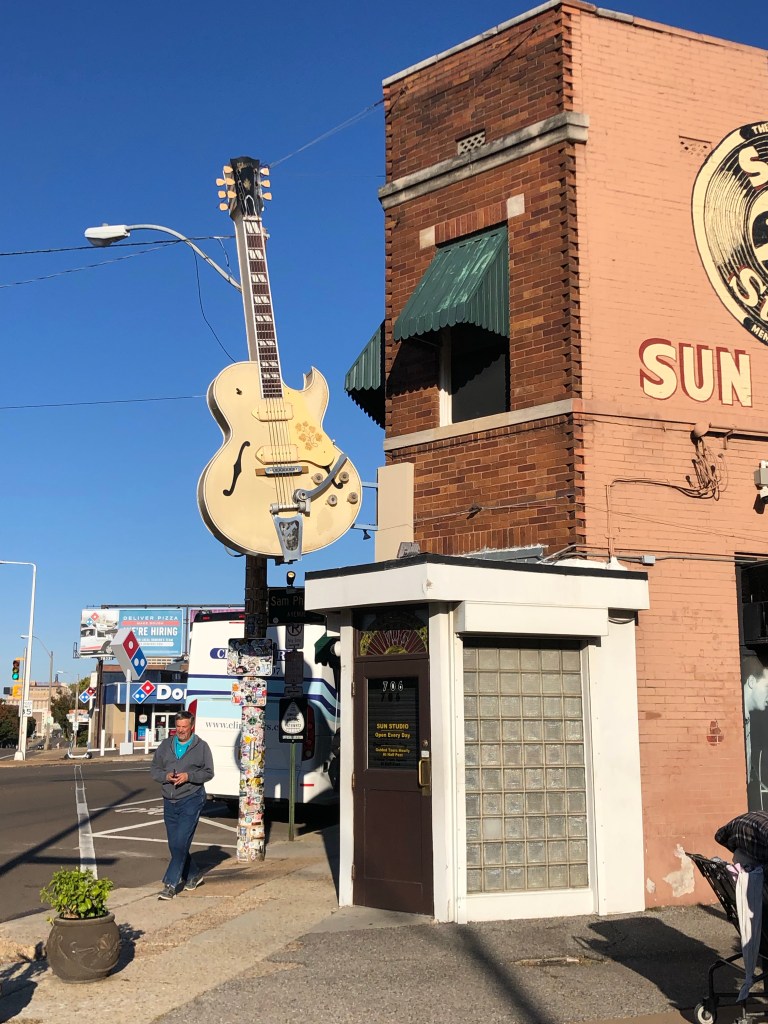
Our day began at Sun Studio. This recording studio made many Memphis musicians famous. Probably the most important one was Elvis Presley. Sam Phillips, the owner of Sun Studio, had an open door policy. Anyone could walk in off the street and ask for an audition. That’s how Elvis got his start. He came in during lunch hour and asked to make a sample recording. Sam was busy, but his business sidekick, Marion Keisker, recorded his performance of two ballads. She was gob-smacked by his talent and good looks and sex appeal. She wanted Sam to contract him immediately but Sam was less than impressed. It took another year for Elvis to break through with a recording for Sun. This time he performed something with a more rock-and-roll beat. Sam liked this one a lot better and he shared it with Dewey Phillips (no relation), a local dj with a large audience, and he played it on his radio show that night. The phones lit up, and Dewey ended up playing the record 13 times that night. And as they say, the rest is history.
Today, Sun Studio’s recording facility is still used to make recordings, at $200 per hour. The building also houses a museum that tells the story of Sun’s history.
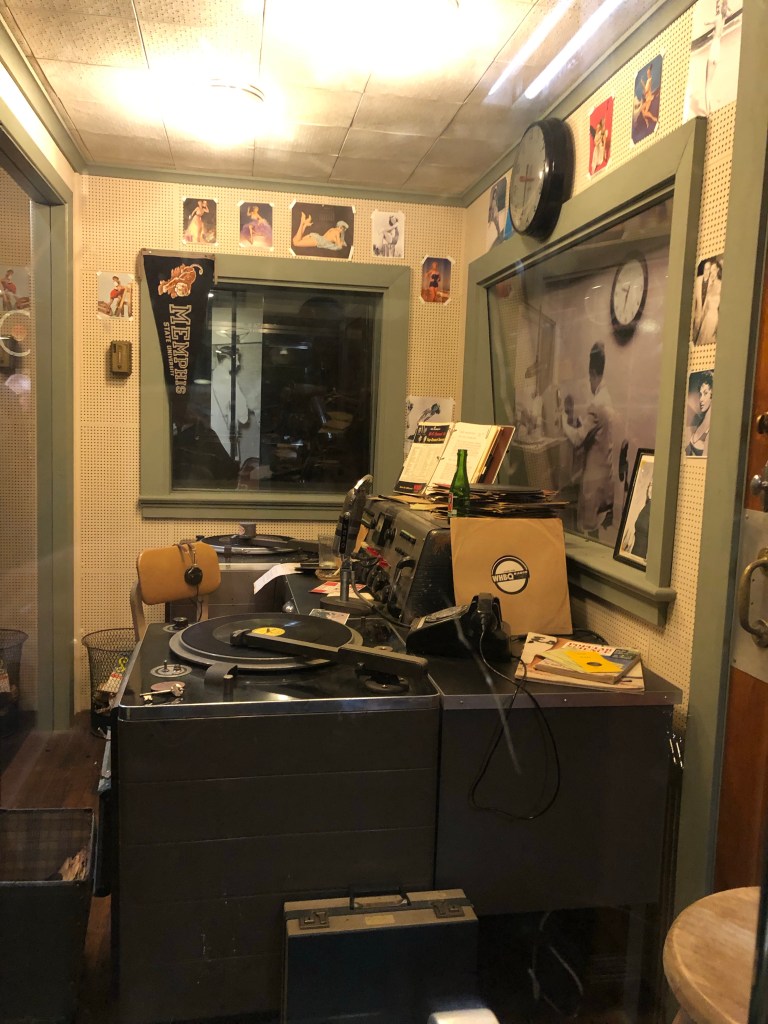
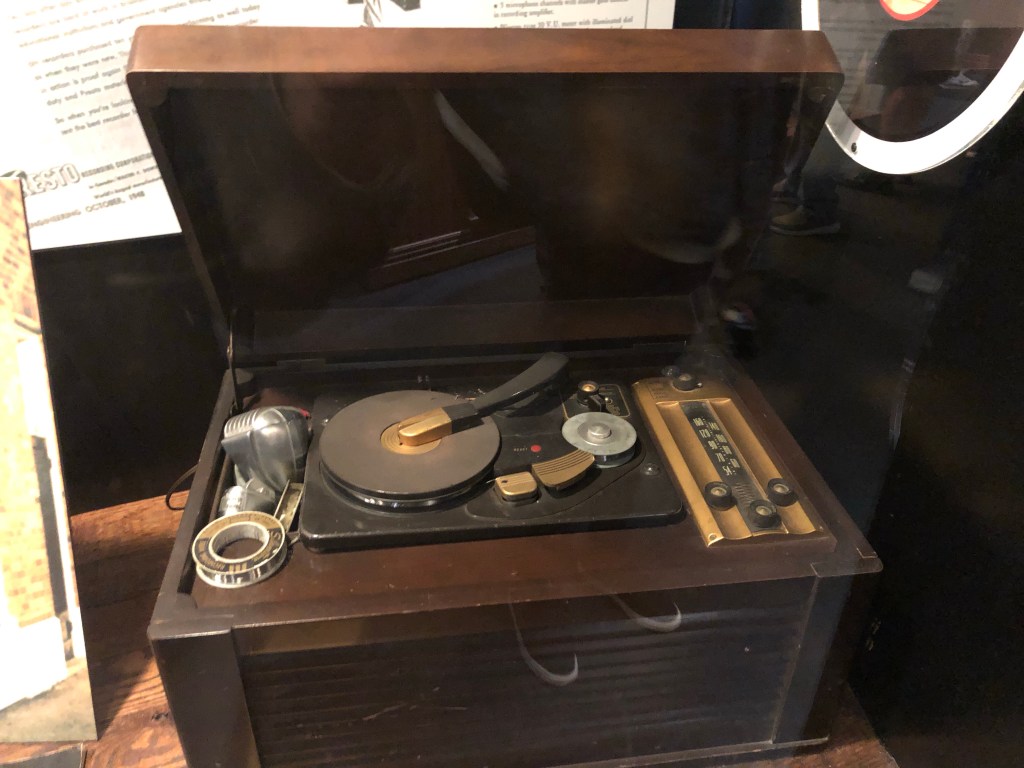
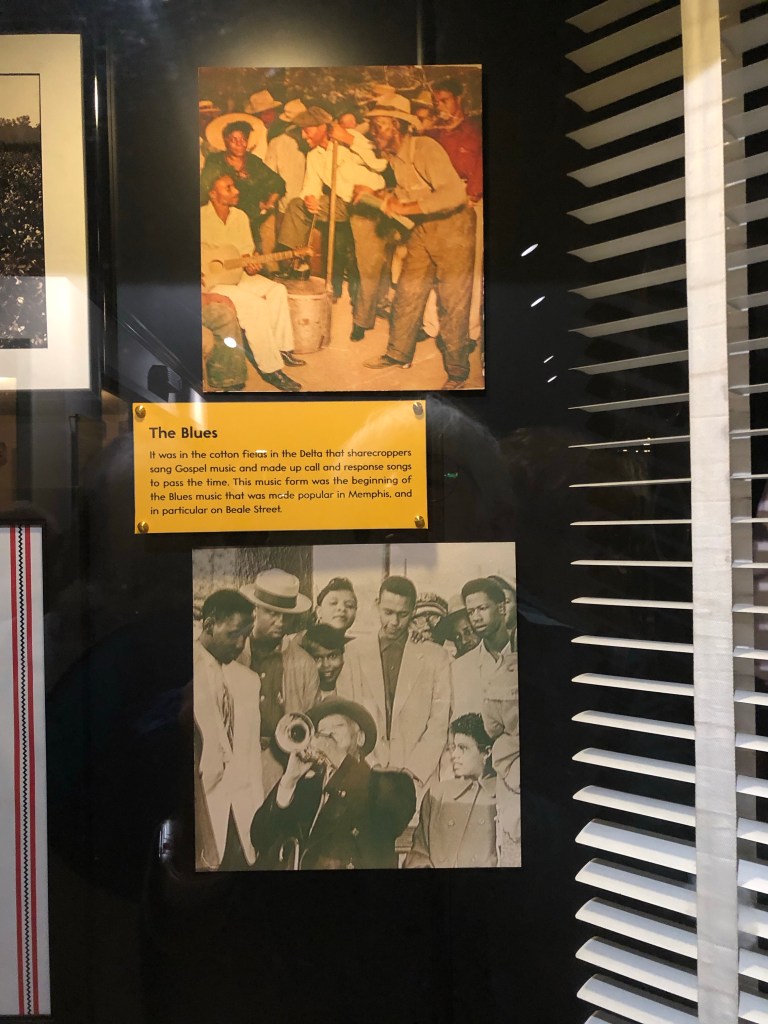
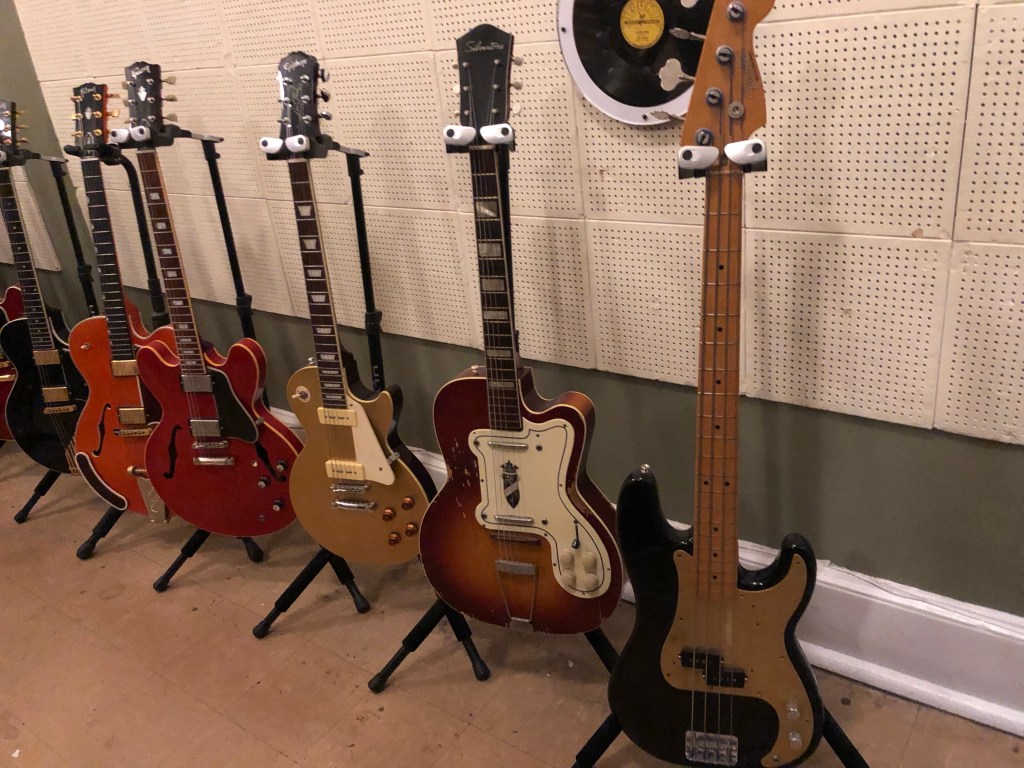
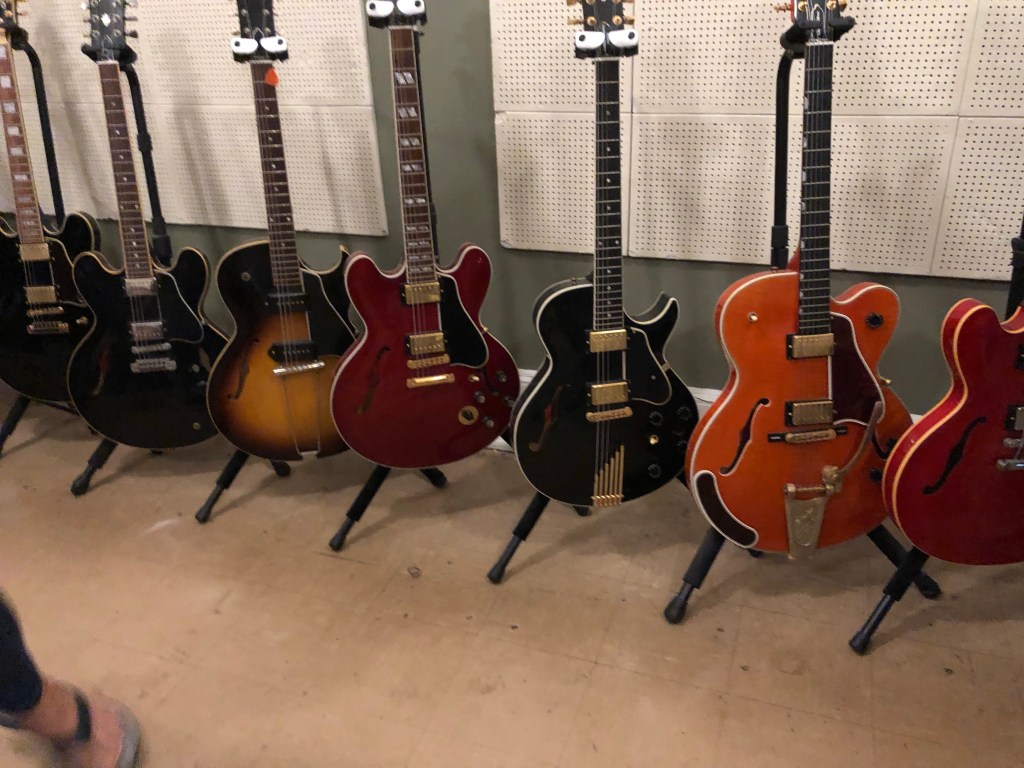
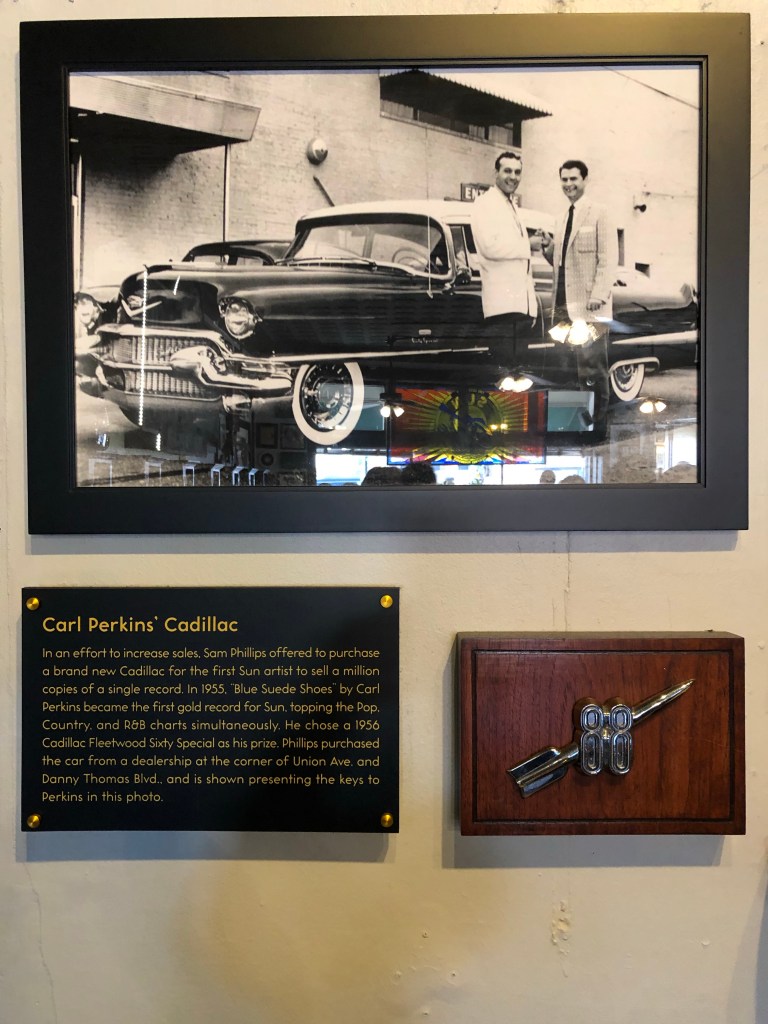
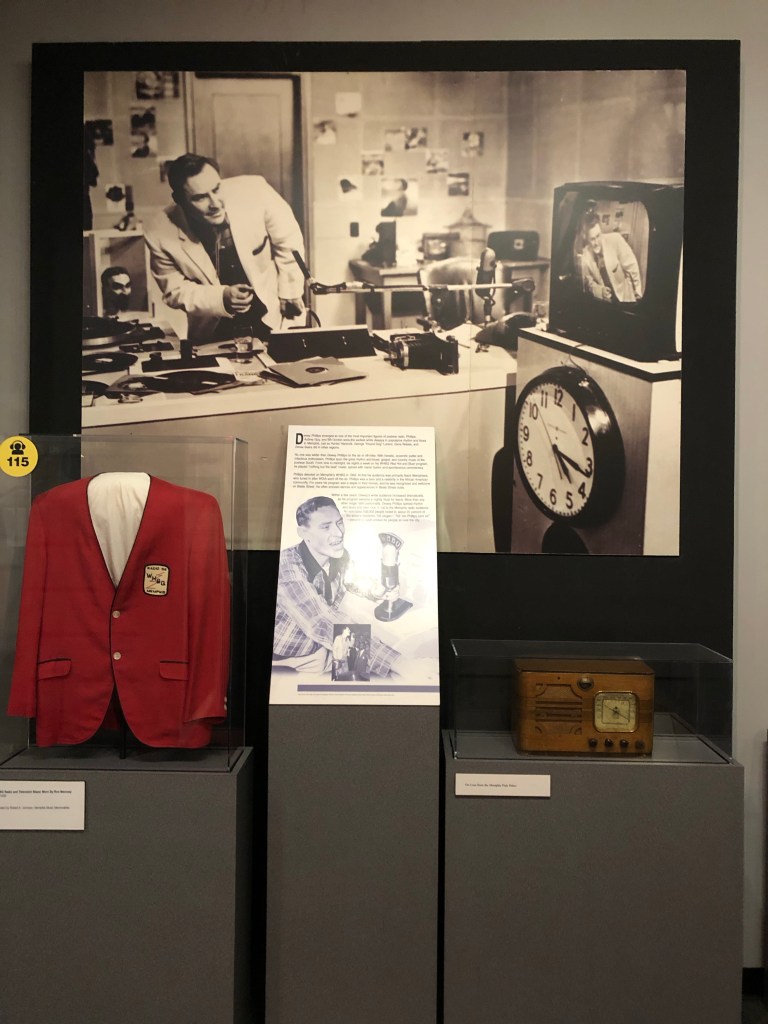
The front entrance to Sun Studio.Dewey Phillips broadcasting studio was located in a Memphis hotel. When the hotel was remodeled, his studio was removed and relocated to the museum at Sun Studio. A wire recorder from the 1940’sThe origins of blues musicMarion Keisker’s officeGuitars used by some of Sun’s studio musicians and headlinersHammond B3Elvis was not the only major talent to record for Sun. Many other famous blues and rock musicians recorded here, including Johnny Cash, BB King, Carl Perkins, Jerry Lee Lewis, Ike Turner, and so many others. Here our tour guide talks about a famous photo of Elvis, Johnny Cash, Jerry Lee Lewis and Carl Perkins recording at the studio. This spur-of-the-moment jam session became known as the Million Dollar Quartet. A hit Broadway musical is based on it as well. Carl Perkins was the first to record a gold record for Sun, with his recording of “Blue Suede Shoes.” Sam bought him a Cadillac as a reward.
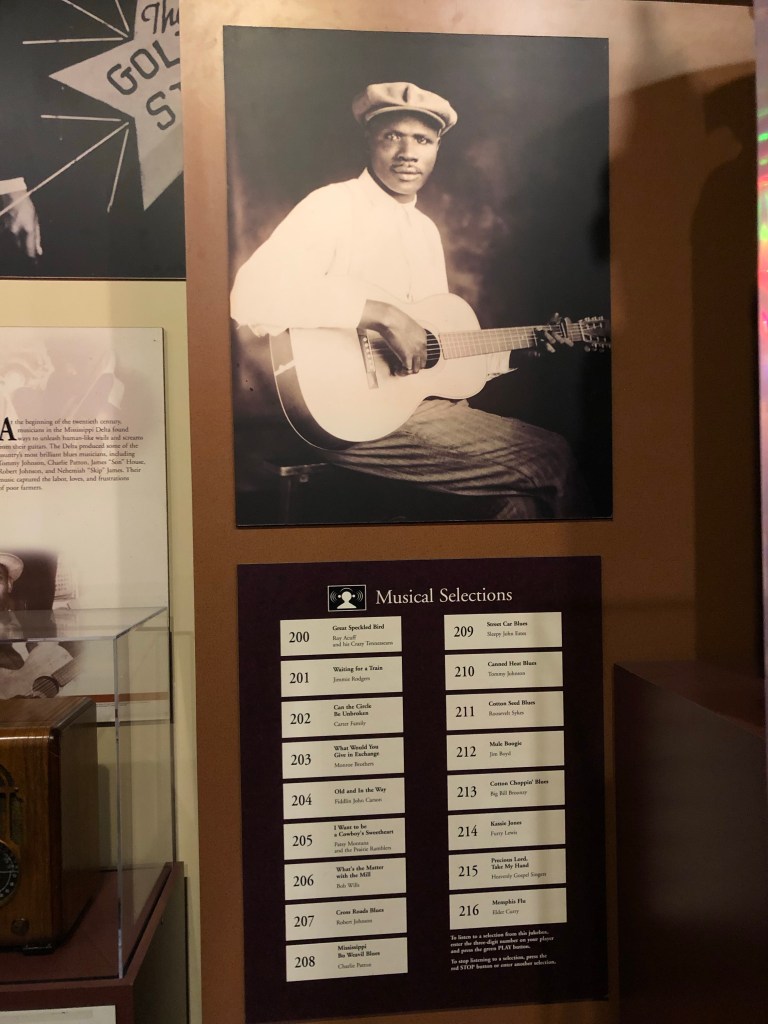
Memphis also has the Rock and Soul Museum. This one was curated by the Smithsonian and located in Memphis, the only Smithsonian museum located outside of Washington DC. It tells the story of rock and soul from their birth in sharecropper work singing, to blues performed on the streets and on the radio. The music of these two eras was often integrated, as was the culture that spawned them. But as society changed, music branched into rock, a primarily white genre, and soul, primarily a black genre. This museum tells the story of this musical evolution through compelling exhibits and song lists that can be enjoyed along with the visual information. It’s a wonderful experience!
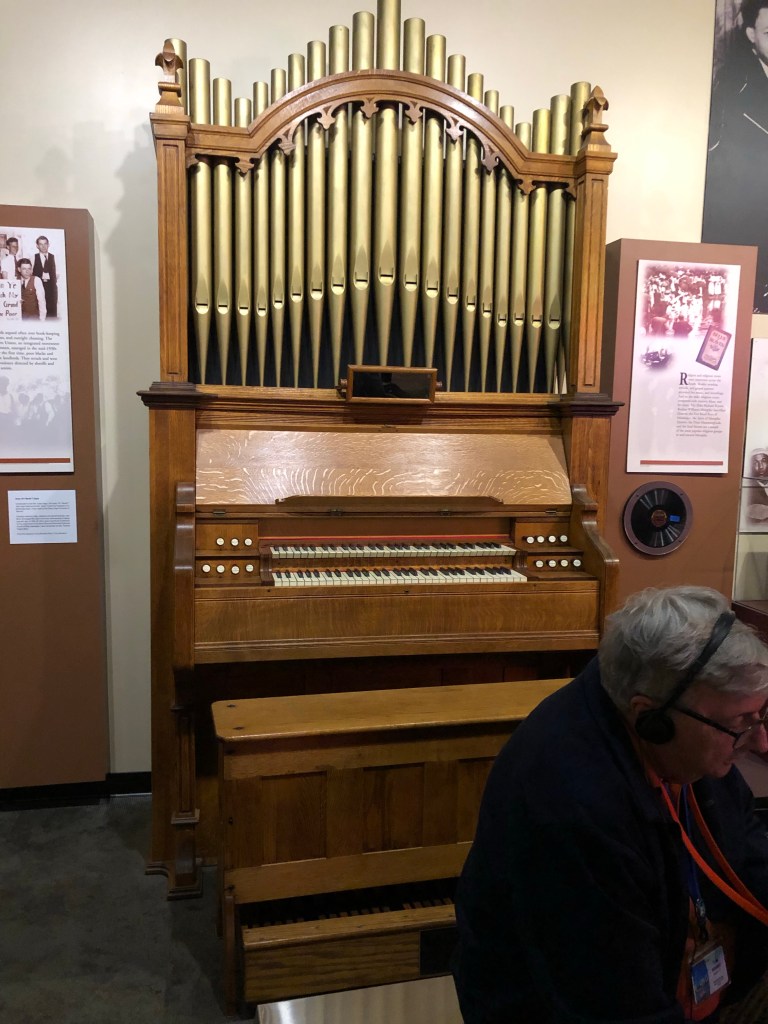
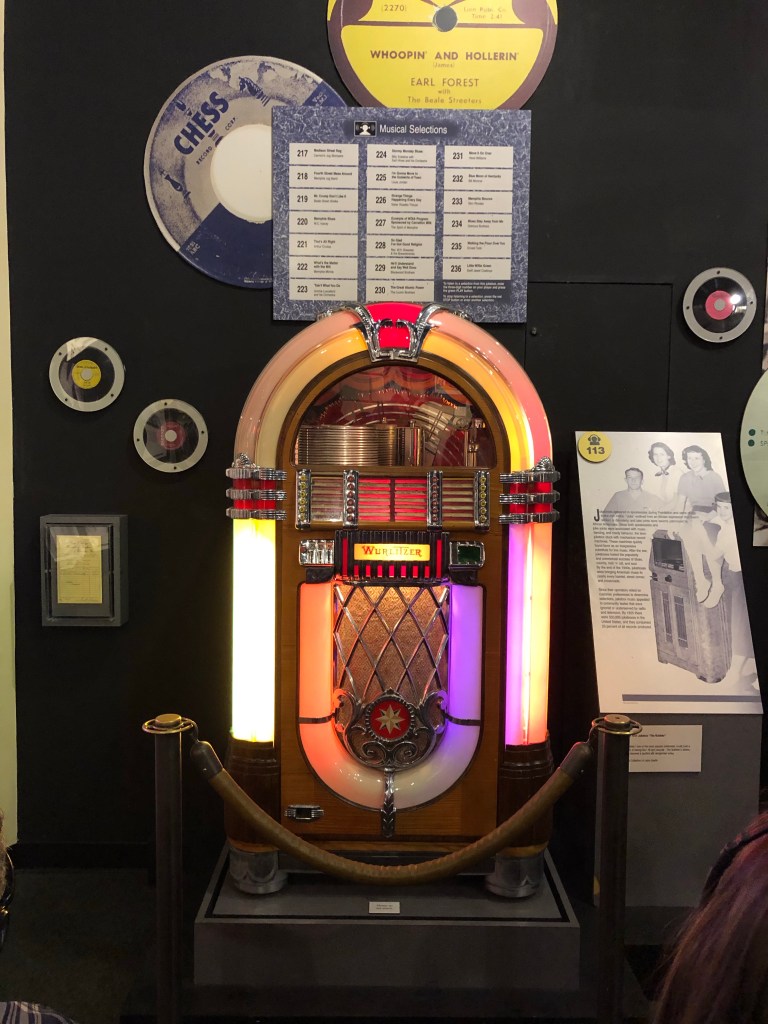
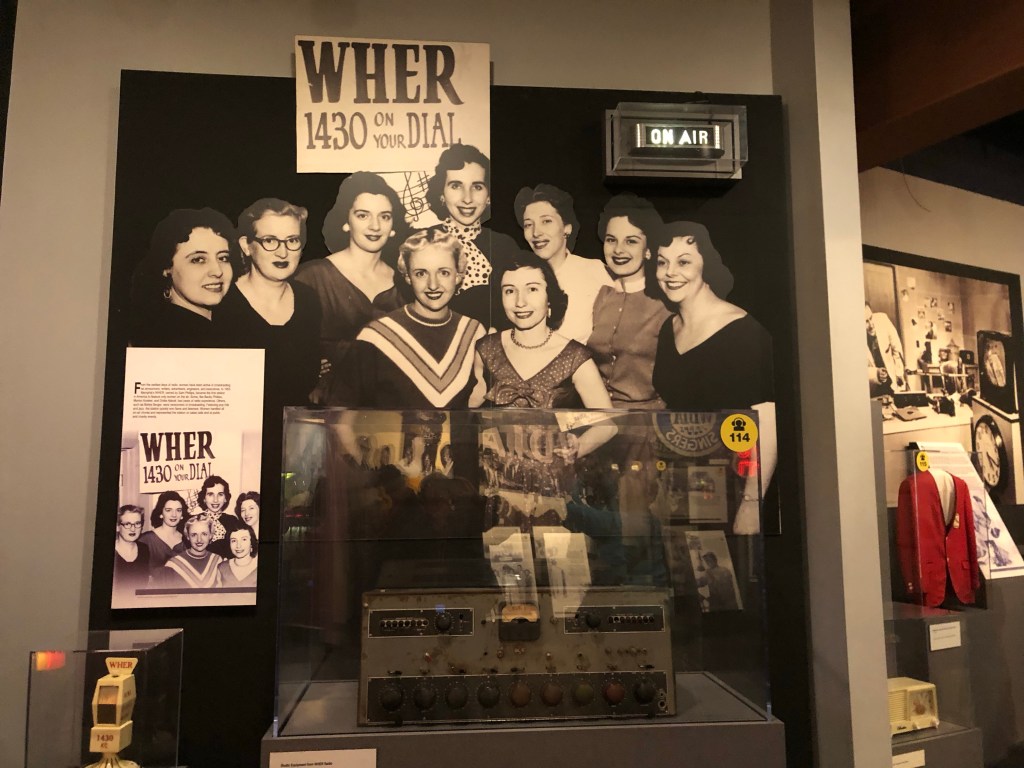
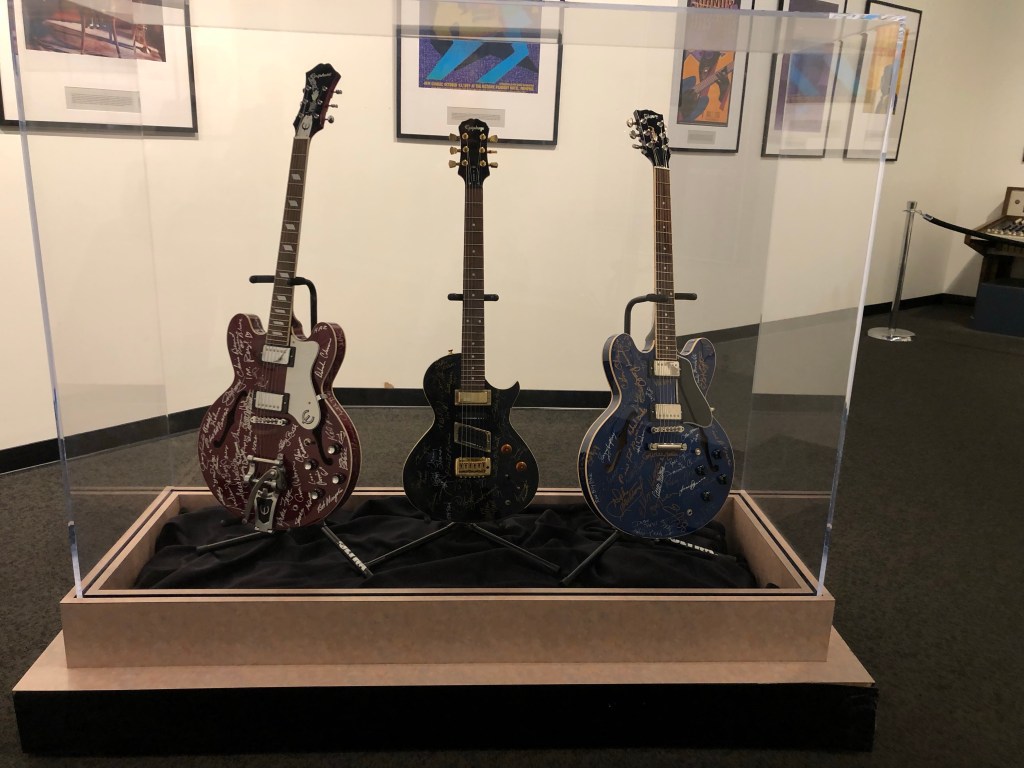
A reed organ from the 1800’s. These were often home instruments and were sized accordingly. The player filled a bellows by pumping two large foot pedals as he/she was playing. An early jukebox. Several of these are located throughout the museum. They are accompanied by playlists of songs from the era covered by the exhibit. Visitors can listen to any or all of them through the audio devices they wear during their tour of the museum. A Wurlitzer jukebox from the 1940’sThe staff of Memphis radio station WHER, the first all-female station in the country. Marion Keisker from Sun Studio is second from the left. An exhibit about Dewey PhillipsTwo of BB King’s guitars. He named all of his guitars Lucille. An exhibit about Sam the Sham and the Pharaohs. Sam was a a Latino musician named Domingo Samudio. As a Latino, he found it difficult to break into either the white or black genres of popular music. His flamboyant staging was in part a way of creating something unique that would capture attention. The band’s most famous song, “Woolly Bully”, included Spanish lyrics as a way of highlighting Sam’s cultural heritage. Three guitars with many famous signaturesA mixing board used to record many famous musicians of the 1960’s and 70’s.
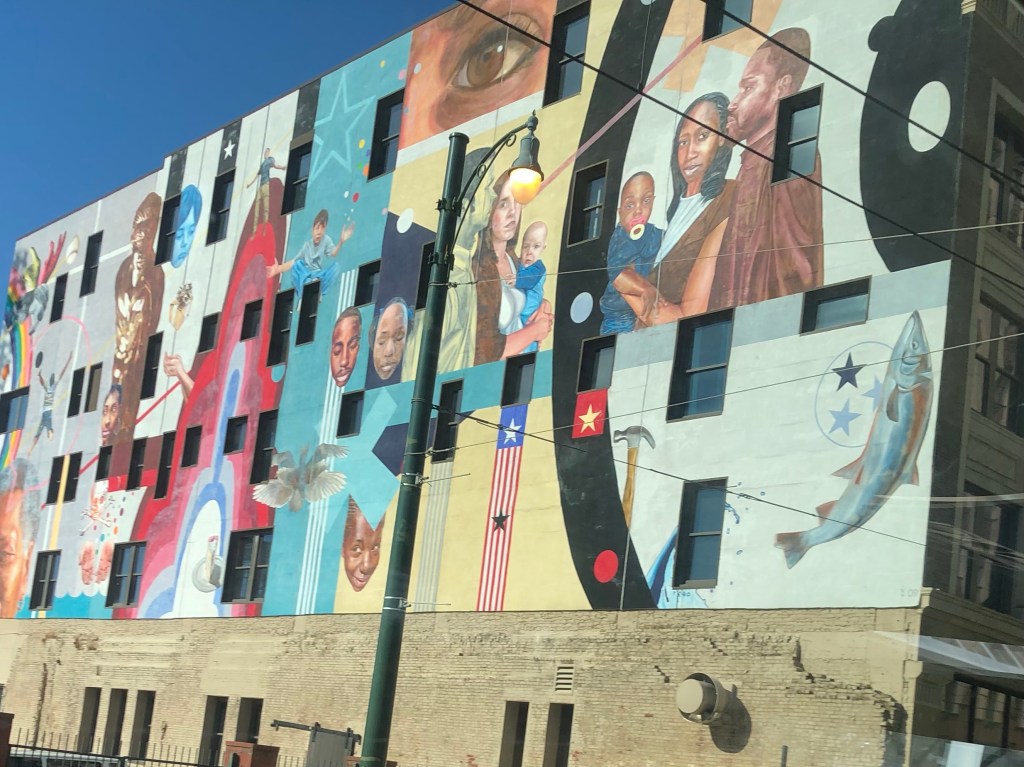
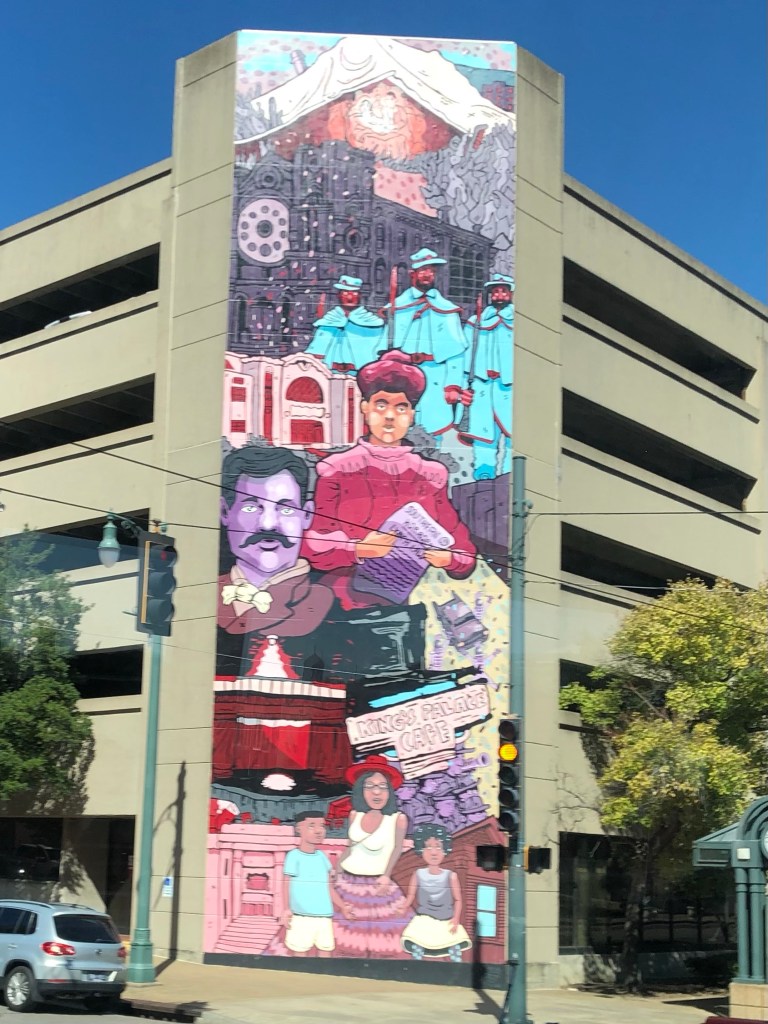
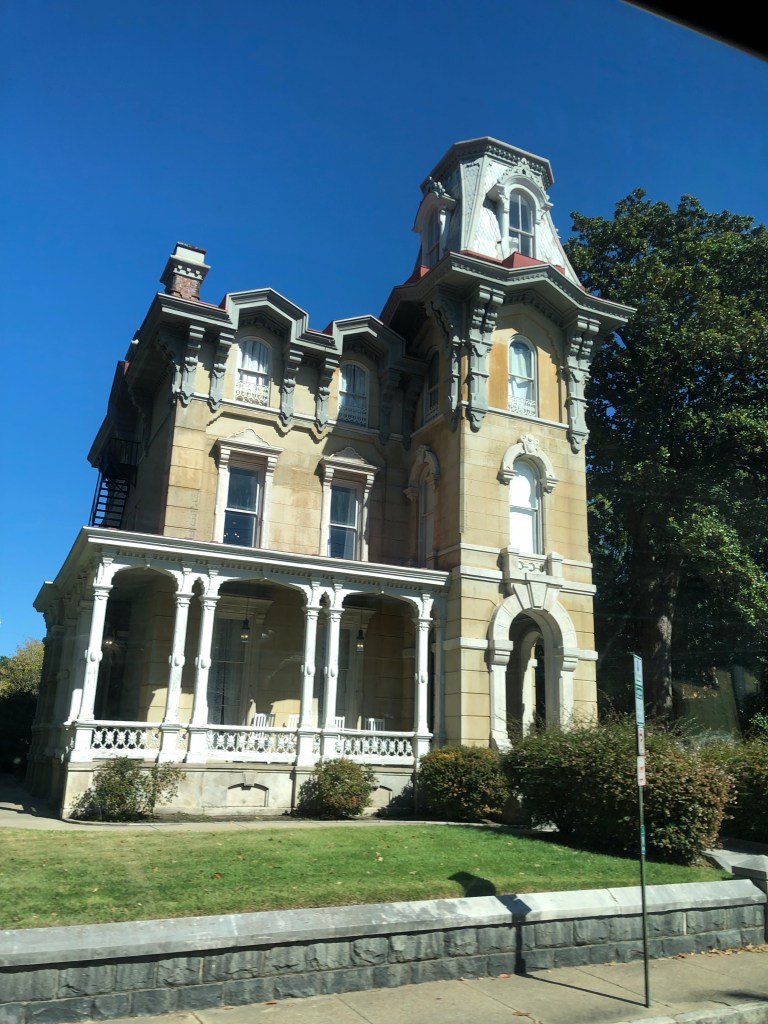
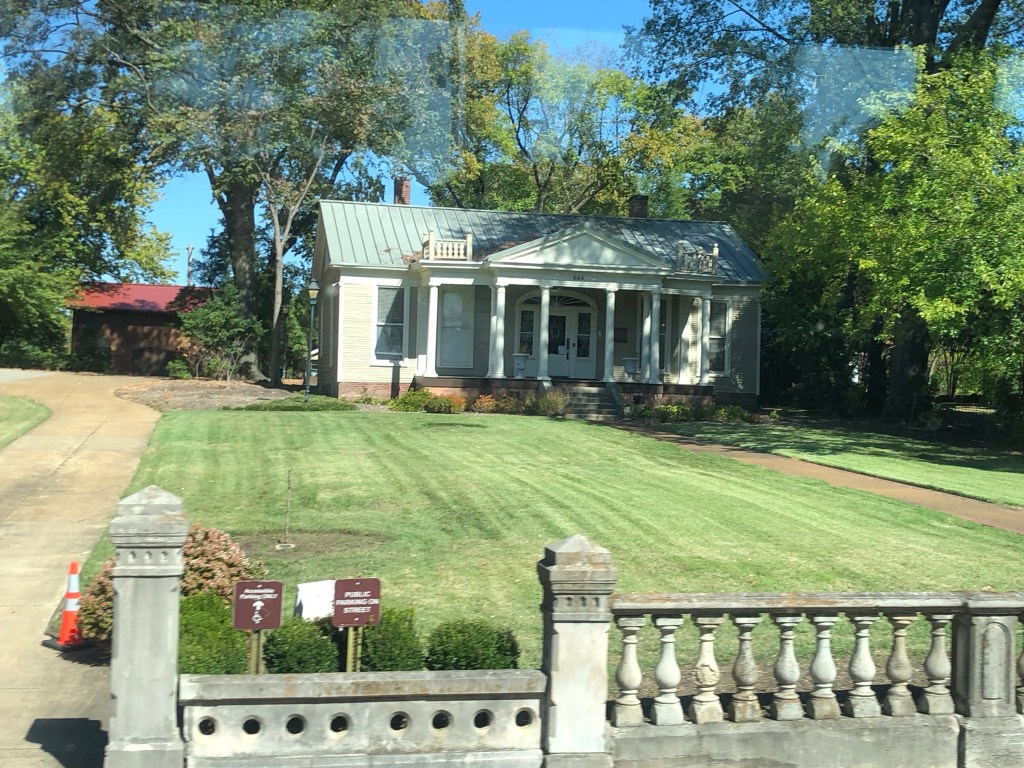
Our day in Memphis included a tour of some of its neighborhoods and iconic buildings. We had an excellent lunch at BB King’s Blues Cafe on Beale Street, drove through a neighborhood of Victorian mansions, past Danny Thomas’s St Jude Research Center, and visited the Bass ProShop with the pyramid on top. Quite a collection of sights!
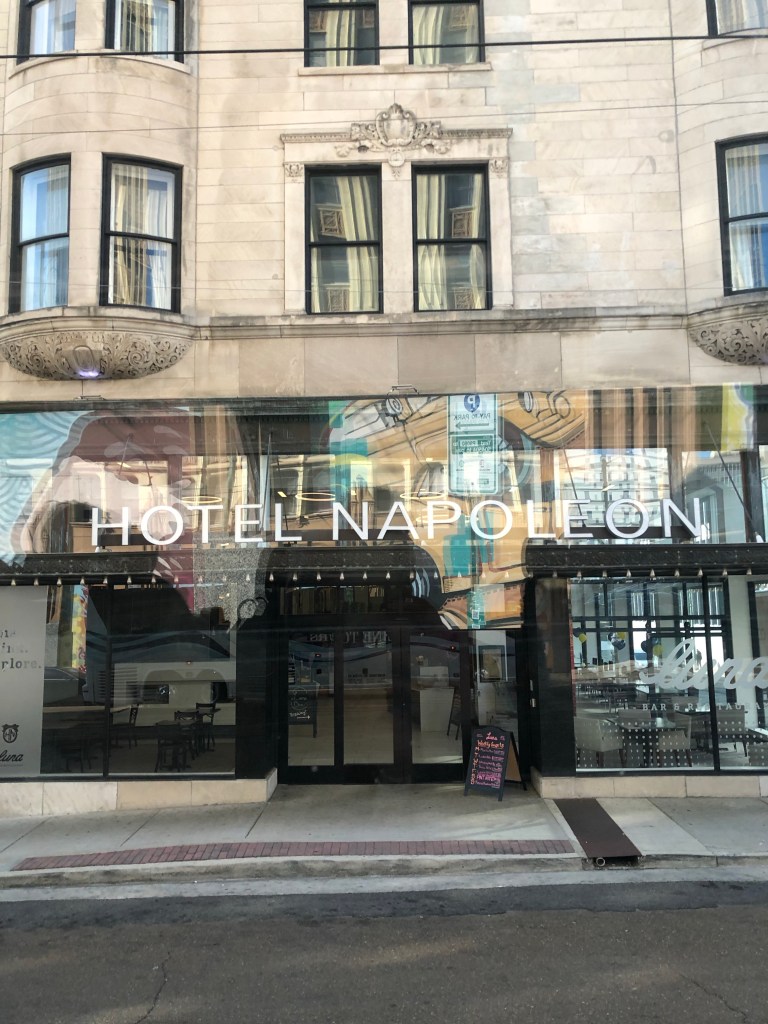
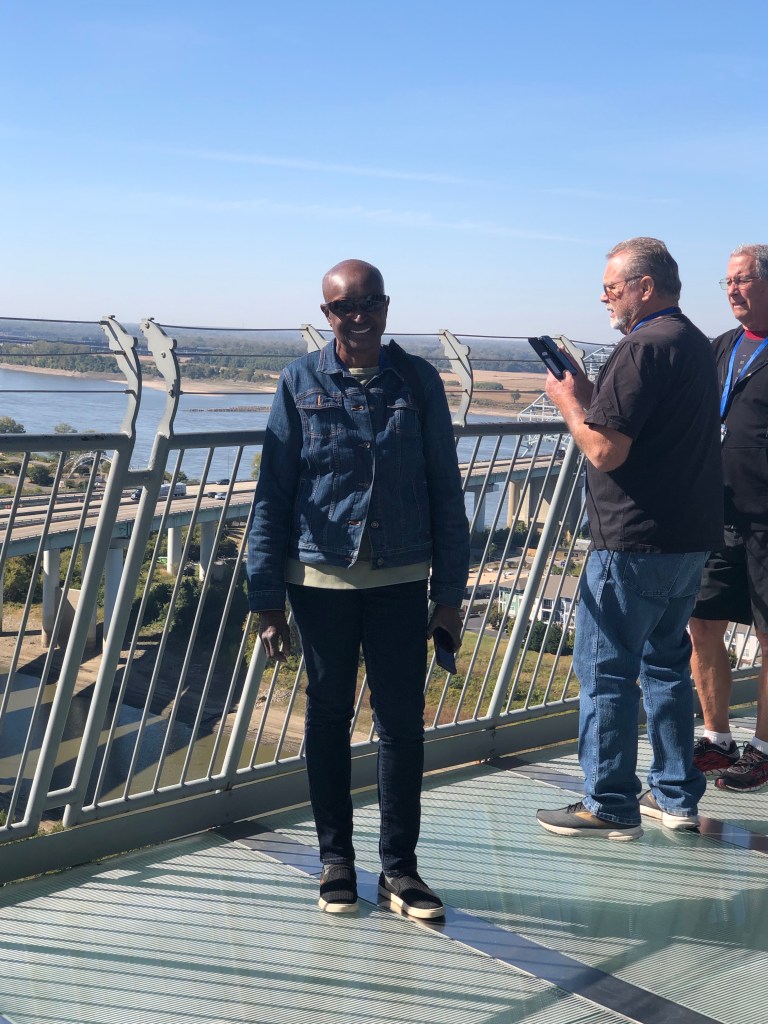
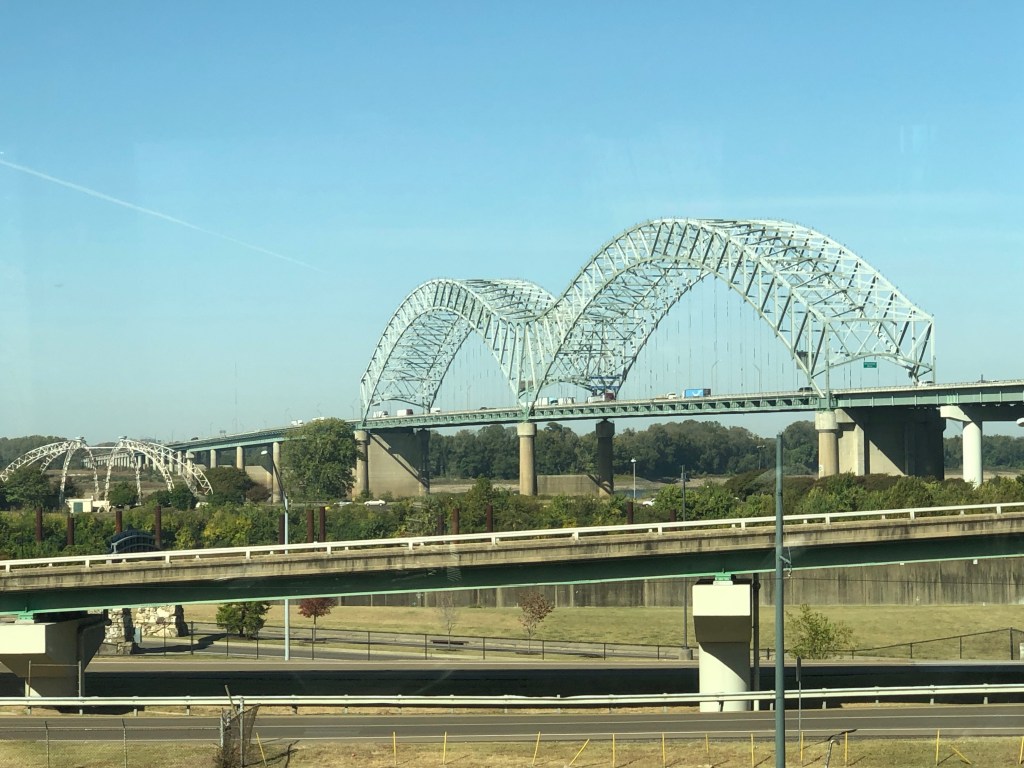
Murals decorate the exterior of several building in Memphis The boutique Hotel Napoleon occupies the former home of the Memphis Press-Scimitar, built by Napoleon Hill, owner of the newspaper and Memphis’s wealthiest citizen, in 1902.BB King Blvd honors one of Memphis’s most famous sons. Victorian-era mansionAnotherSmaller house on the grounds of one mansion, built for the owner’s daughter Bass ProShop, seen from I-40. The building was originally used for Memphis Grizzlies games but was sold to Bass ProShops when a new arena was built. The building houses a luxury hotel, retail space, and an elevator to an observation deck and restaurant near the top of the pyramid. The bar at the topDes standing on the observation deck. The floor is glass. I avoided walking on it. The I-40 bridge over the Mississippi River between Memphis, Tennessee and West Memphis, Arkansas. The locals refer to it as the Dolly Parton bridge.













 Wanda Free
Leave a comment