Welcome to our journeys! To follow along, type your email in the box below and click the “Subscribe” button.
Day 36 – Memphis, Civil Rights Museum
This day, October 21, was devoted to another side of Memphis’s role in America history. On April 4, 1968, Martin Luther King Jr was assassinated on the balcony of his room in the Lorraine Motel in Memphis. Dr King’s influence in the civil rights movement of the 1950’s and 60’s was so enormous that the motel later became the centerpiece of the National Civil Rights Museum. Other sites important to the assassination, including the building across the street where James Earl Ray fired the shot that killed King, are also part of the museum complex.
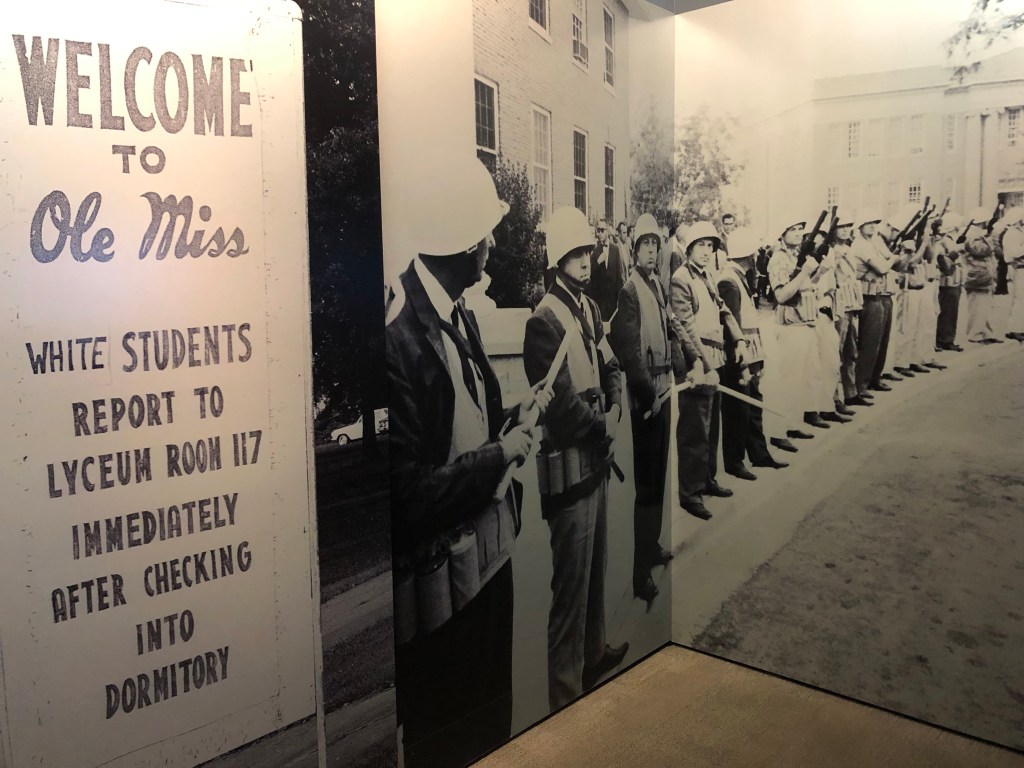
This museum tells the story of the battle for racial equality in the first half of the 20th century in America. Having grown up during some of this this time, I remember many of the events portrayed in the museum as current events of my childhood and teenage years. There are many excerpts from newspapers and radio and television news broadcasts that bring these events to life. There are also recreated artifacts and scenes that allow you to walk into some of these events as if you were a participant. We spent 5 hours going through the Lorraine Motel section and were so overwhelmed by it that we didn’t get to the rest of it. It’s a place that really gets under your skin.
The museum opens with an exhibit on the Rosenwald Schools. During the early 20th century, Booker T Washington and Julius Rosenwald, the head of Sears and Roebuck, collaborated on a project to provide a good education to black children. They worked with communities in the original 11 confederate states, plus Oklahoma, Kentucky, Missouri, and Maryland, to assist in the construction and staffing of school buildings for black students. The communities had to invest in the projects with financing, labor, and in many cases donations of land. The local white school boards also had to agree to fund the schools after they were built. Over a period of about 20 years, over 5,000 (!) schools and teacher homes were built. This huge investment in education gave the black population a foundation on which to build greater expectations for the future. The museum acknowledges the Rosenwald Schools as a spark that helped to ignite the civil rights movement in the generation that began their education in them.
I have no photos from the Rosenwald Schools exhibit, as they were not permitted. I think that the rest of the museum’s experience is best told in pictures. These are highlights of the breadth and depth of the information presented.
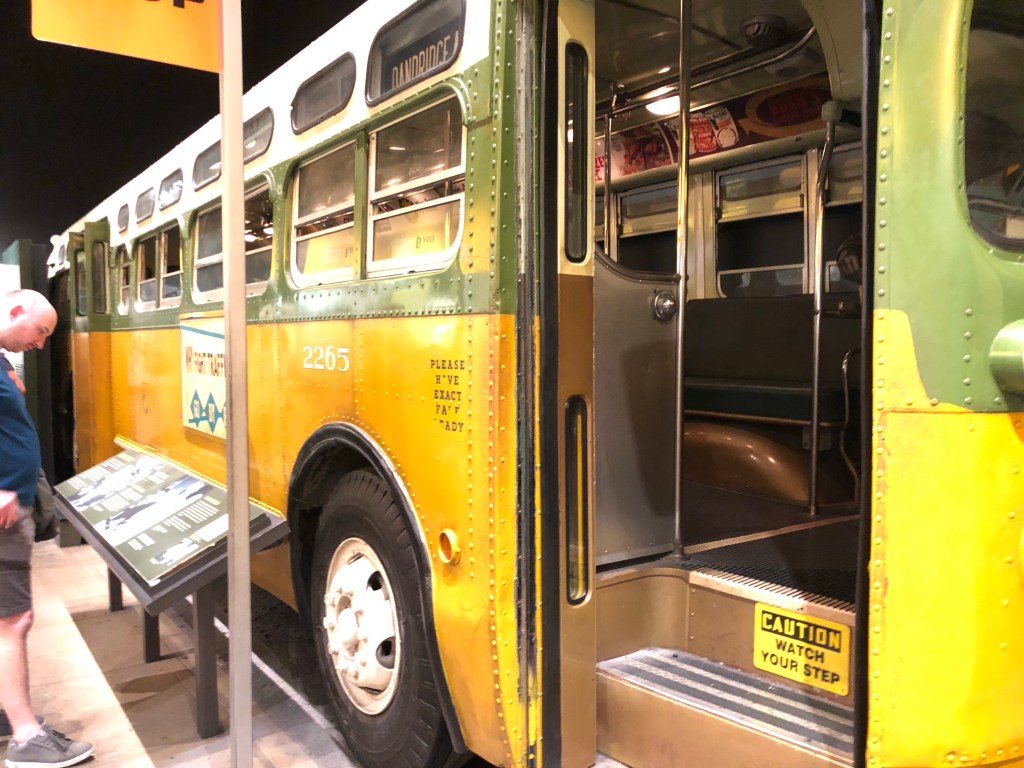
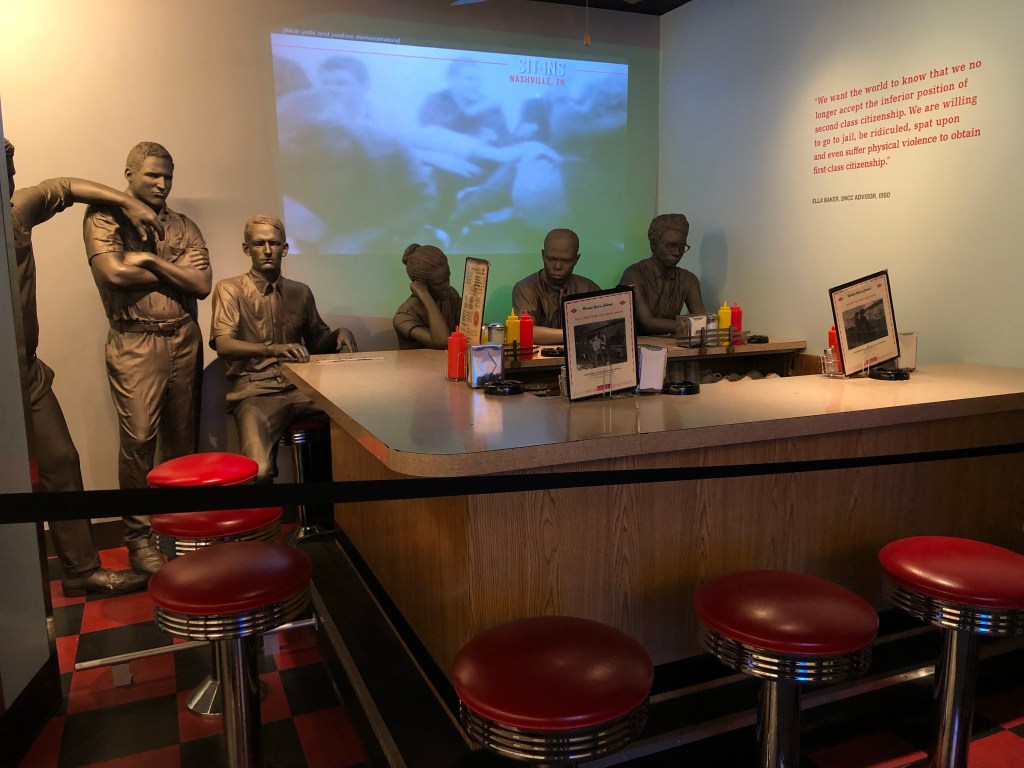
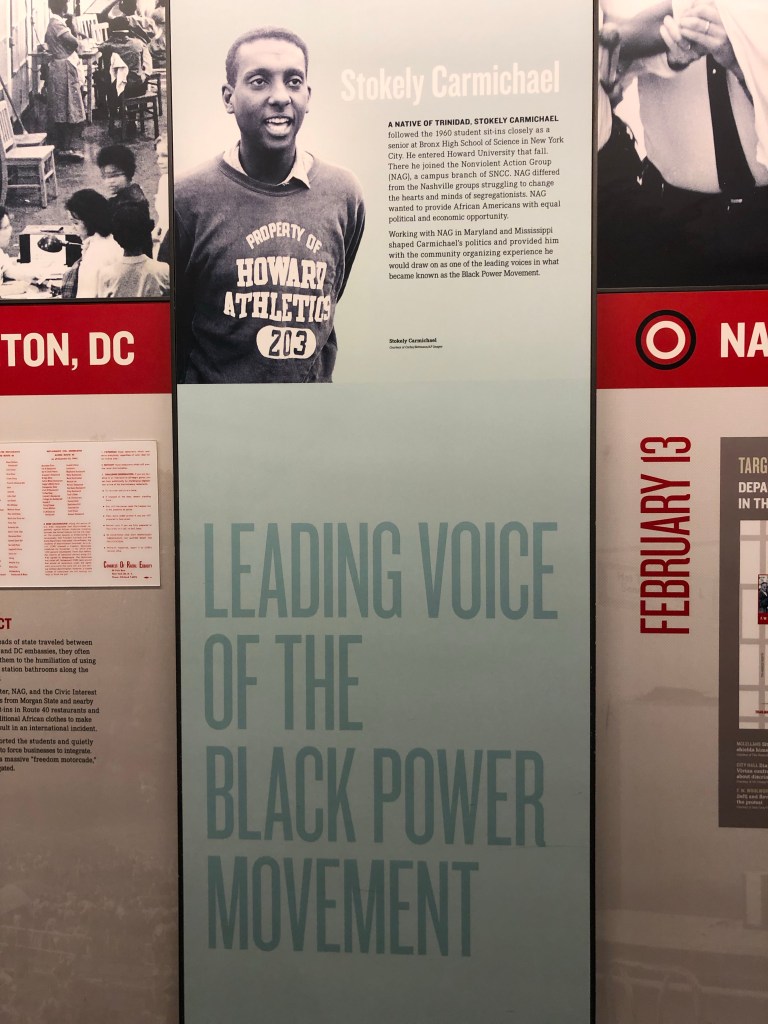
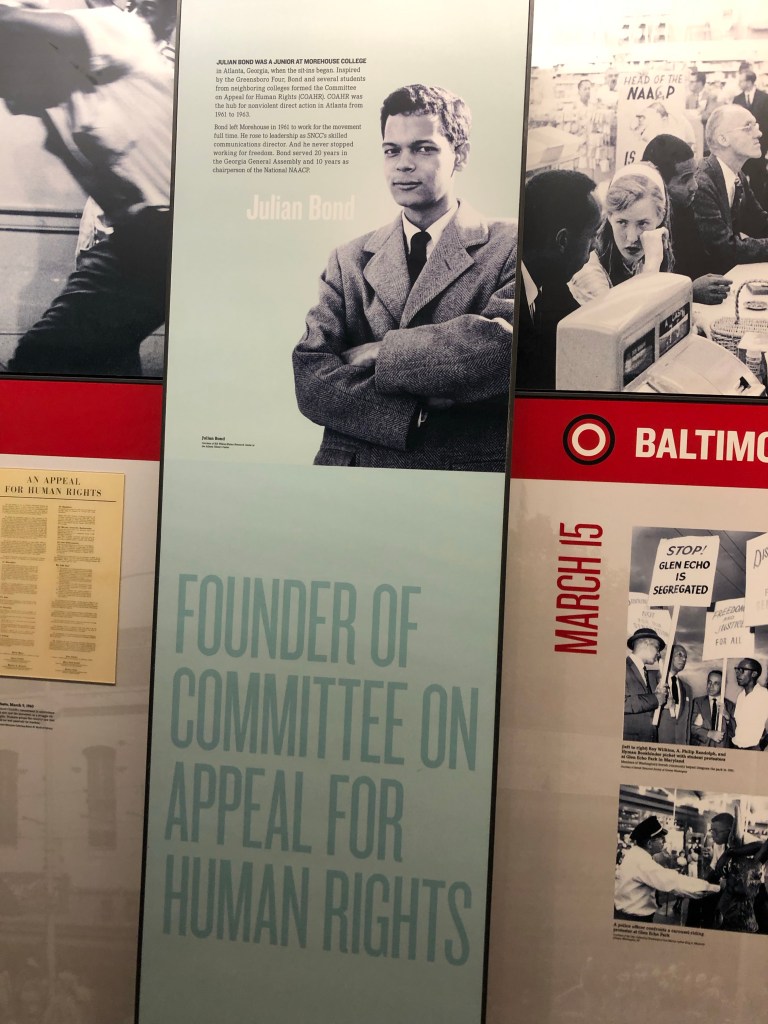
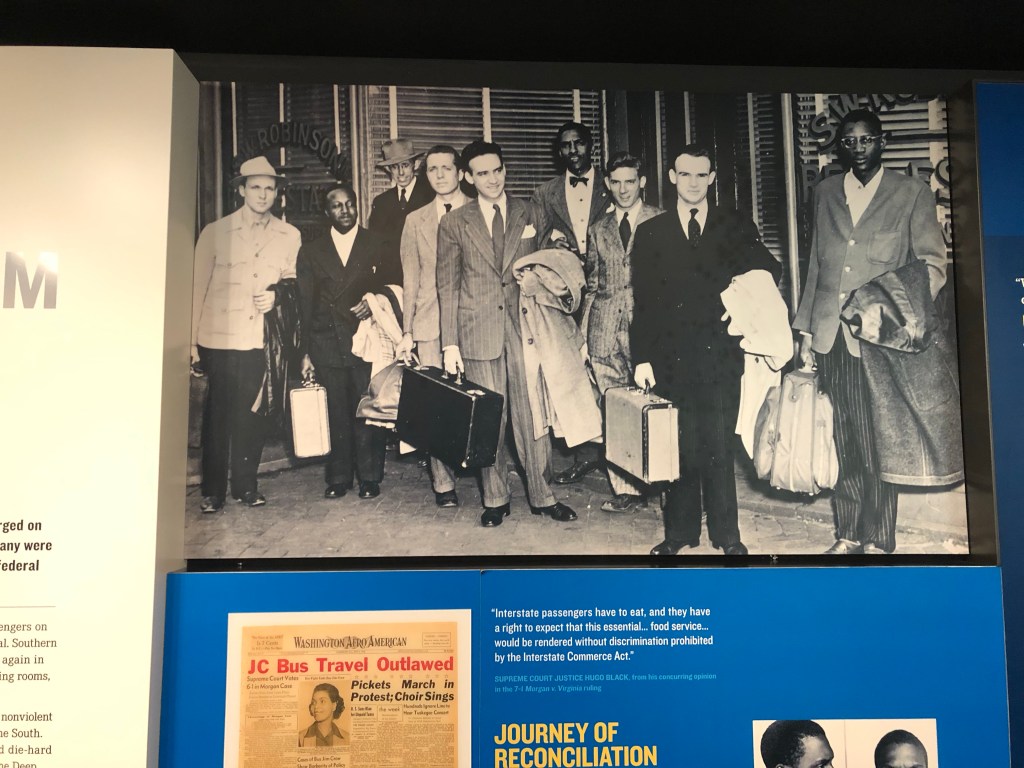
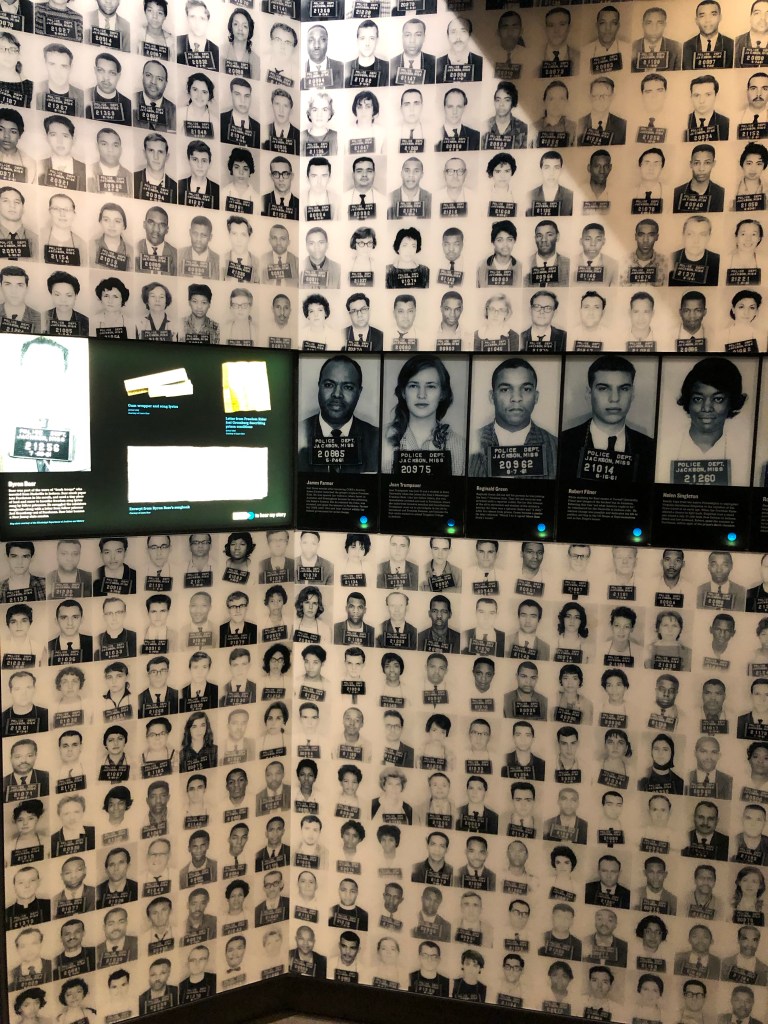
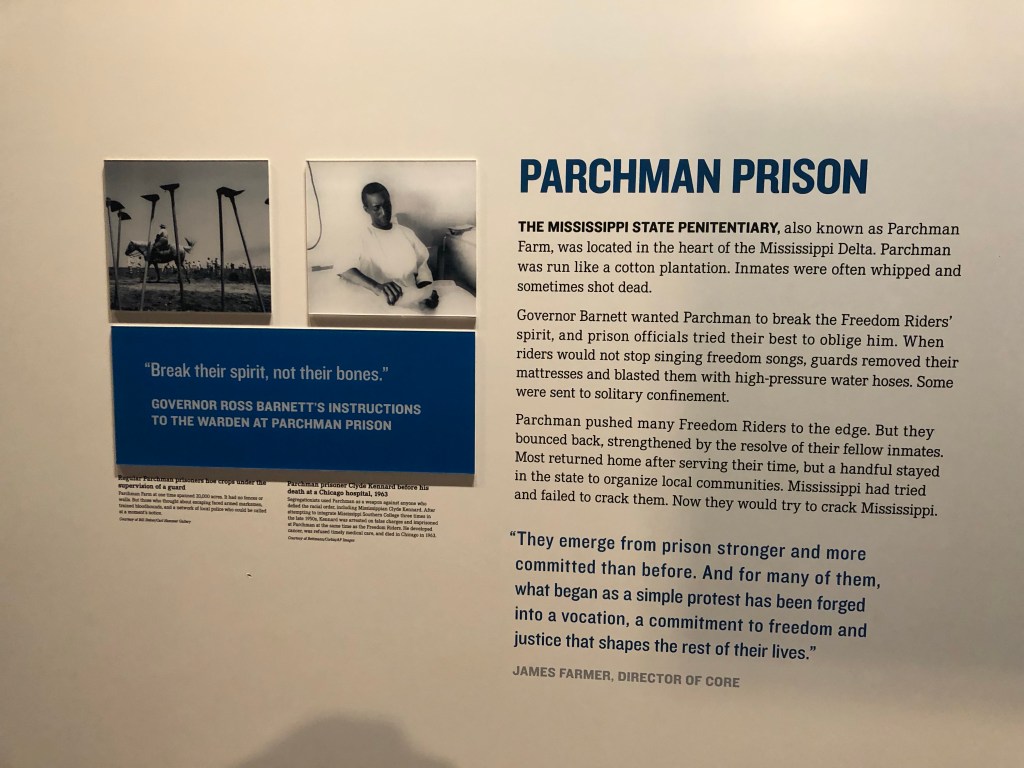
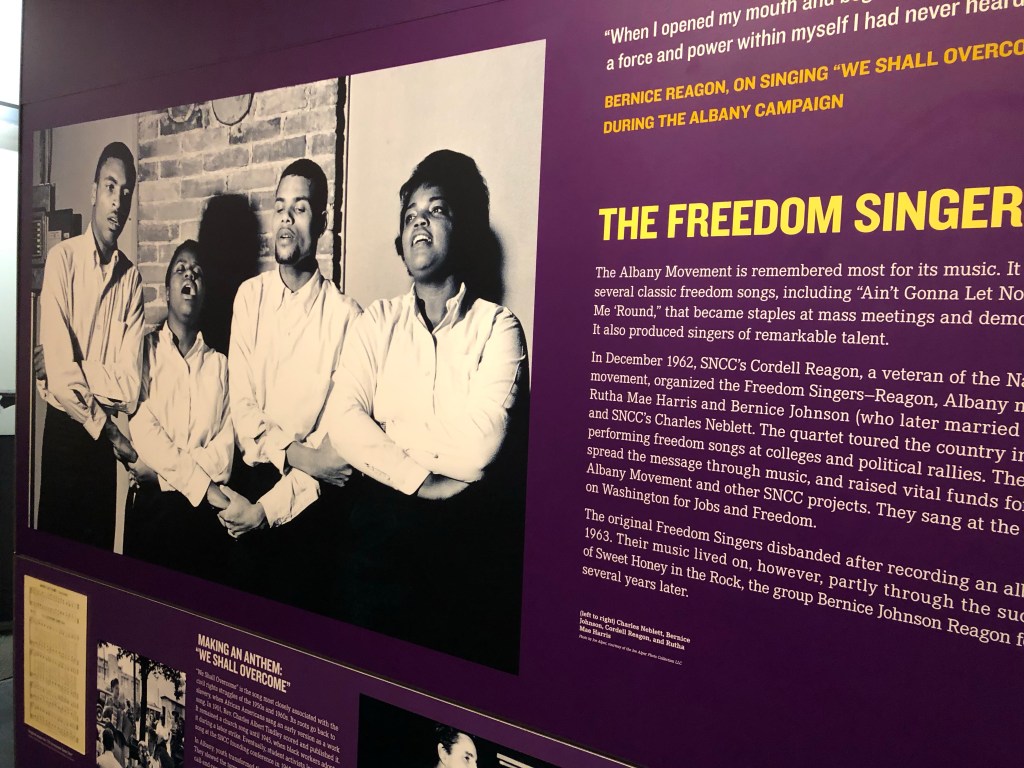
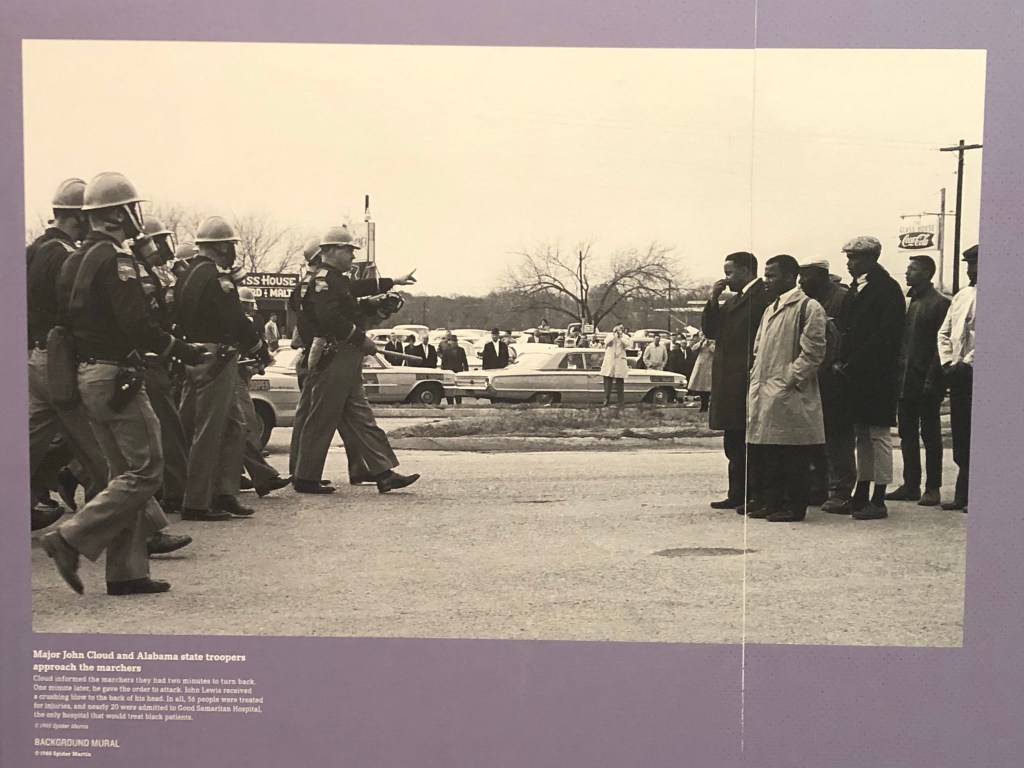
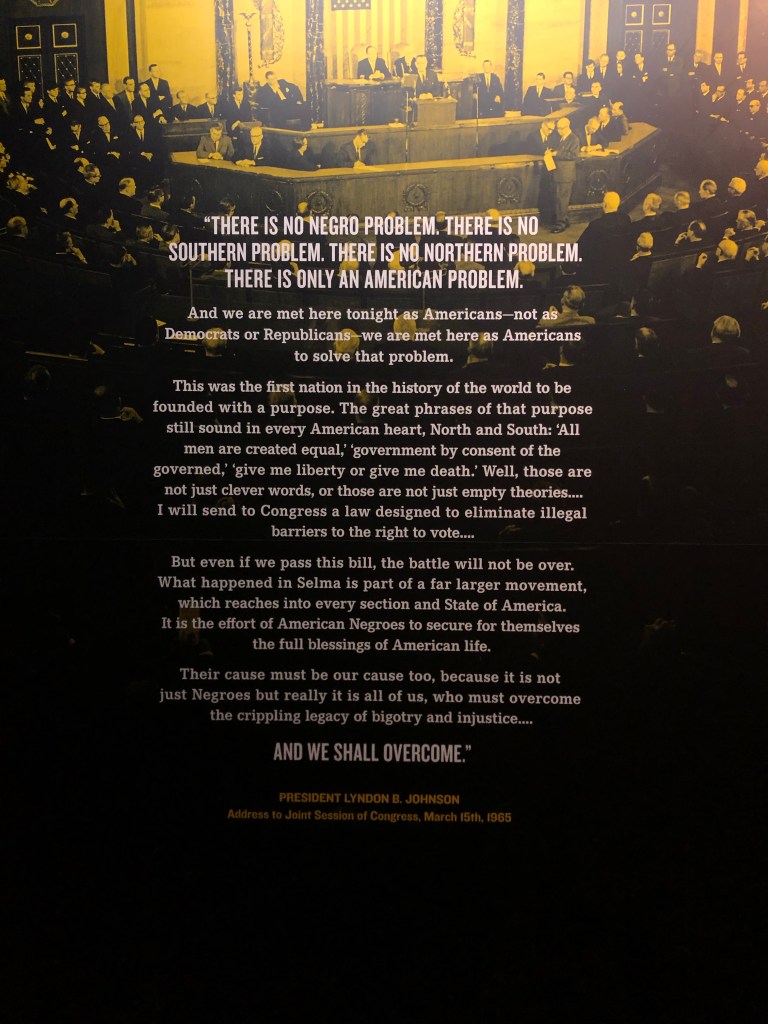
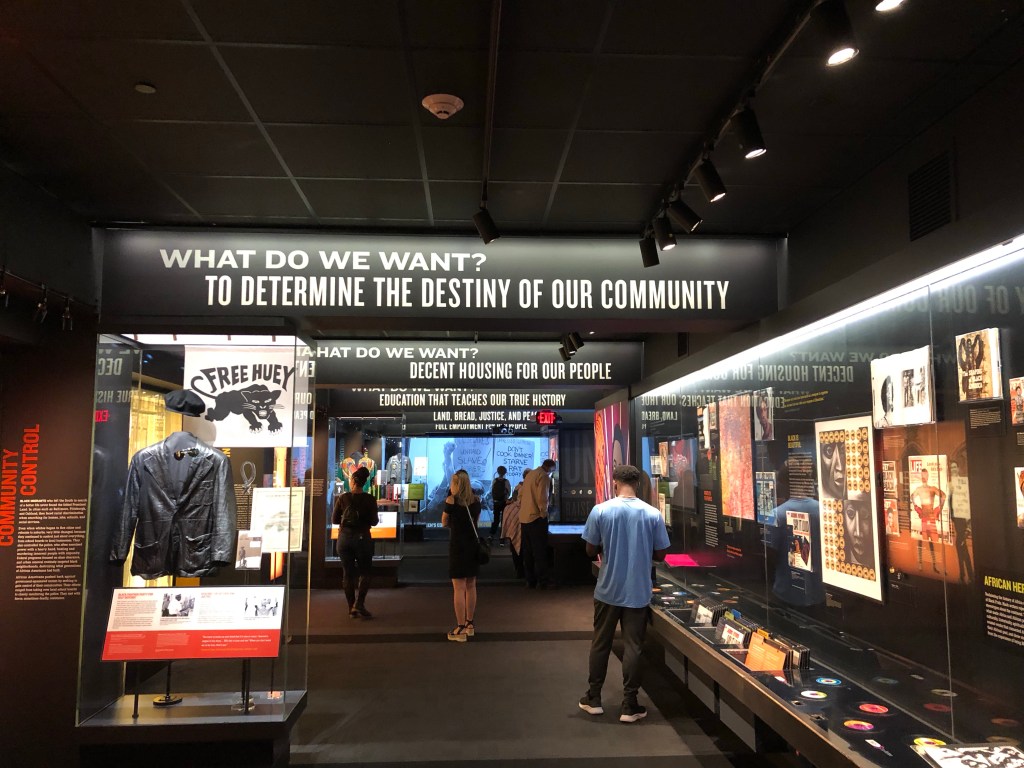
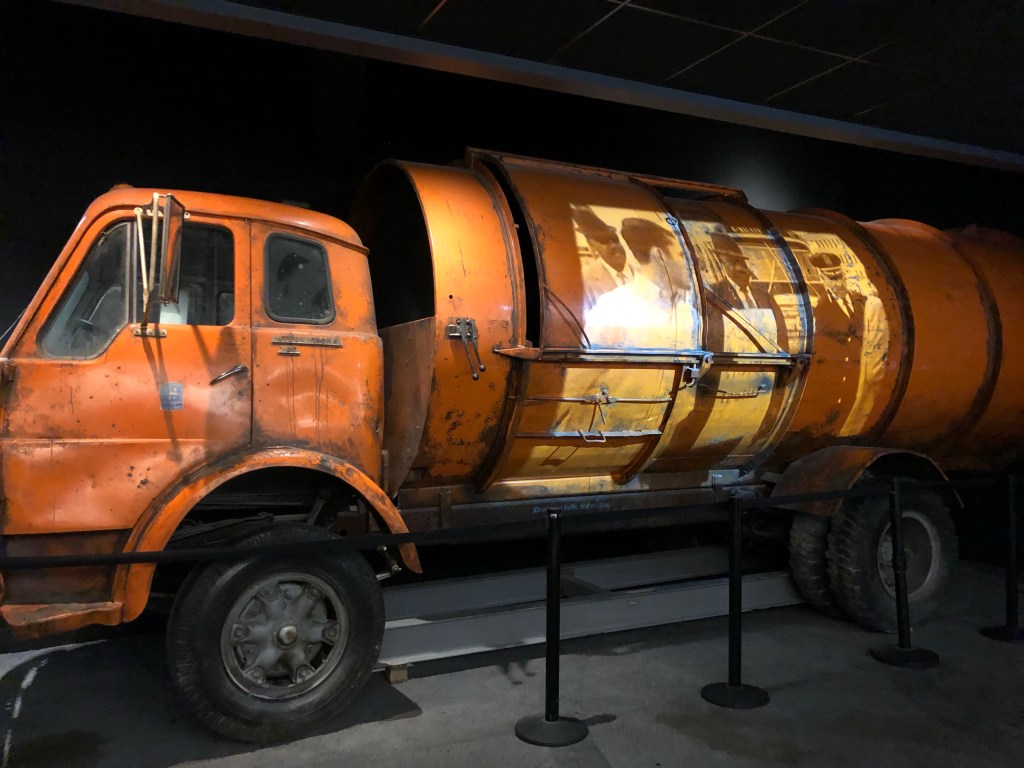
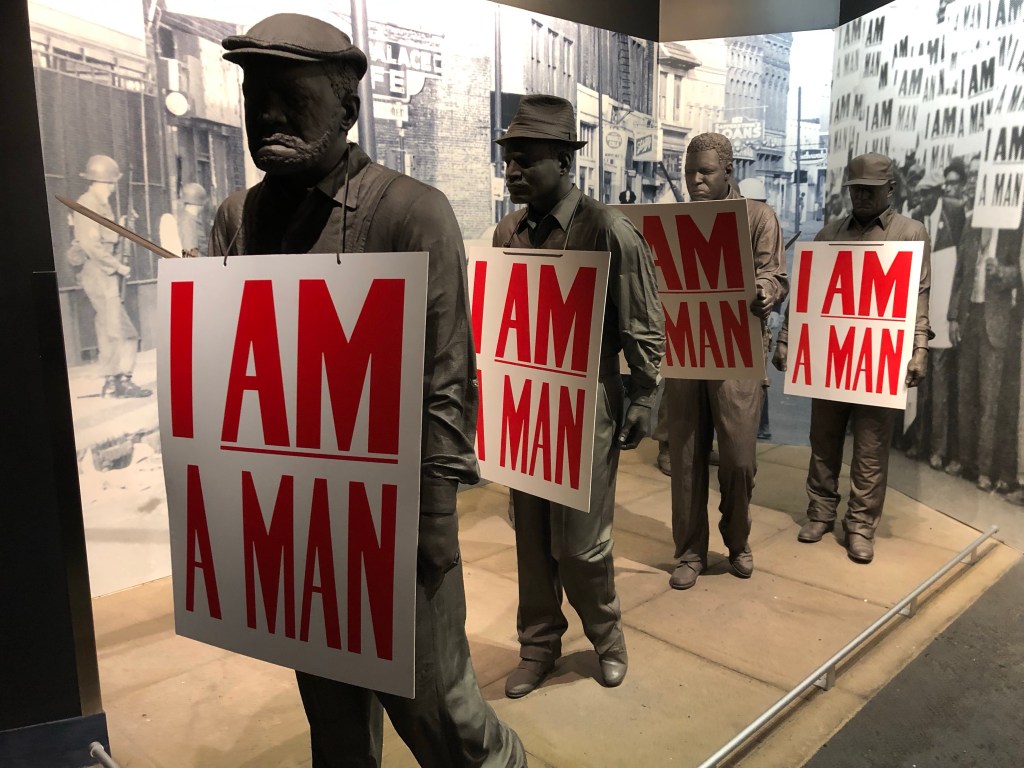
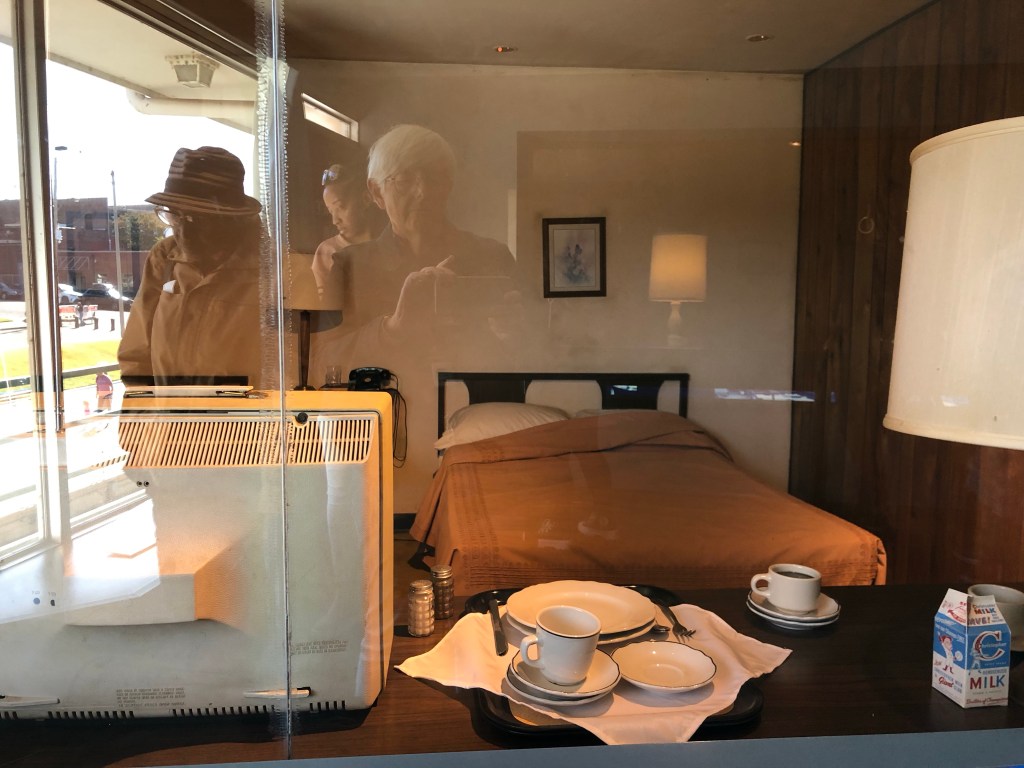
Martin Luther King Jr and Coretta Scott Kingat a meeting of the Southern Christian Leadership Conference (SCLC)Replica of the bus where Rosa Parks refused to give up her seat to a white passenger. Recreation of the lunch counter sit-in in Greensboro, North Carolina. Diane NashStokely Carmichael Julian BondThe Freedom RidersReplica of bombed bus carrying the Freedom RidersMug shots of some of the many non-violent protesters who marched, rode buses, participated in sit-ins during the 50’s and 69’s, and were jailed for it. Description of the prison experience of protesters sent to the Mississippi State Penitentiary This exhibit describes foreign reactions to the racial strife in America, and how it put pressure on the Kennedy Administration to make the country live up to its founding idealsIntegrating education was a major part of the civil rights struggle Music added courage and inspiration to the movement.Remembering the children killed during the bombing of 16th Street Baptist Church in Birmingham, AlabamaRecreation of the March on Washington in 1960 where Martin Luther King Jr delivered his “I have a dream” speechThis exhibit shows the shift in American politics during the civil rights era. Map on the left shows 1960’s electoral college results, and on the right, 1964’s. The standoff at the Elmer Pettus Bridge in Selma, Alabama during the first protest demanding the right to vote on March 7, 1965. The brutal attack on the protesters that followed became known as Bloody Sunday. A second March was held on March 9. Martin Luther King Jr had been called in to lead it. He tried to get a federal ruling to allow the march to proceed peacefully but was unsuccessful at first. He turned the march around at the bridge when the protesters encountered the police waiting for them again.Lyndon Johnson’s speech to Congress introducing the Voting Rights Act on March 15, 1965. The third March from Selma to Montgomery, Alabama began on March 21, 1965 and reached the Alabama State Capitol on March 25. The line of marchers was over a mile long. By this time King had secured a federal order protecting the protesters, who received an escort from the Alabama National Guard. This exhibit shows the dramatic increase in registered black voters after the passage of the Voting Rights ActThe struggle is not over. Significant present goals of Black Americans are featured in this exhibit. The Lorraine Motel section of the museum ends with Martin Luther King Jr’s last days. He was called to Memphis to support a strike by the city’s sanitation workers. The strike had been going on for a long time and no progress was being made in negotiations with the city. Workers were demanding a living wage and humane treatment. “I Am A Man” was their rallying cry. King arrived in Memphis on March 28, 1968 and stayed in this room, #306. On April 3 he gave the last speech of his life, his famous “Mountaintop” speech, to a packed hall at Mason Temple. He was shot on the balcony of this hotel room on April 4. He was 39 years old.









 Wanda Free
Leave a comment