Fifty years ago (!) I lived in northeastern Oklahoma for a few years. Since we were sort of in the neighborhood, having just experienced the eclipse in Atkins, Arkansas, I wanted to spend a few days visiting old haunts in the area. Our travels took us to Beaver Lake in the northwest corner of Arkansas, and then to Skiatook Lake, just south of Bartlesville, Oklahoma, my home from 1974 – 1978.
Beaver Lake
This US Army Corps of Engineers reservoir project is situated roughly between the towns of Rogers to the west and Eureka Springs to the east. The dam that created the lake is on the eastern end of the reservoir, near Eureka Springs. It was built between 1960 – 1966, and was quite new when I lived in the area and visited the lake on weekends. The project included water supply for the region in Arkansas, as well as recreational features like campgrounds, marinas, hiking trails, and beaches. During the 1970’s it was very popular with campers, boaters, and fishermen (and women), and was usually very busy during summer weekends.
Our return trip to Beaver Lake revealed that it is still very popular, and filled up on weekends, at least at this time of year. We discovered that the water level is not what it used to be, probably due to a combination of climate change impacts and increased demand on the water supply. The facilities are also in need of tlc, although they were functional and clean.
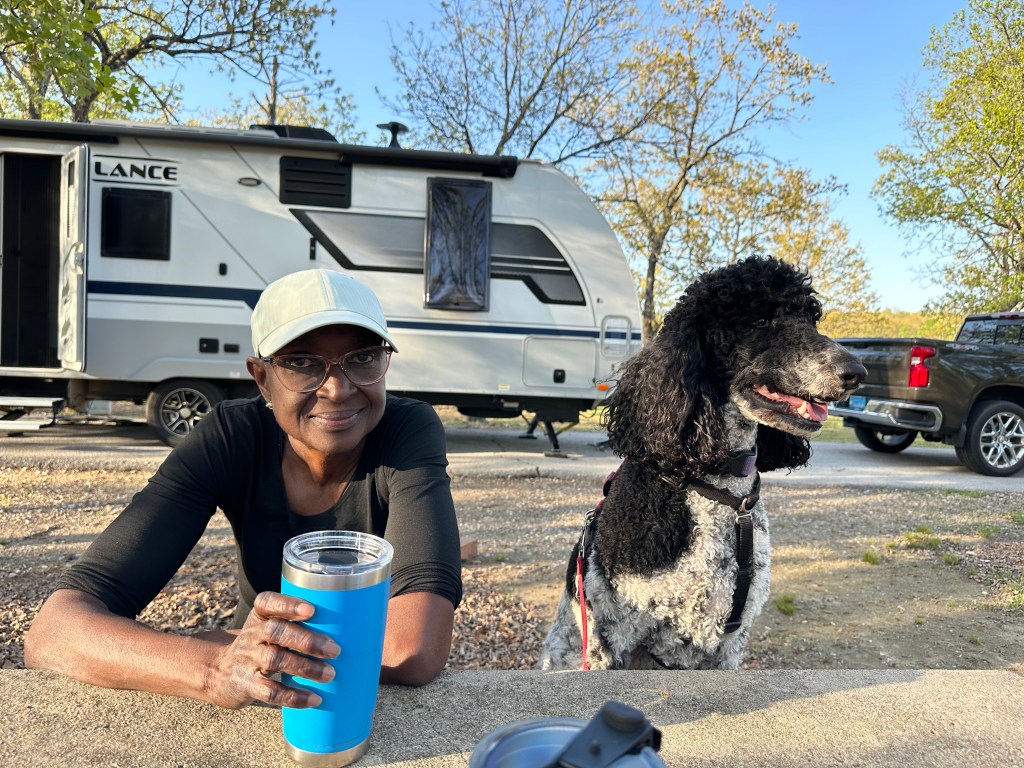
Here’s Wanda 2 parked above the current shoreline at Horseshoe Bend campground. You can see where the shoreline maxed out in prior years.

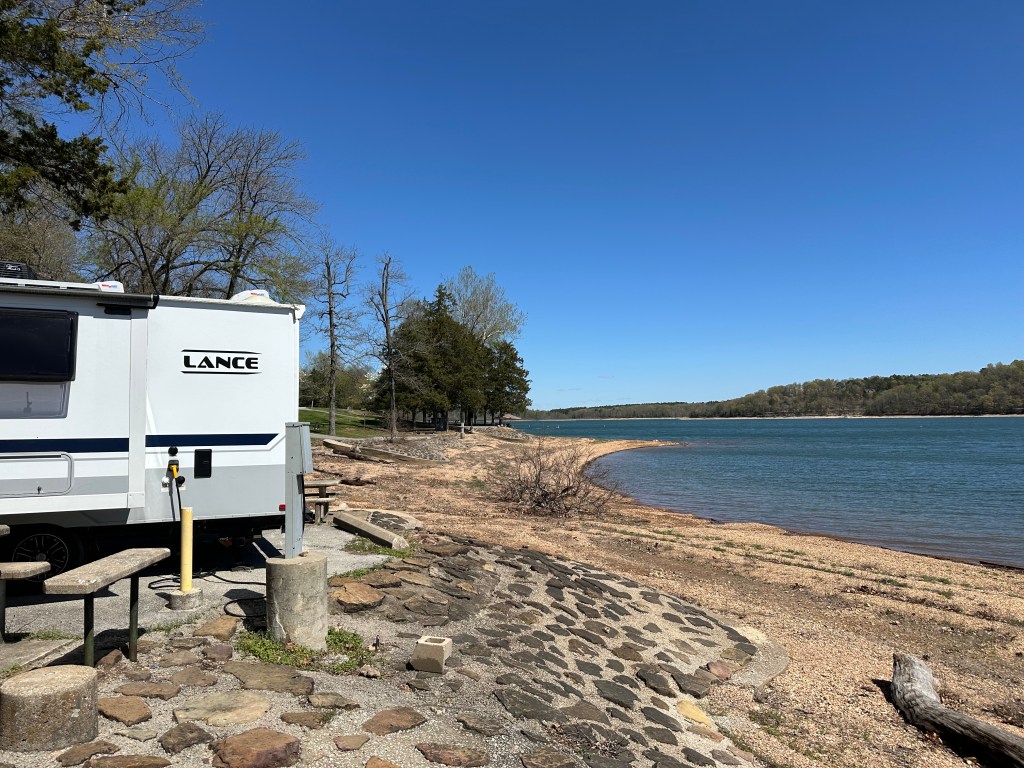
Horseshoe Bend Campground was our home base for a few days of exploring the area. We spent a day in Eureka Springs and another in Rogers / Bentonville.
Eureka Springs
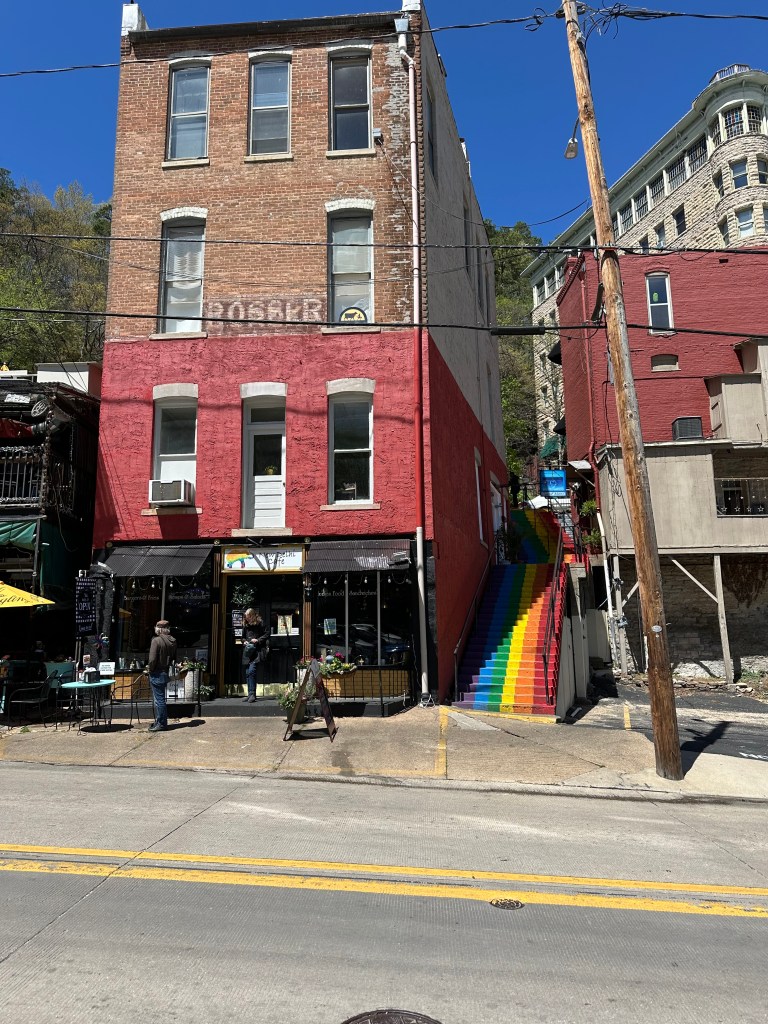
We spent our first day exploring the quirky little town of Eureka Springs, on the opposite end of Beaver Lake from where we were staying. Beaver Lake is sizable, making the drive to Eureka Springs a 45-minute trip. It’s a pretty drive through the countryside, with forests surrounding the road most of the way.
Upon arriving in Eureka Springs, I saw that it was pretty much the same as I remembered it from long ago. While in the 1970’s the remnants of 1960’s counter culture dominated the scene, today there are a variety of shops and restaurants that appeal to more modern tastes. The architecture and the layout of the town are pretty much unchanged. The town climbs a series of steep hills and is home to several natural hot springs. The springs were used as a healing center by several Native American tribes. In the 19th century the healing properties of the springs attracted a growing population of European Americans, and a town was built up starting in 1879, establishing the Victorian architecture that still dominates today.
The entire town was placed on the National Register of Historic Places in 1970. This has no doubt helped to preserve the original buildings and geography of the place.


Rogers / Bentonville
These towns are the complete antithesis of Eureka Springs. They have changed so much over the past 50 years that they are unrecognizable. The reason for this is the explosive growth of the Walmart company. Sam Walton’s original discount store was located in Rogers, and was in operation when I used to visit the area in the 70’s. I might have even stopped in, I don’t remember. But as the company grew, the town grew along with it. Today it is a bustling place with shopping centers, hotels, restaurants, cultural venues, and neighborhoods of large new homes.
Walmart’s corporate headquarters remains in Bentonville. I actually returned there during the 1990’s to do some technical training for some of their staff members. I remember the building I visited dominated a landscape of primarily farms and churches. Today the area is so built up that the headquarters is unremarkable in the midst of it.
Crystal Bridges
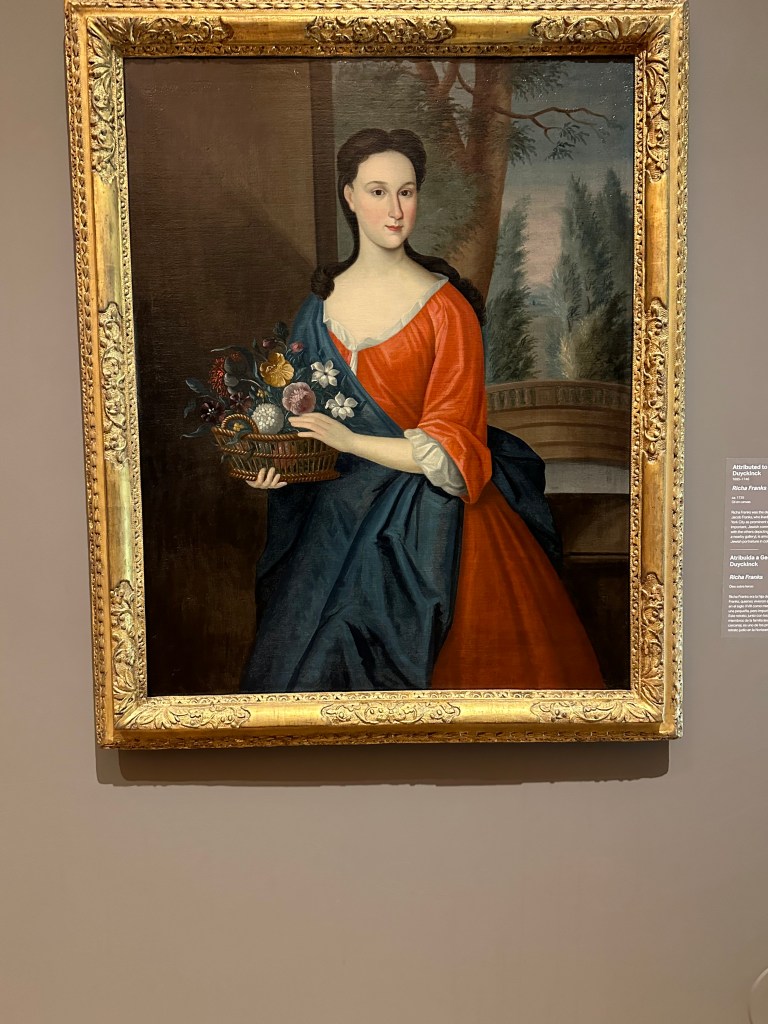
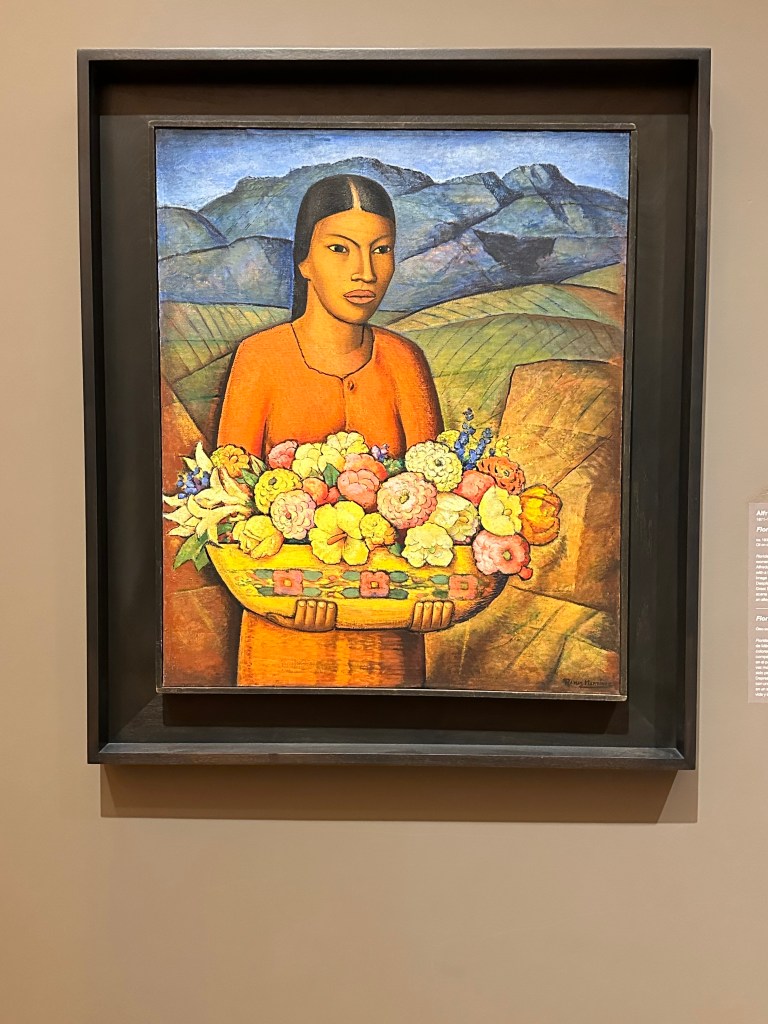
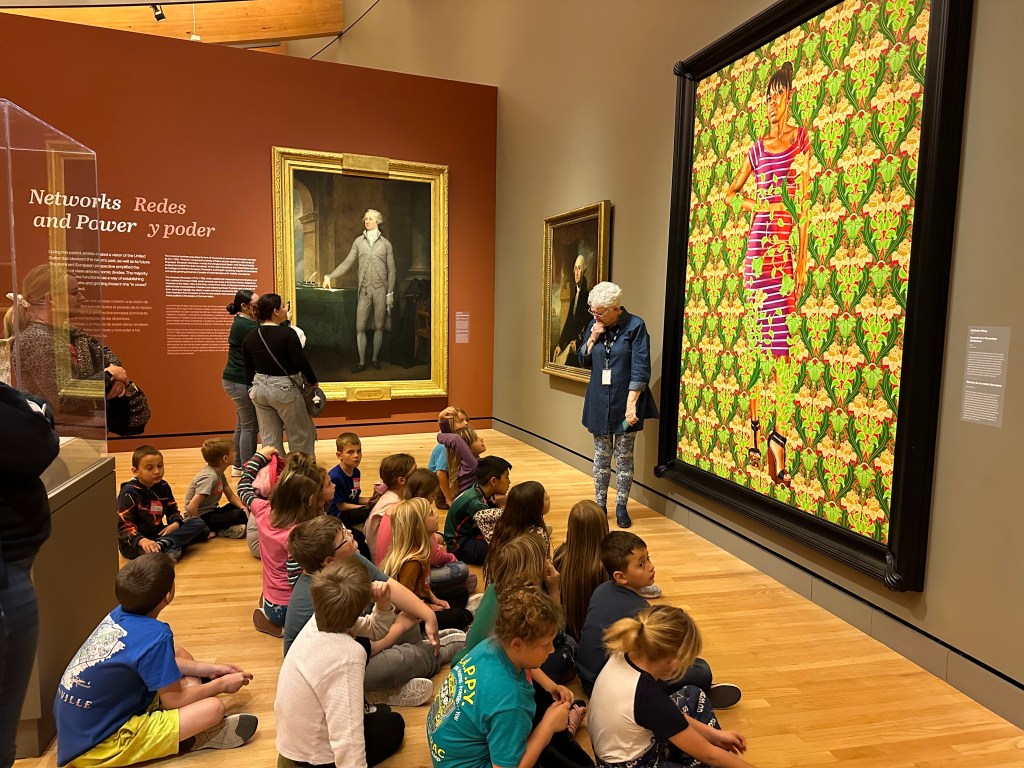
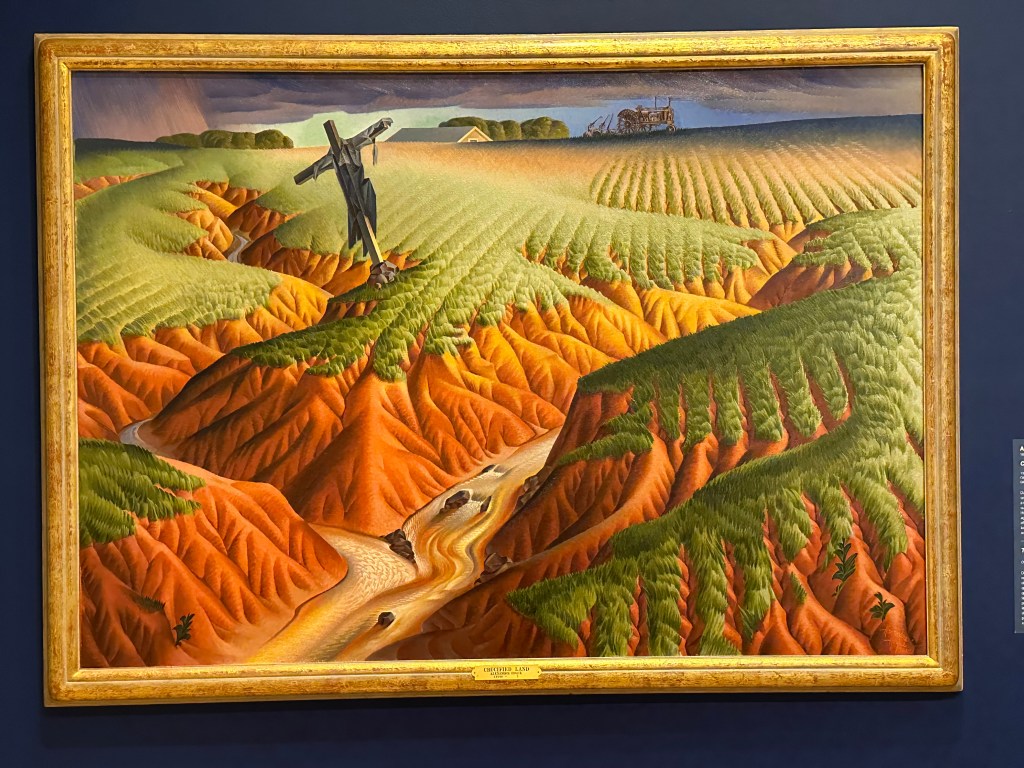
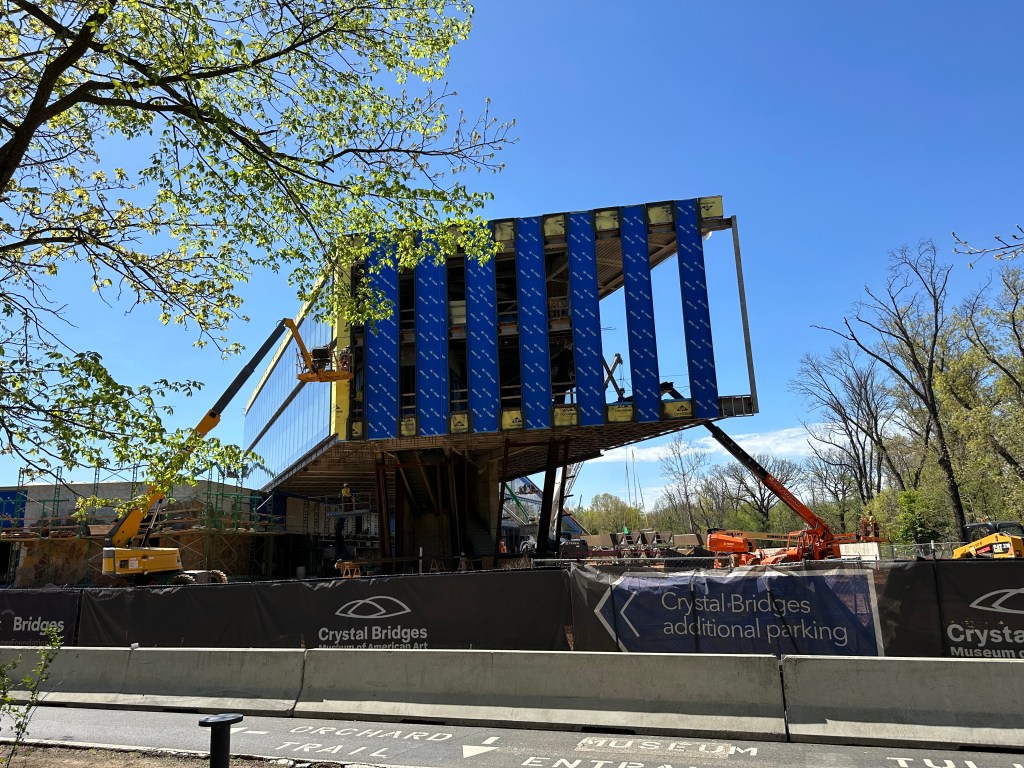
The crown jewel of Bentonville is the Crystal Bridges Museum complex. This beautiful art museum and cultural center was founded by Alice Walton, daughter and heir of Sam Walton. It brings an incredible collection of art work, much of it collected by Alice Walton personally, to the surrounding area of the Ozarks.

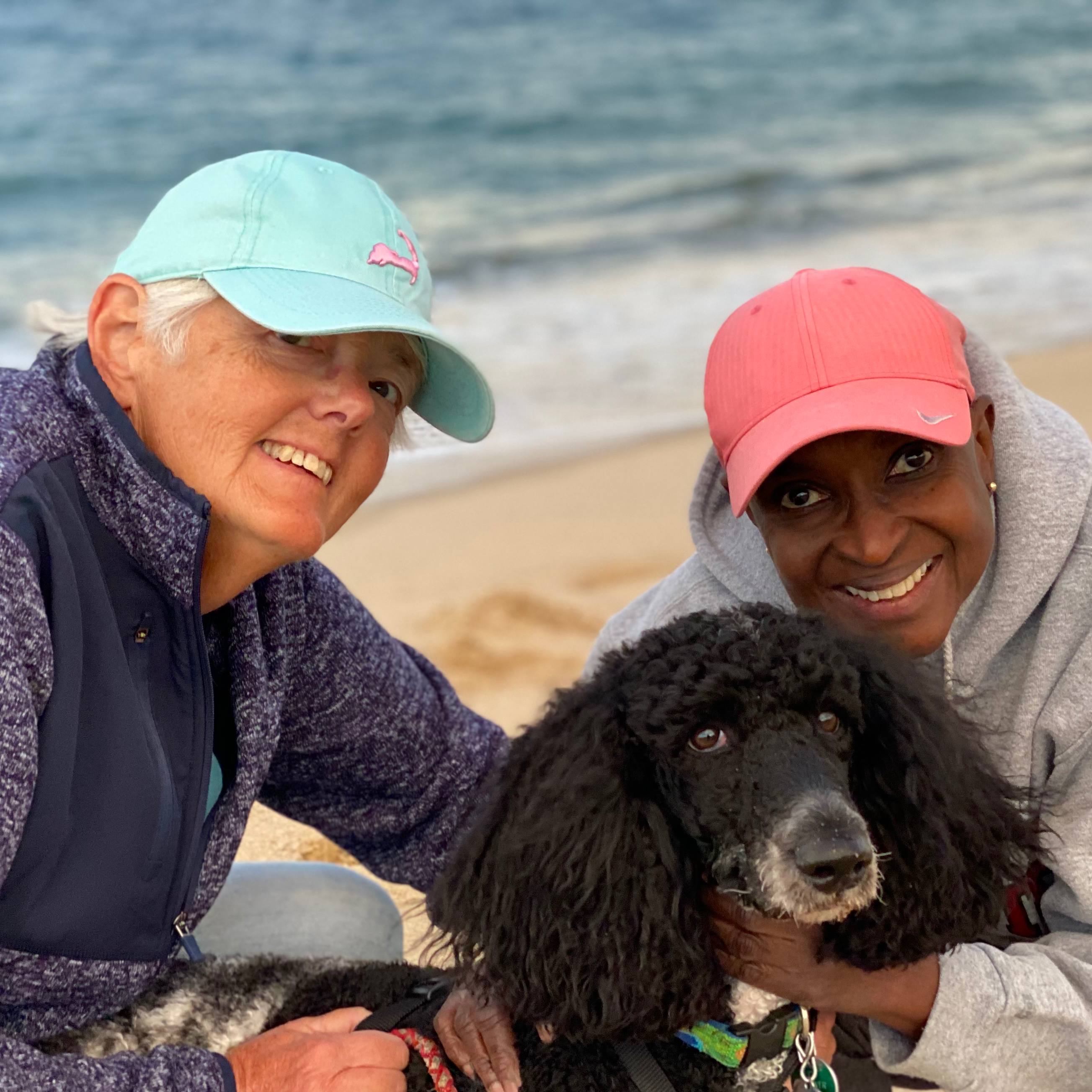
The museum has an extensive collection housed both indoors and outside on the grounds. We appreciated that Gracie was encouraged to enjoy the outdoor exhibits with us.

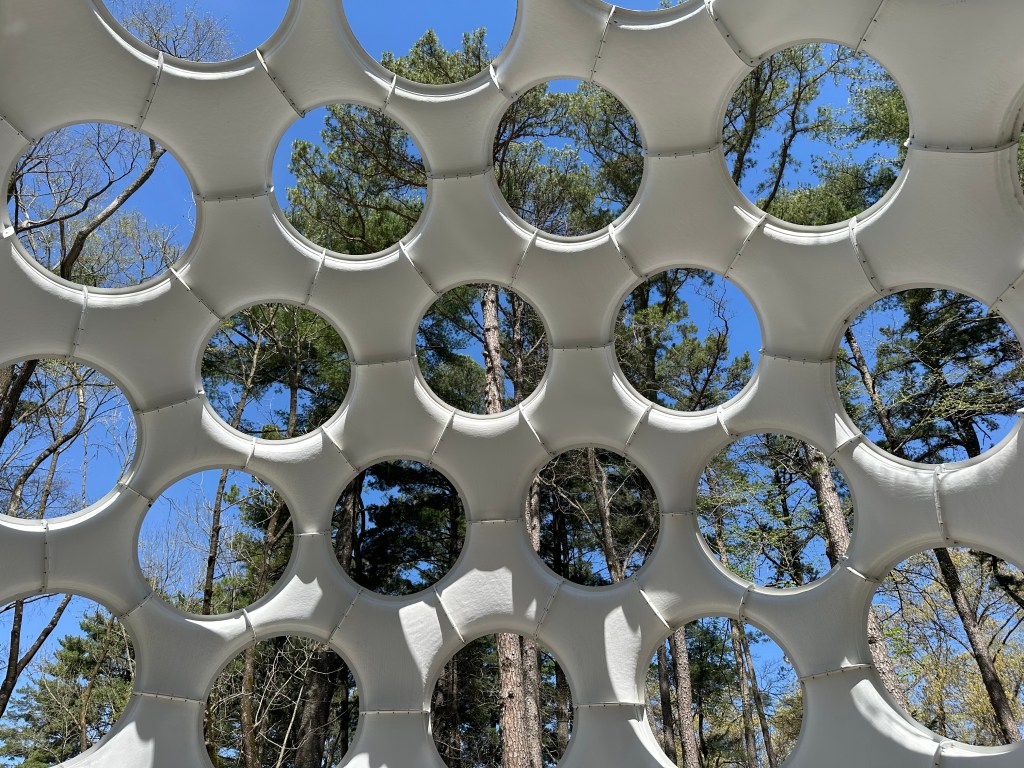


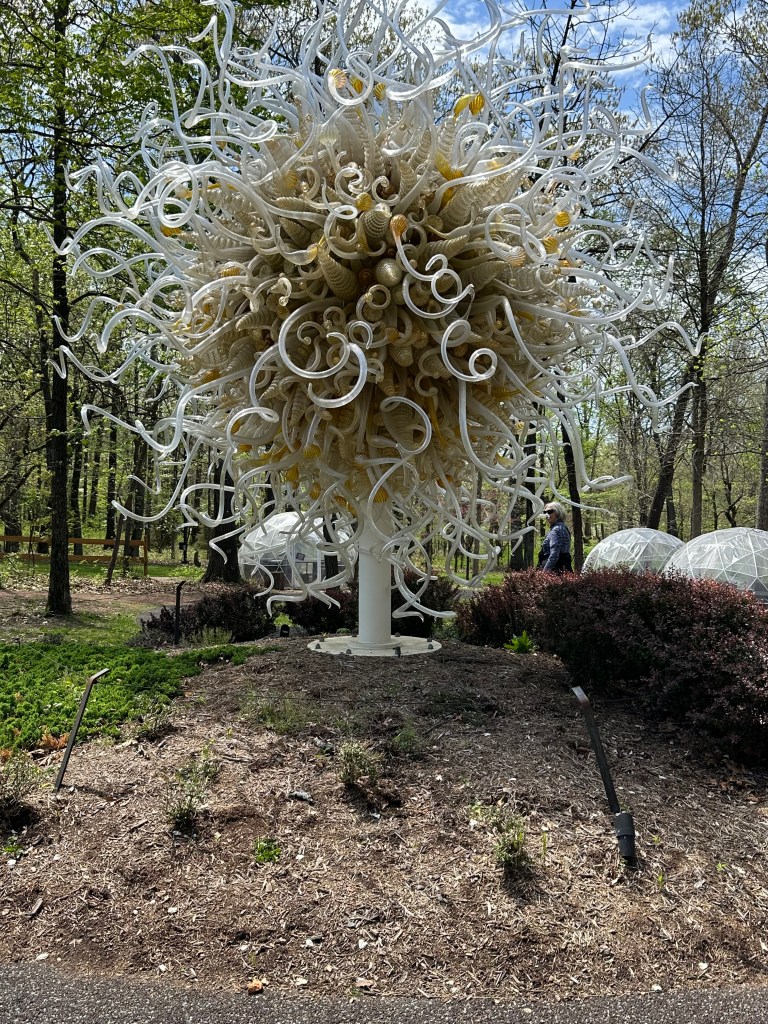
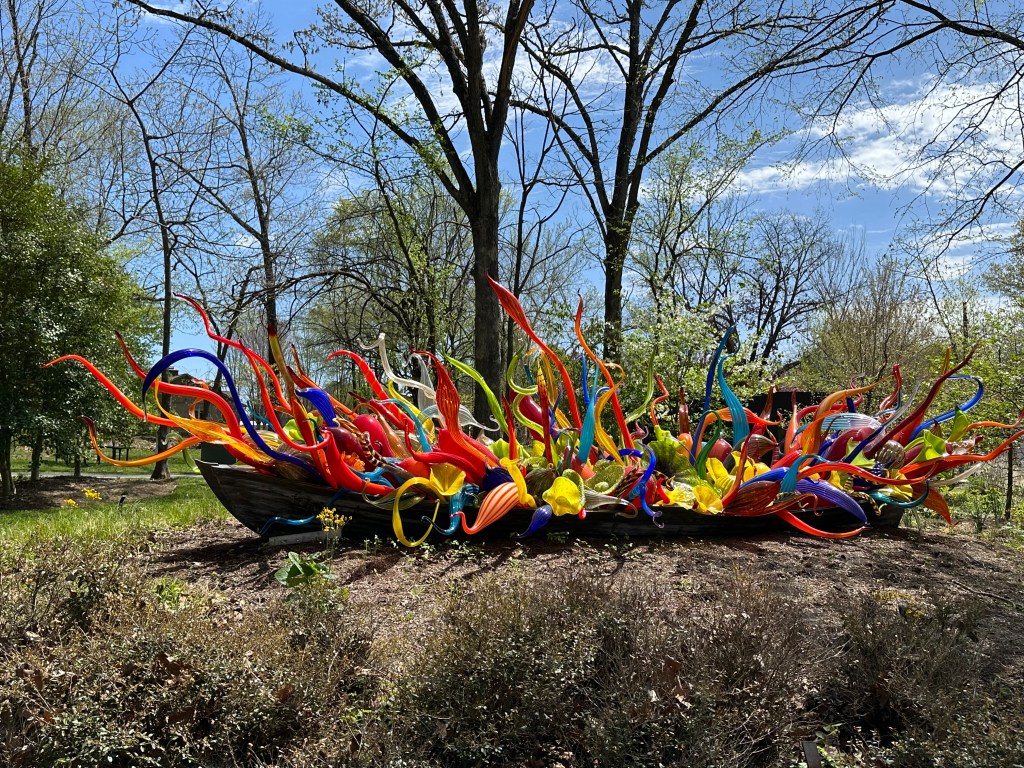
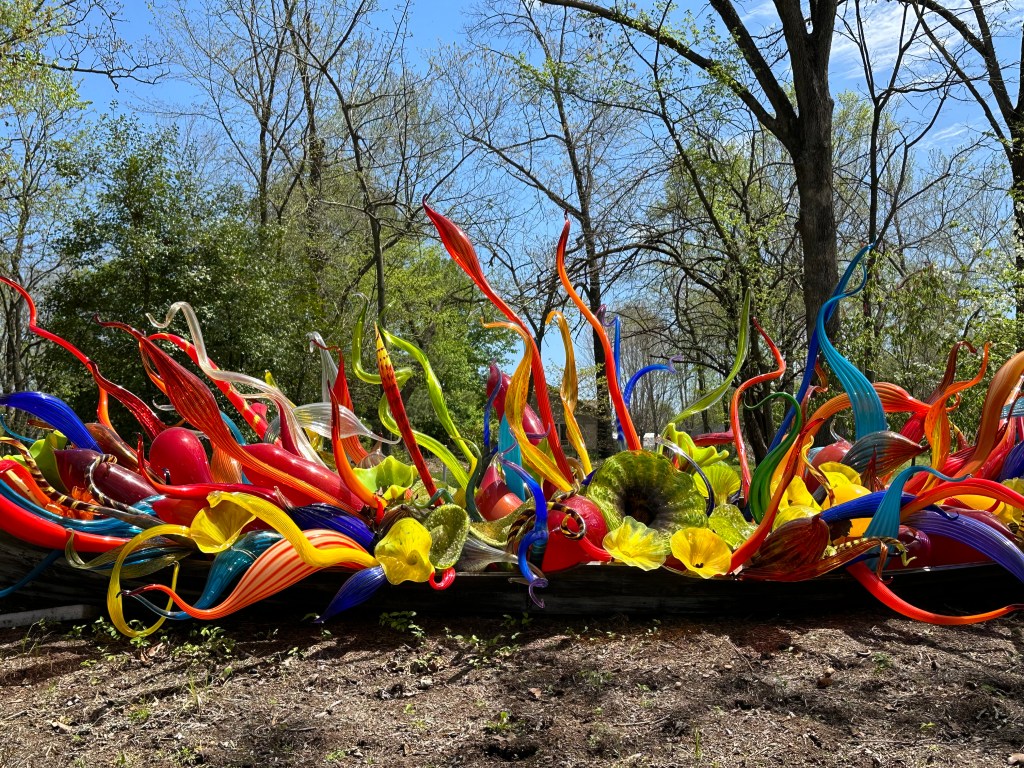

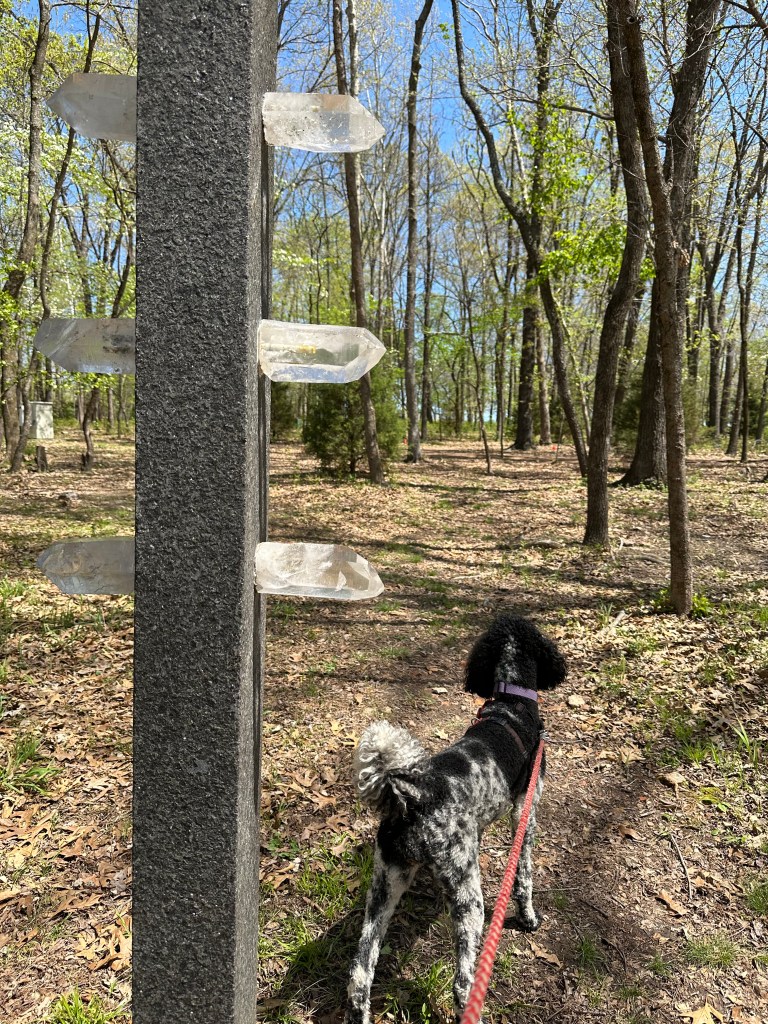
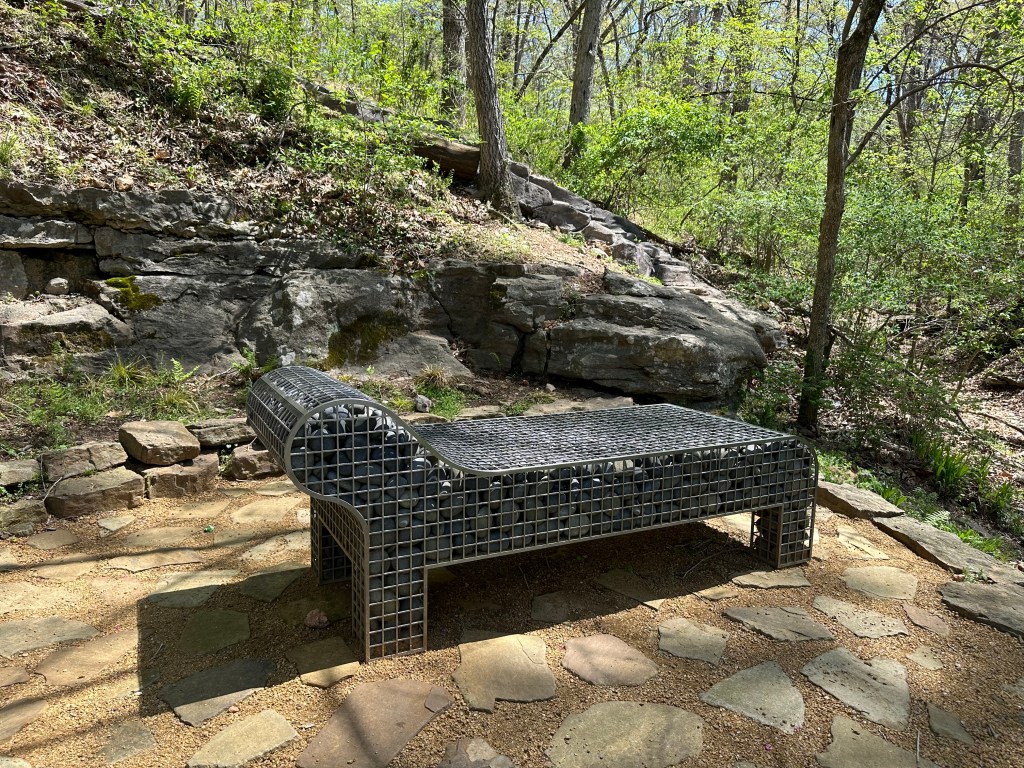

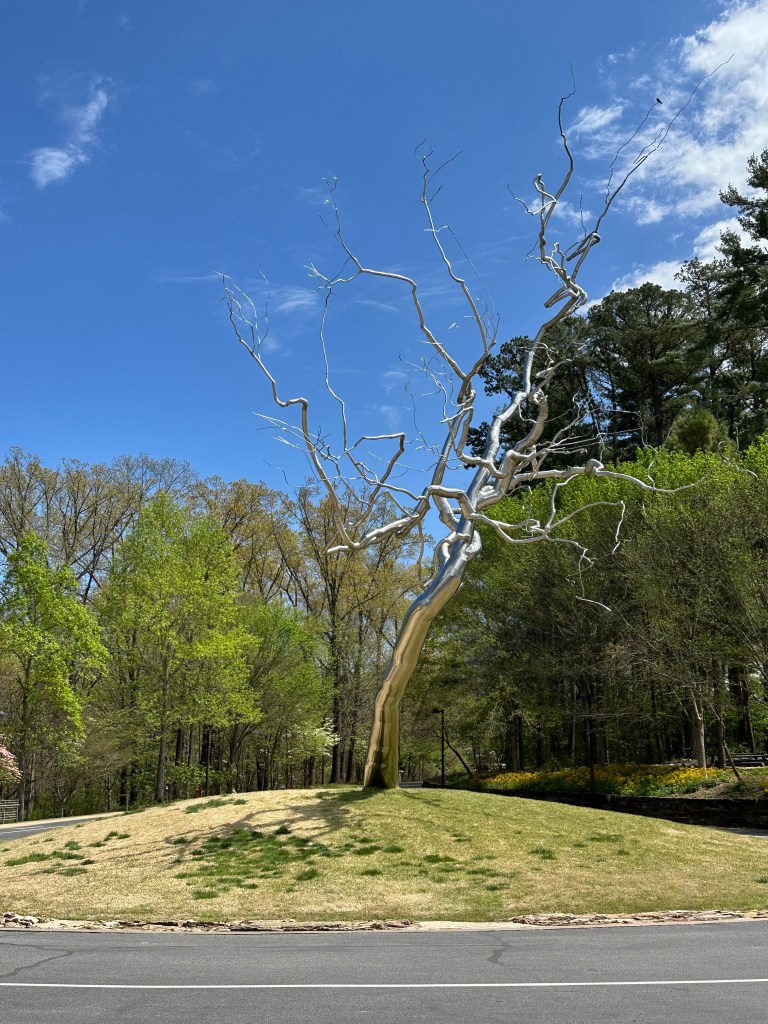
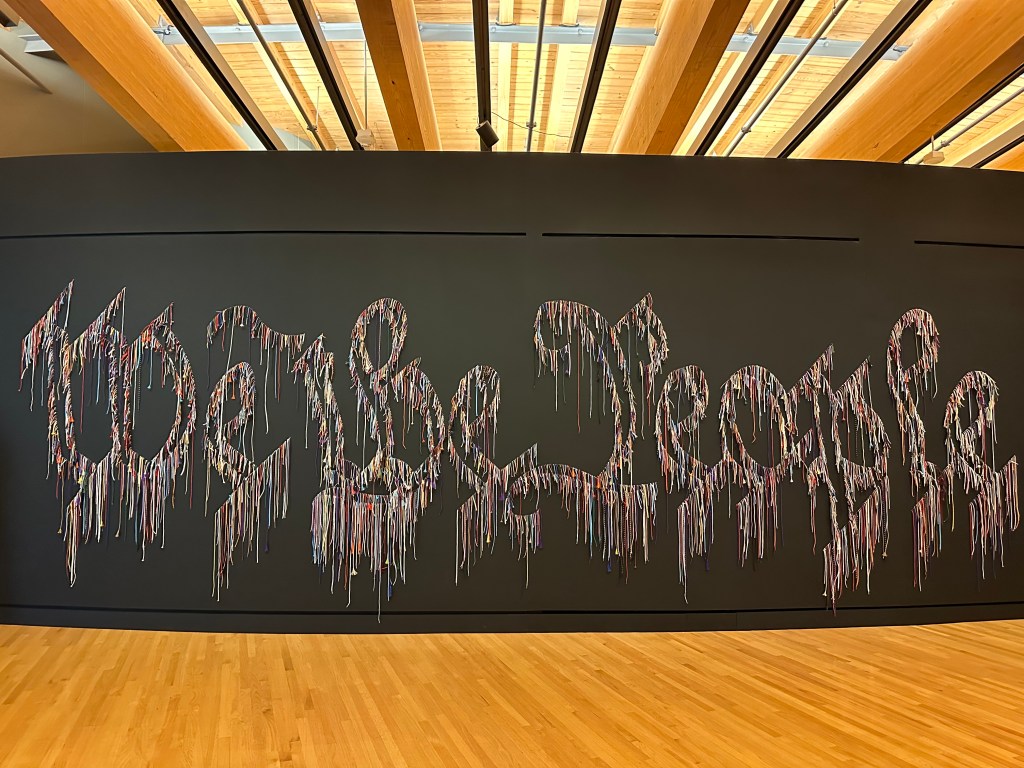
Since we couldn’t bring Gracie inside, Des and I took turns going through the indoor museum. There are many galleries and I couldn’t get through them all. I did see a wide range of artworks in my allotted half hour though!



Oklahoma
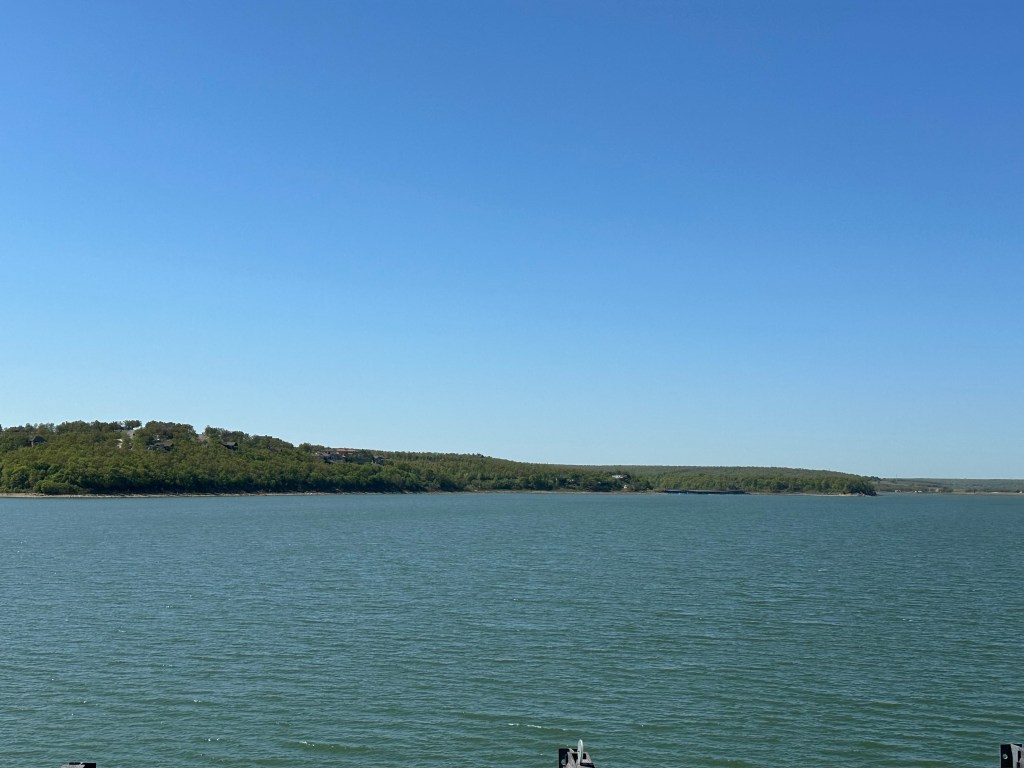
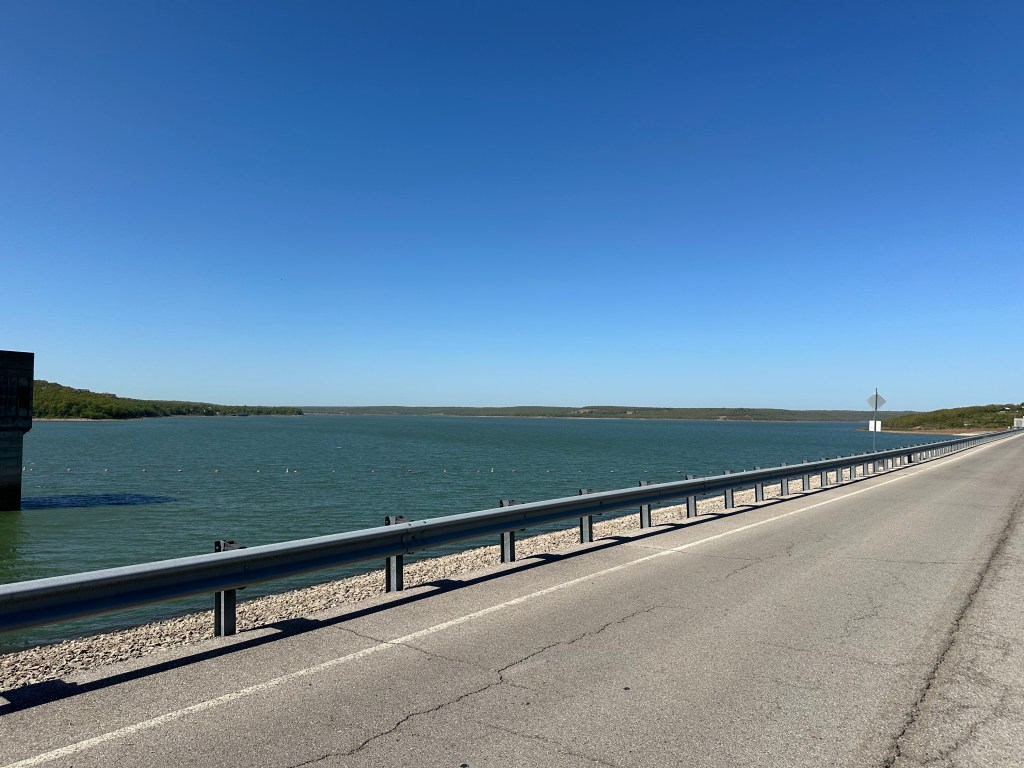
Our next stop after leaving Beaver Lake, Skiatook Lake, is another Army Corps of Engineers project. It provides similar benefits to northeast Oklahoma: water, recreation, flood control. Although I never went there while I was living in the area, as it was under construction most of that time, the location fit nicely into our itinerary.
Bartlesville
We took a drive up to Bartlesville after setting up camp at Skiatook Lake. I was able to find the house where I had lived and the church where I studied the organ. And the iconic Price Tower, architect Frank Lloyd Wright’s only skyscraper. The town has undergone a lot of change since I left, though, and it was disorienting to try to find my way around.
When I lived there, Bartlesville was the world headquarters of Phillips Petroleum Company, and it thrived in that role. But Phillips Petroleum merged with Conoco in 2000 and the company headquarters was relocated to Houston. Bartlesville still seems to be in recovery mode.
Woolaroc
One of the pleasures of living in Bartlesville was visiting the Woolaroc Museum, located just a few miles outside of town. Woolaroc (named for the woods, lakes and rocks that dominate its environment) was the ranch home of Frank Phillips, the founder of Phillips Petroleum and a very colorful character from Oklahoma’s pre-statehood days. Uncle Frank, as the locals affectionately called him, was a passionate collector of just about anything that had to do with the “old west”. He established the Woolaroc Museum to house his eclectic collections and to share them with the public. (We noted with pleasure that the “public” includes dogs! Gracie was a model visitor).
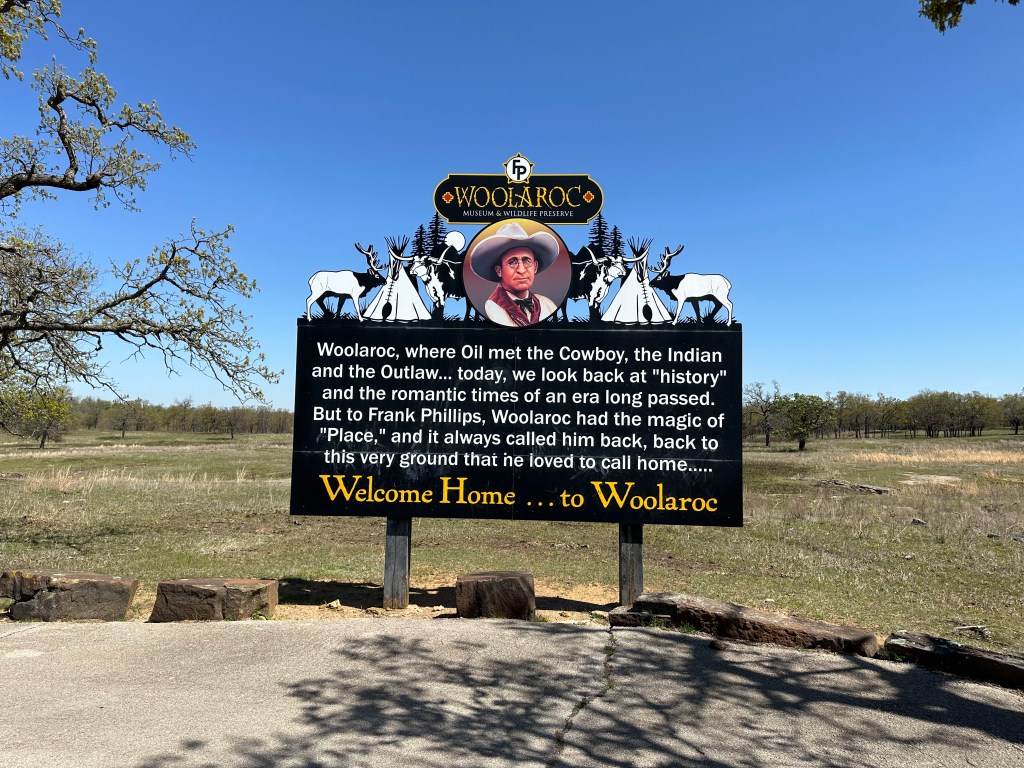
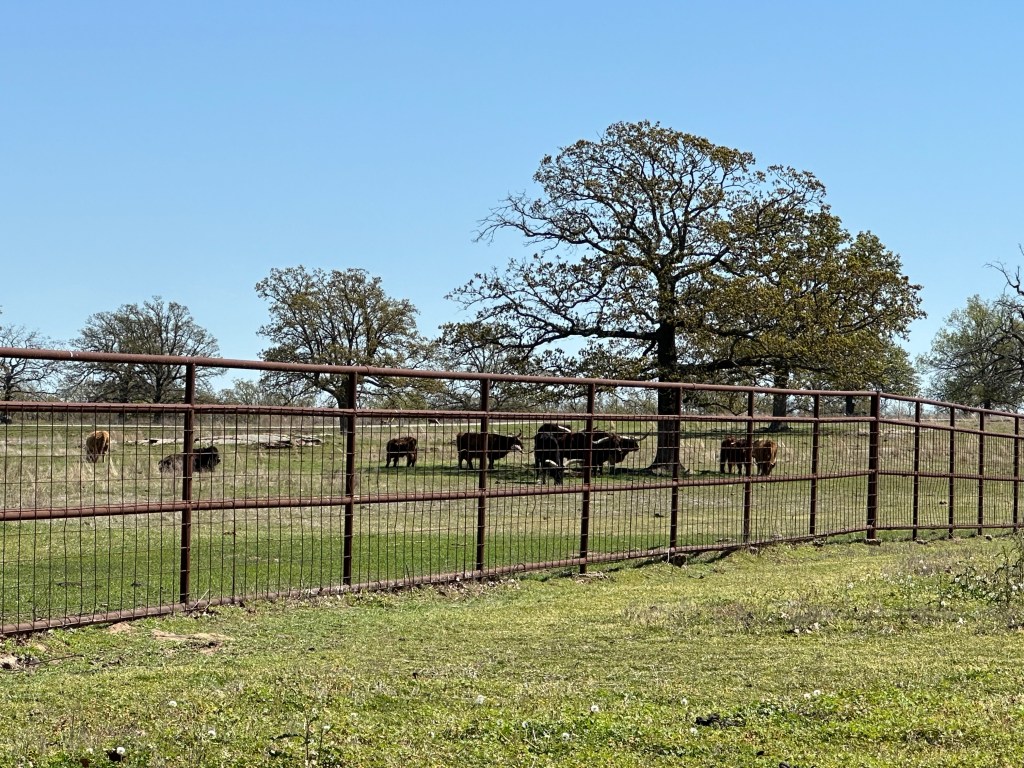
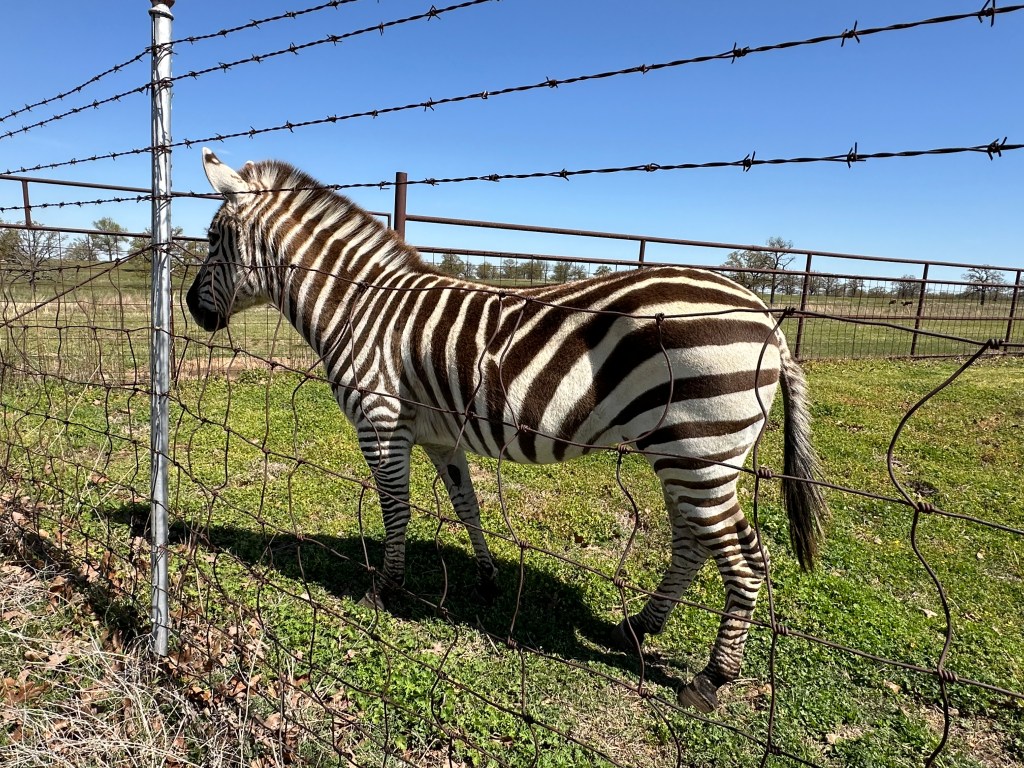
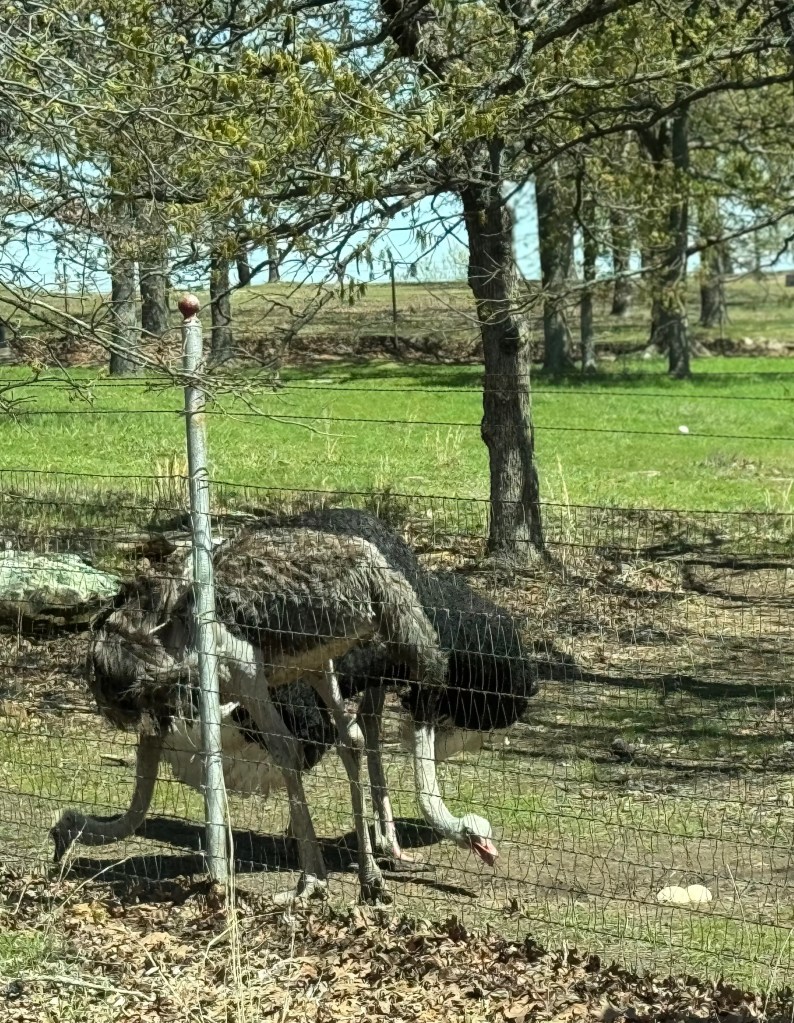


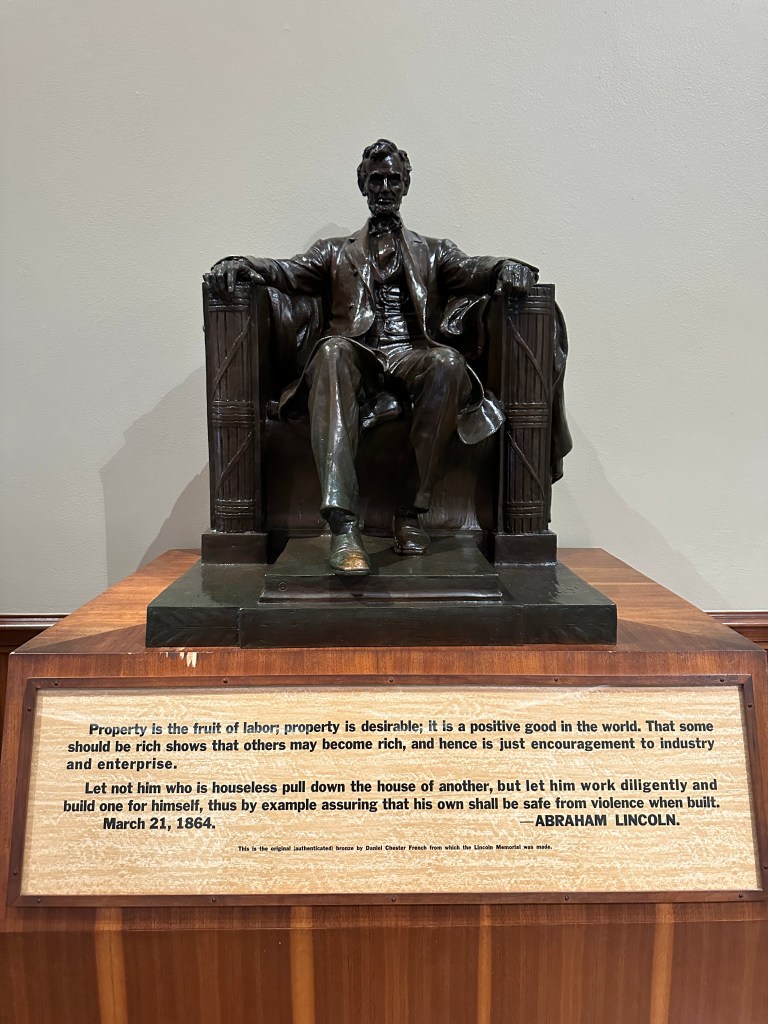
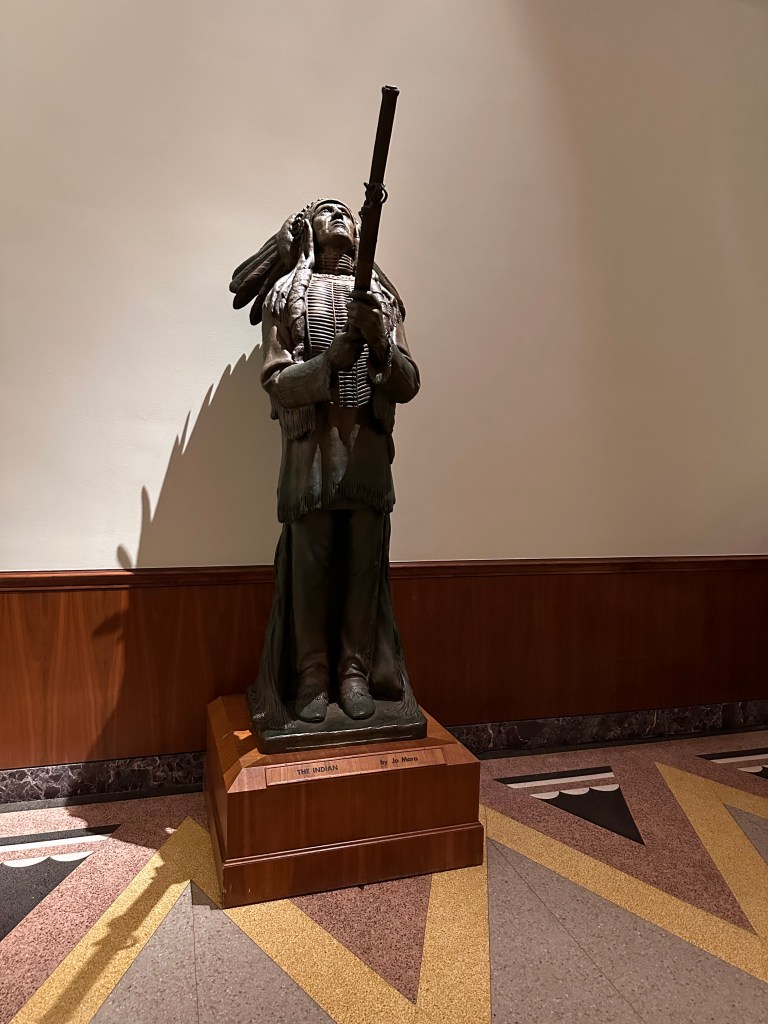

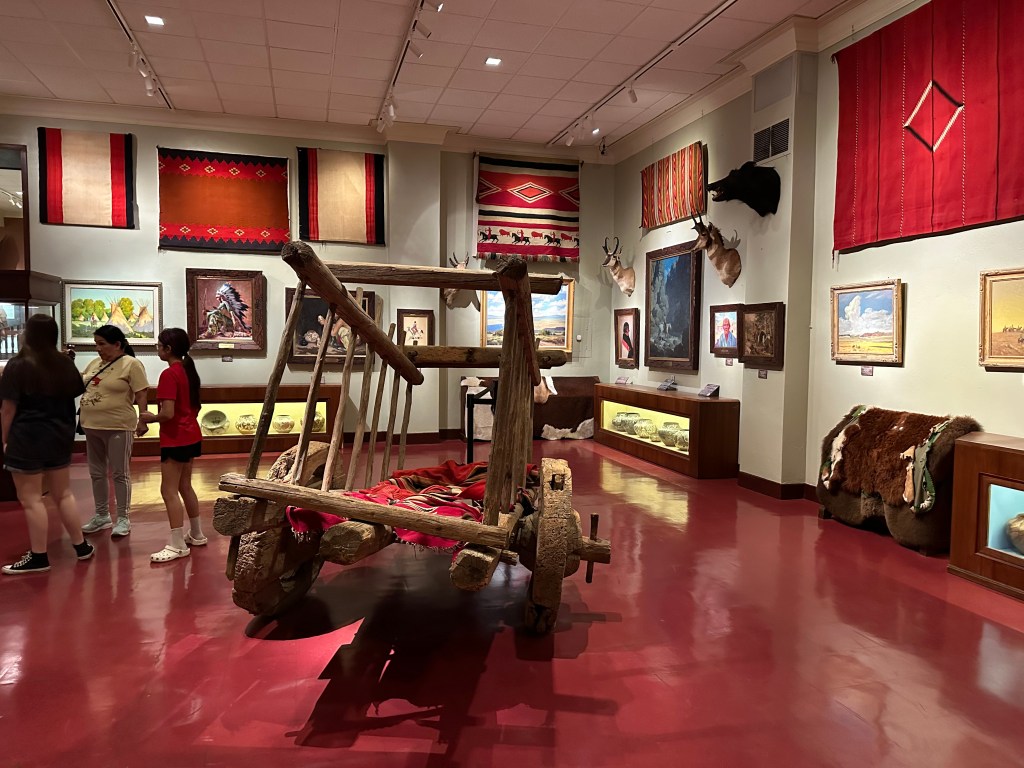
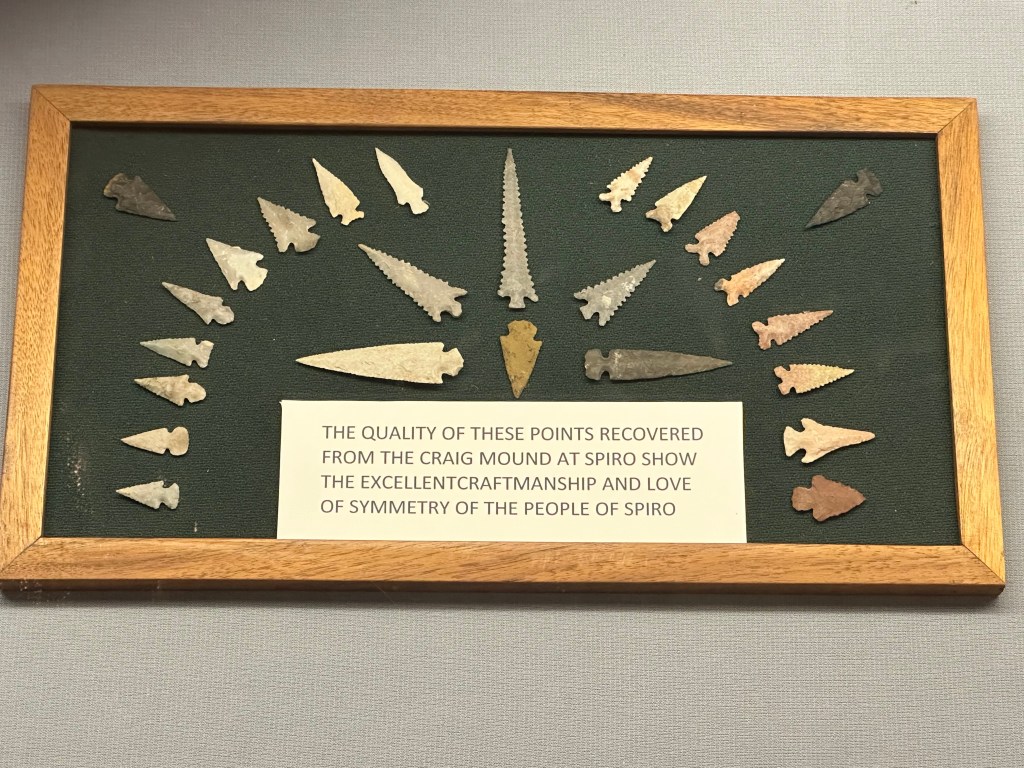


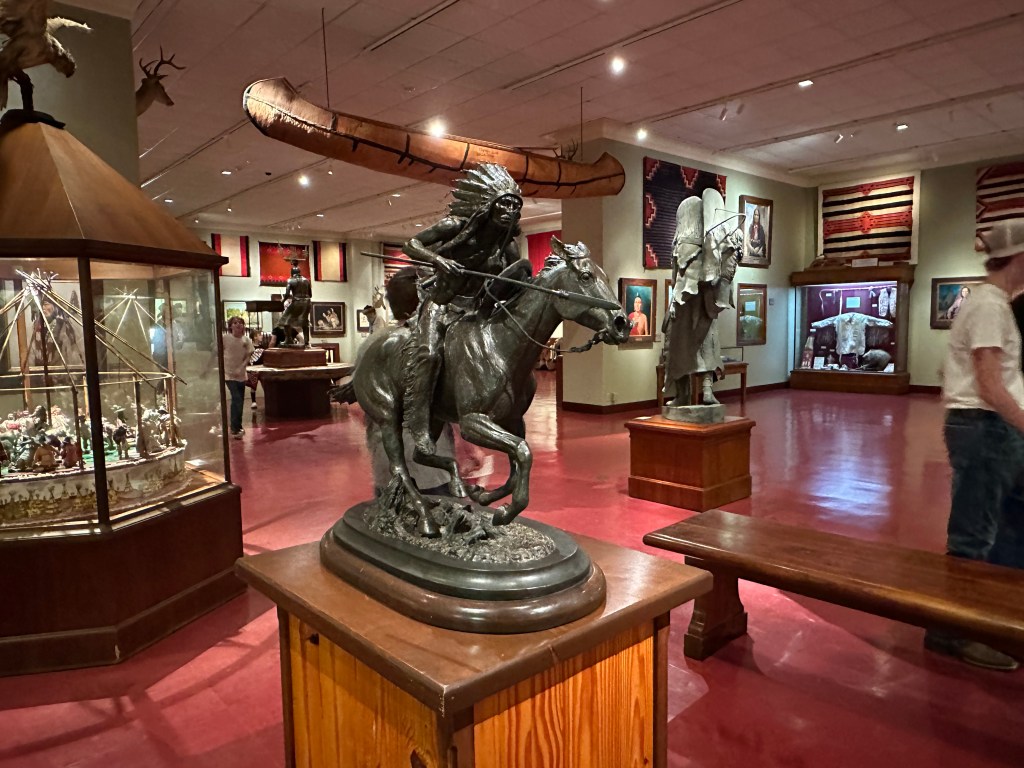
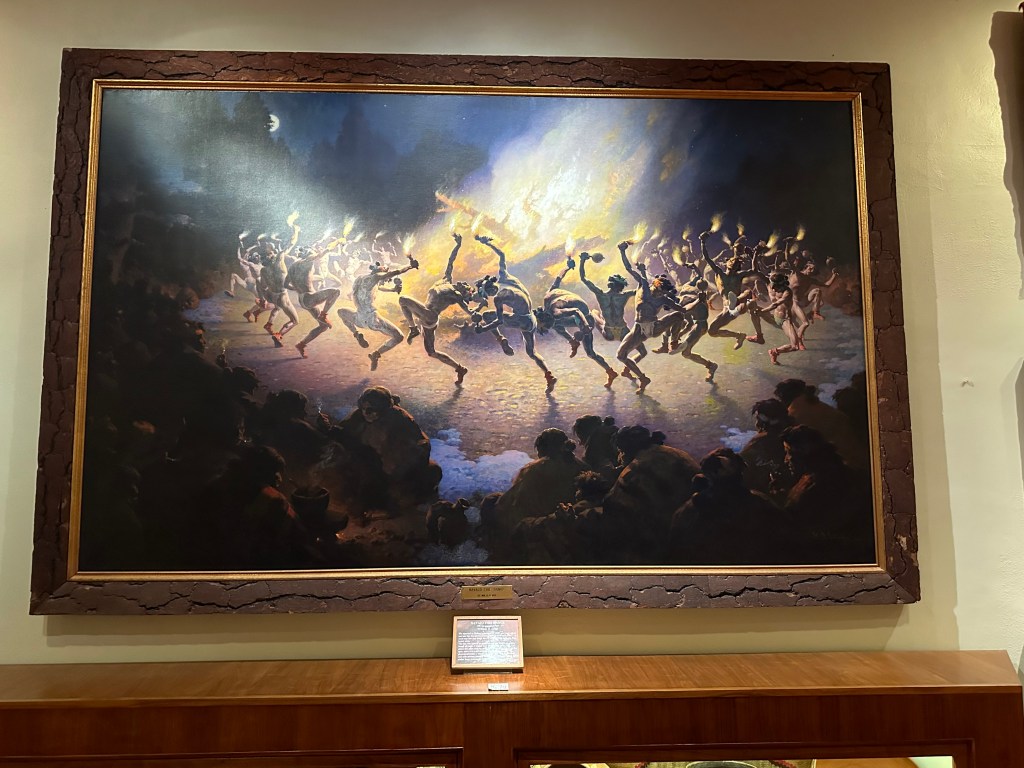


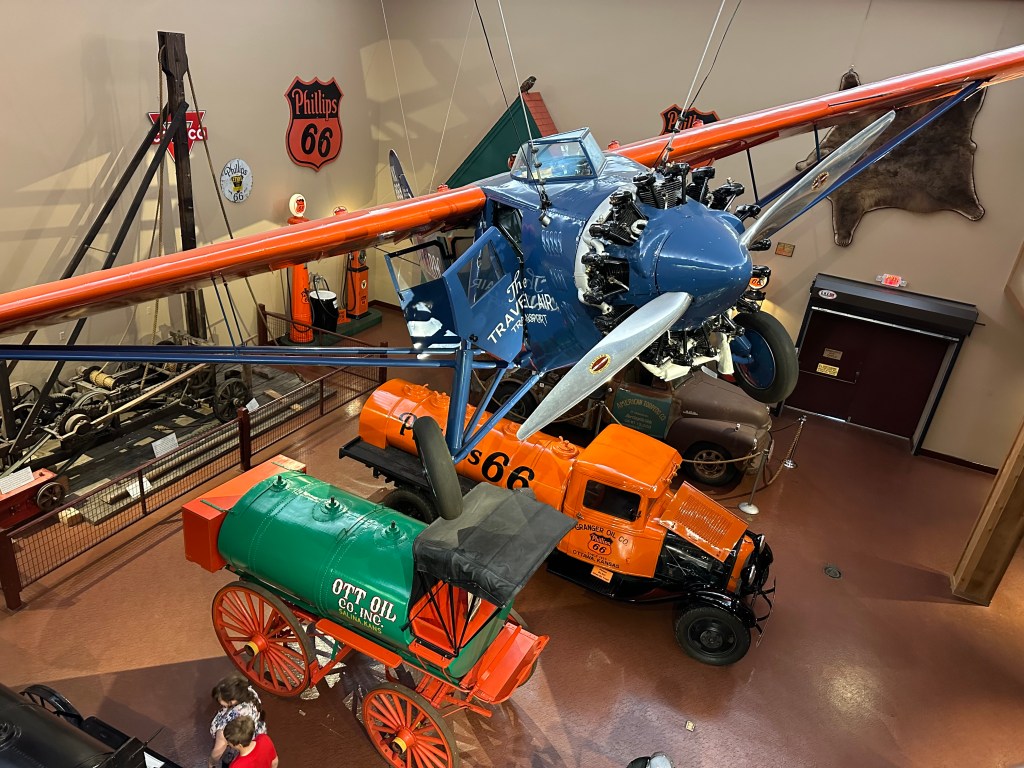
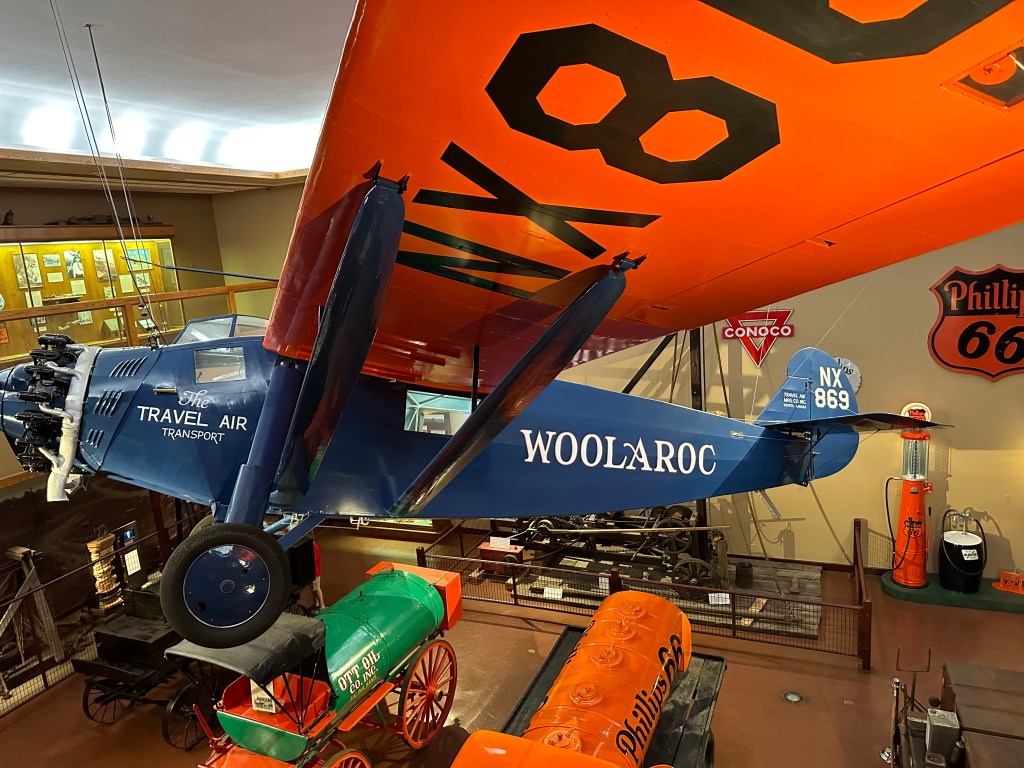
The Woolaroc Museum began as a hangar for the Woolaroc airplane sponsored by Frank Phillips that won the Dole Air Race from Oakland, California to Honolulu in 1927. Here is the Woolaroc, now sharing space with other examples of historical transportation.

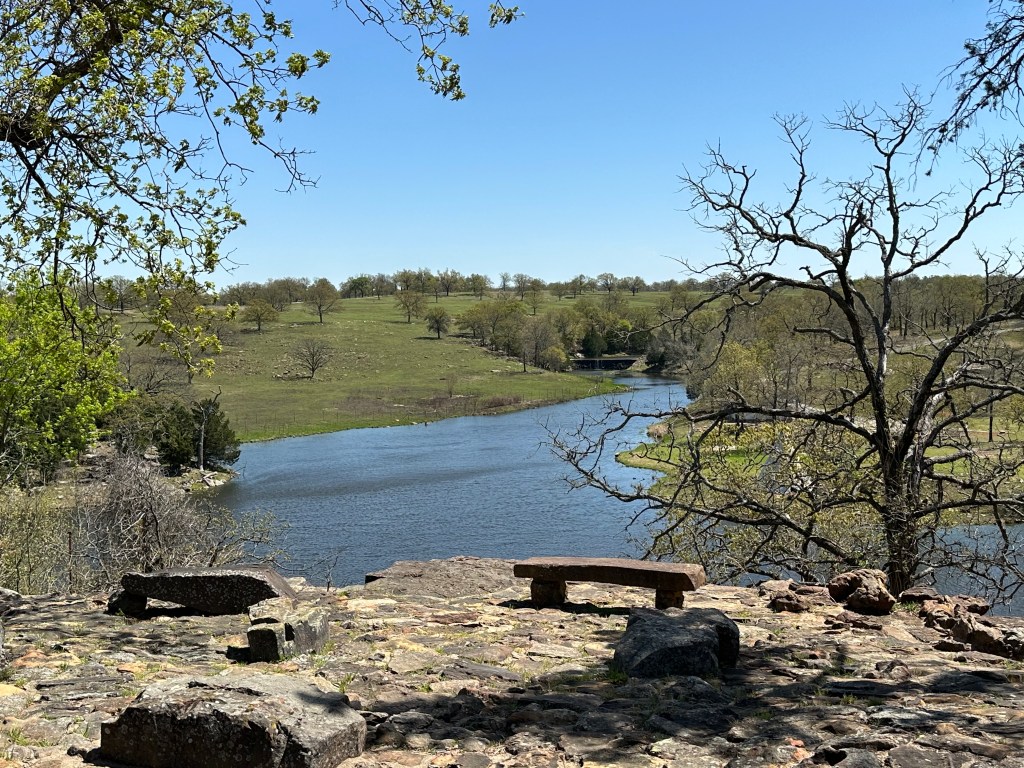
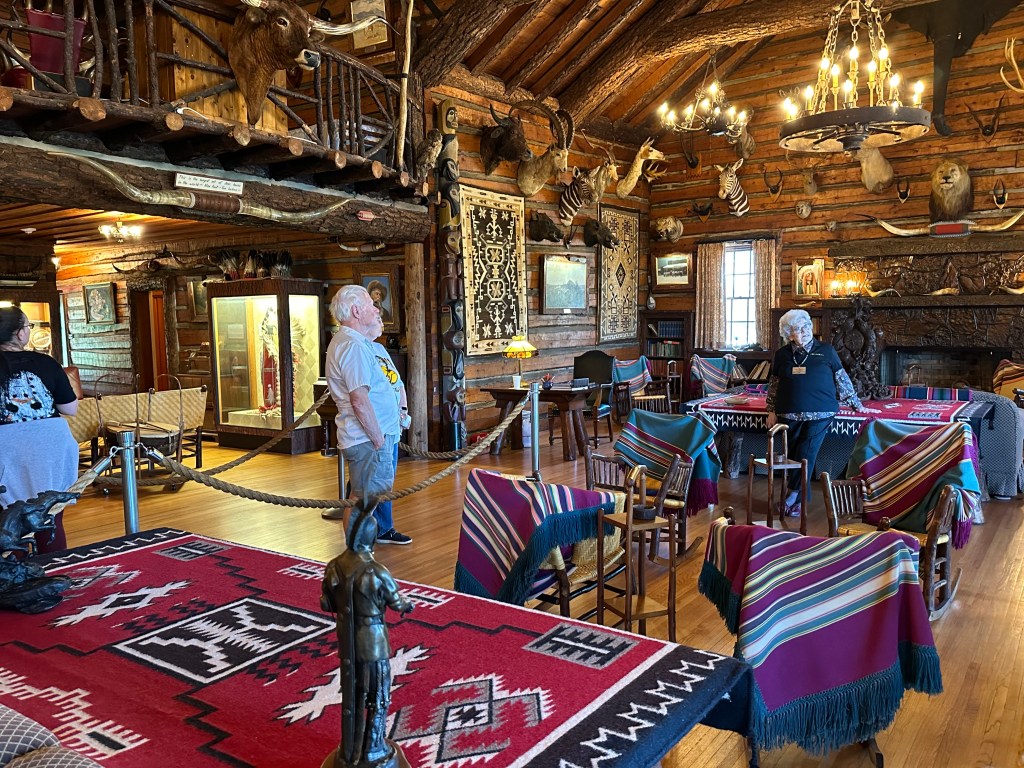
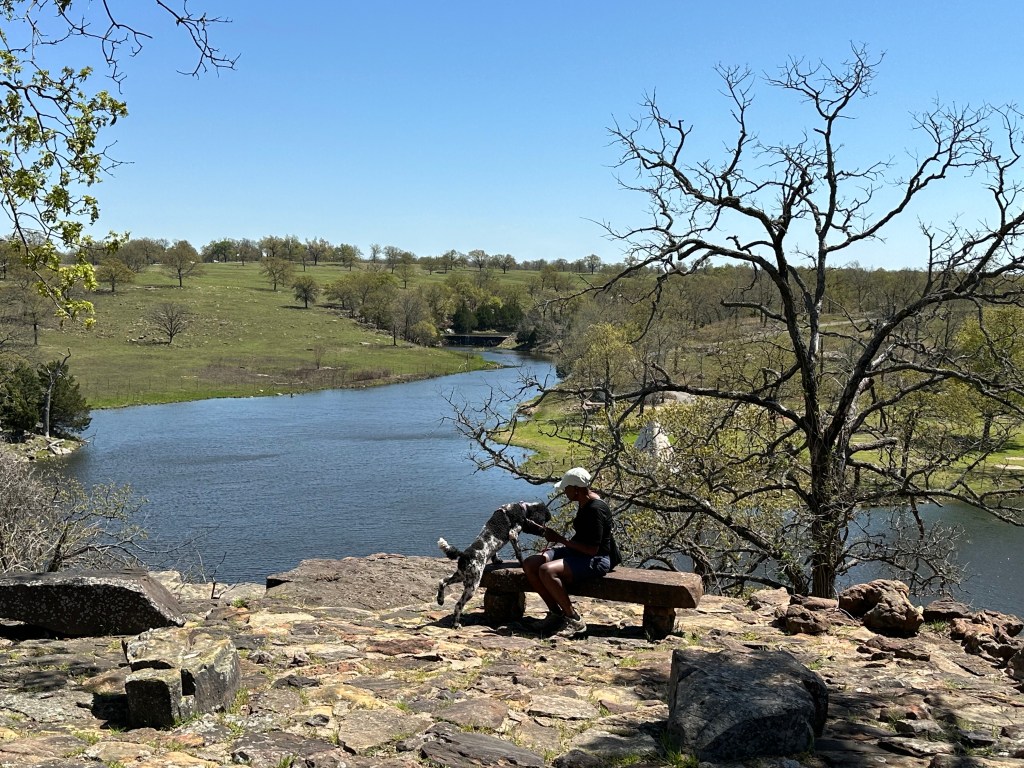
Frank Phillips’ lodge is on the grounds of the Woolaroc estate. It is set on a cliff overlooking a small lake. Uncle Frank used it as a retreat and as a place to entertain guests. It is rustic, romantic, and full of treasures.



 Wanda Free
Leave a comment