Welcome to our journeys! To follow along, type your email in the box below and click the “Subscribe” button.
Day 20 – Water, wood and music
It’s a given that when your tour follows a river there will be water experiences. We had a great one today. We also had some surprising ones involving things we both love. What a great day!
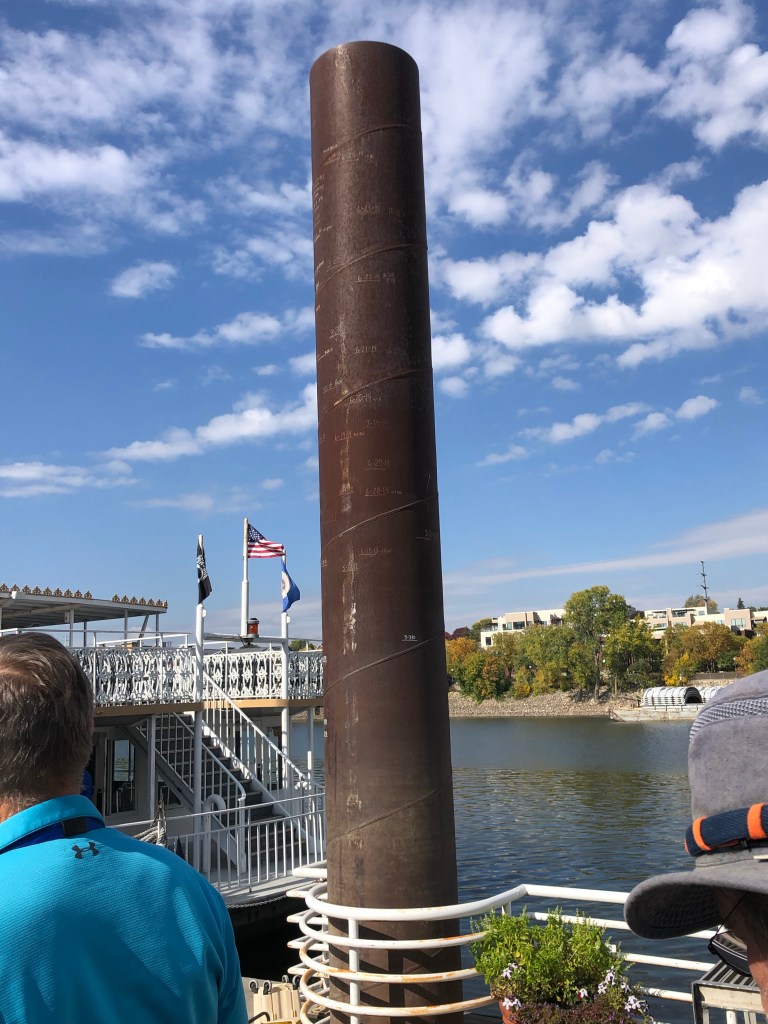
Our day began with a cruise on the Mississippi. As we were waiting to board our boat we saw some high-water marks on pillars next to the dock. The highest ones were about 20 feet above our heads. This was a grim reminder of what the river can do during floods.
Enlarge the picture to see the high-water dates
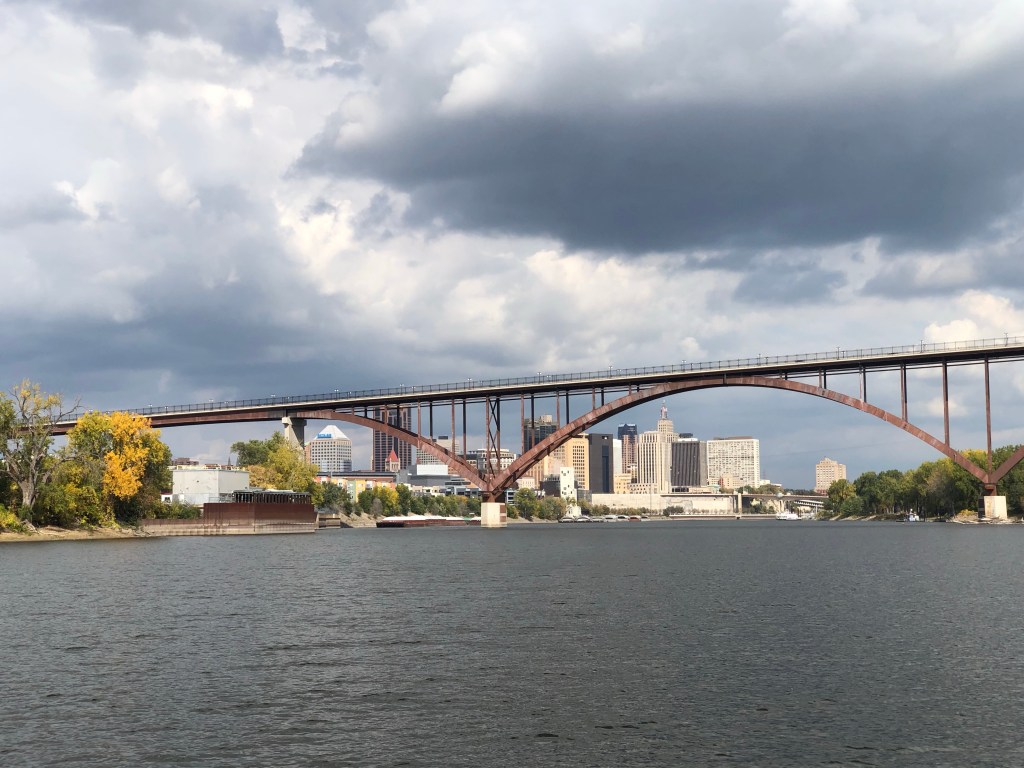
Once aboard we were served lunch on the main deck as we sailed downriver from St Paul. About halfway through the cruise lunch was over and we could search out a good spot for viewing and photos. It was a beautiful warm day and we stood at the bow for the whole trip back. My photos actually show the cruise in reverse, starting at about 5 miles south of the landing in St Paul.
The river is narrow and deep in this section. There is no indication that there is a large city five miles upstream.
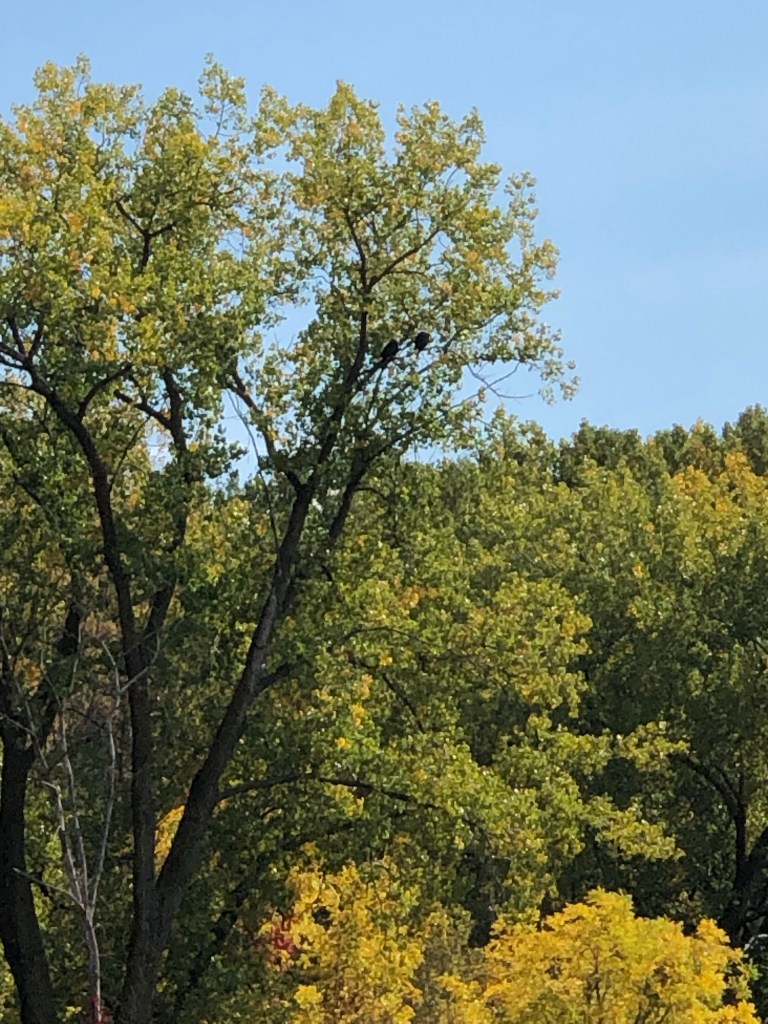
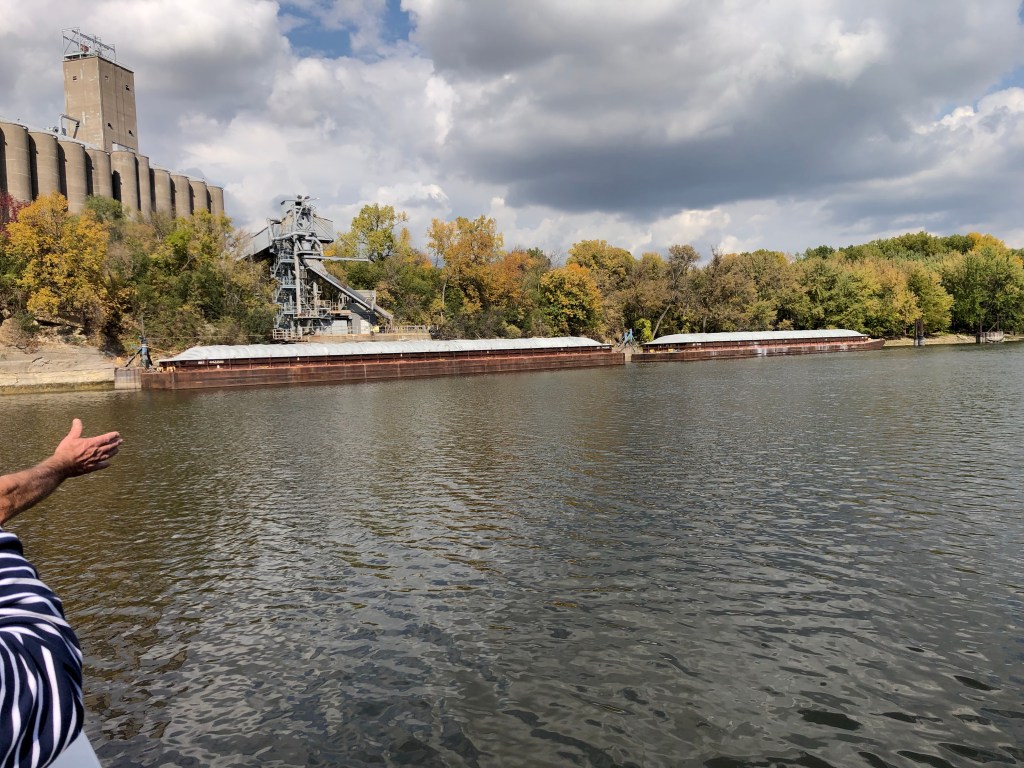
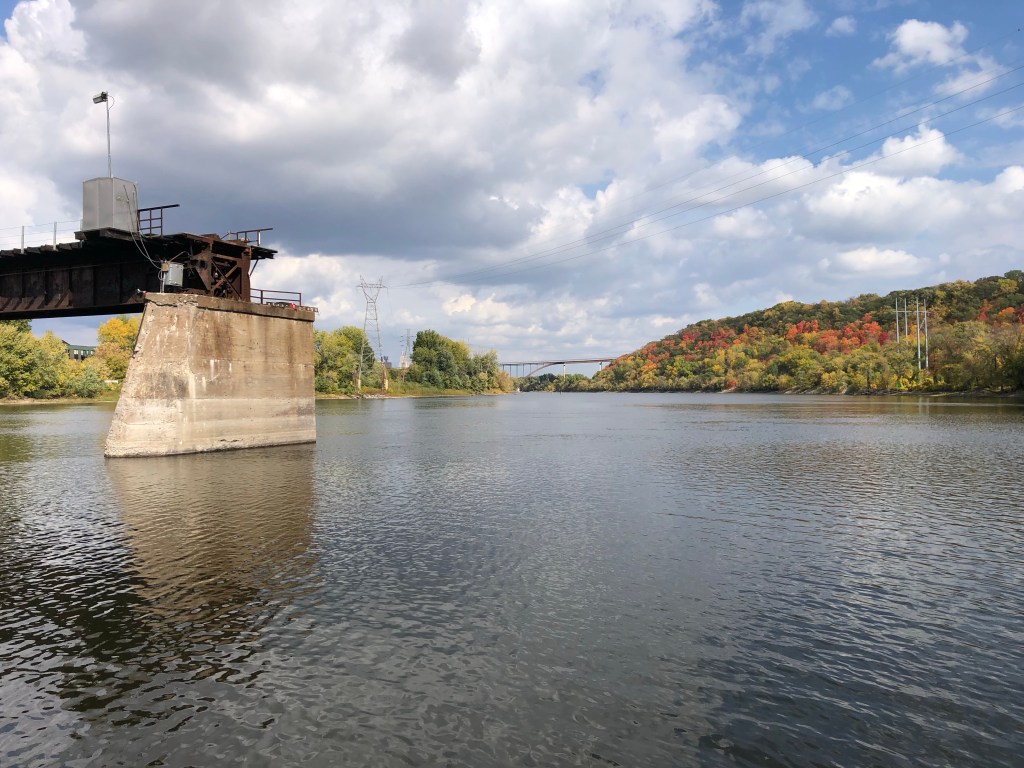
The Minnesota River entersthe Mississippi just above our turnaround point. There’s those tourists againAn eagle nest. We learned these can weigh as much as 1000 pounds. A pair of eagles perched in a tree. They might be the owners of the nest but we saw others in the area too. A grain transport facility. Grains are stored in the silos on the left and loaded into barges. Two barges are docked at the loading platform on the right. A tug will take them downriver when they’re full. Closer view. These huge barges can hold 60 railroad cars worth of grain. Sailing through an open railroad bridge, with a highway bridge in the distance. The city of St Paul coming into viewAutumn colors on the riverbank Approaching St PaulSt Paul cathedral came into view as we sailed under the bridgeSt Paul from the waterfront Colorful waterfront condos with more barges waiting to be loaded in the foreground As we left the cruise we noticed more high-water marks on the building. The highest one was from 1965.
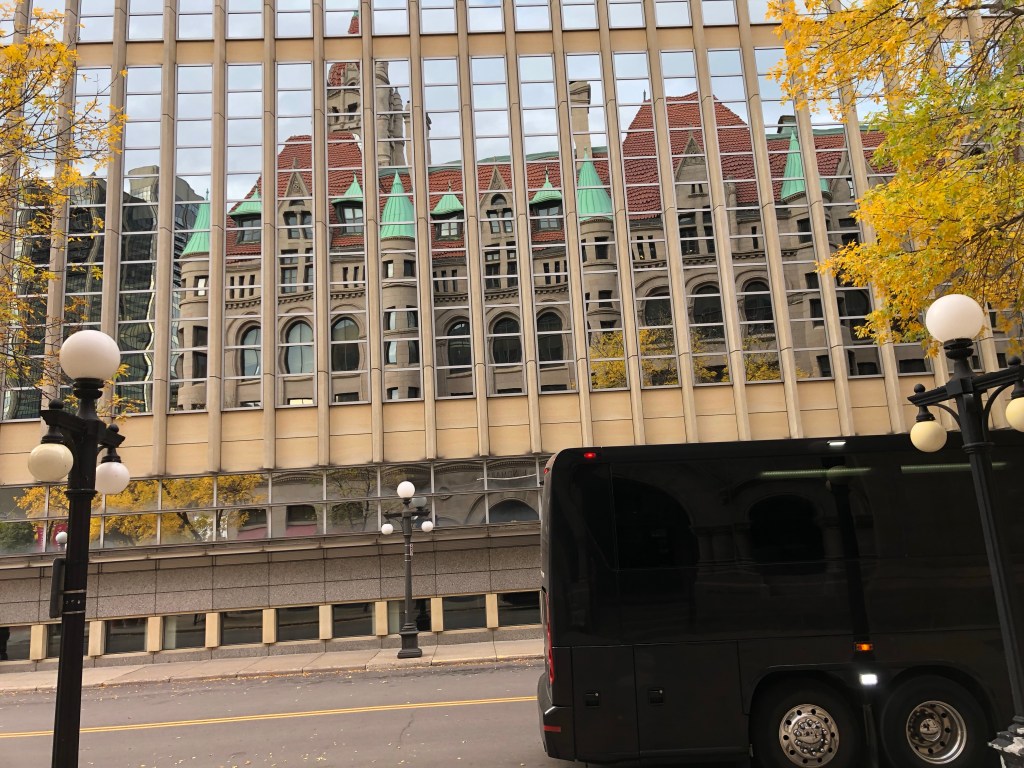
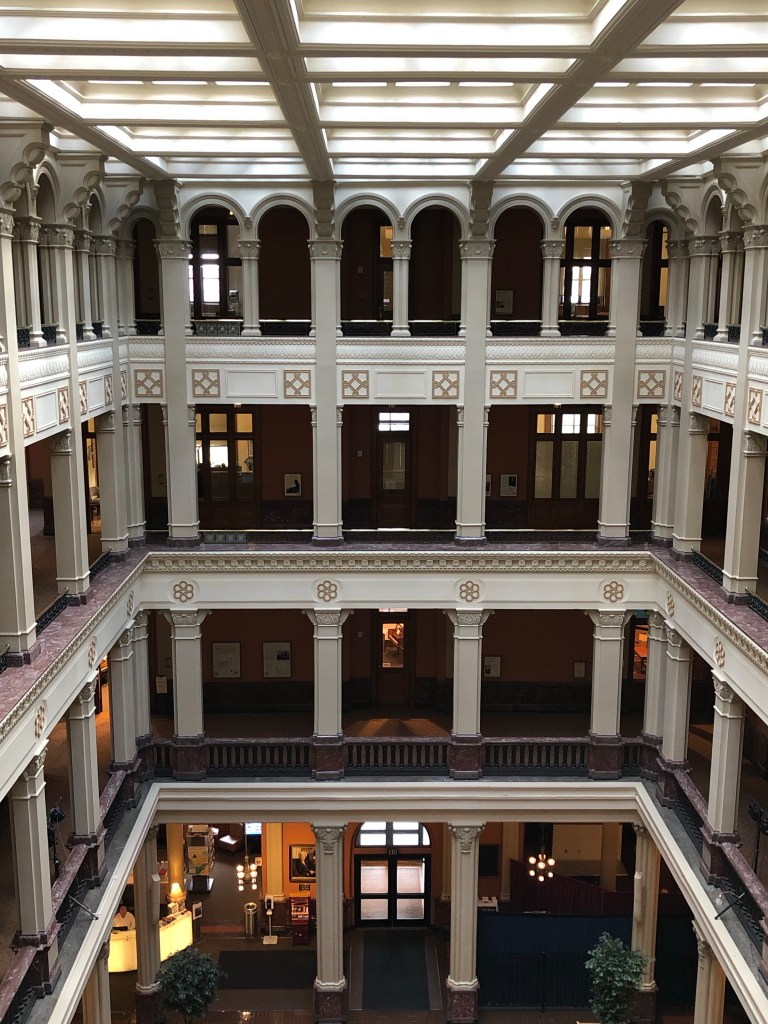
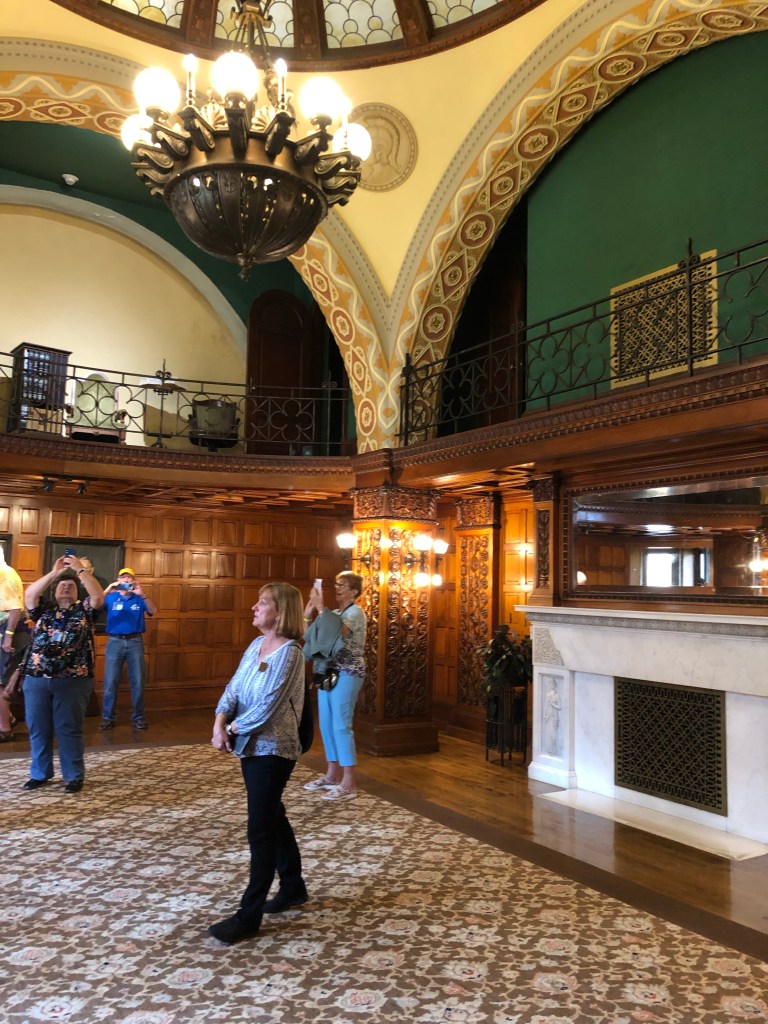
Our afternoon was spent at the Landmark Center in St Paul. This beautiful building was built by the federal government in 1902, as a post office, court house and customs house. When the post office and court system outgrew their spaces in the building it was slated for demolition. Public opposition led to the acquisition of the building by the county. An extensive renovation was done, financed largely through private donations. Today the building houses galleries supported by the local chapter of the American Woodturners Association (Carol you would LOVE this!), the Schubert Club (musicians you would LOVE this!), galleries with changing exhibits, and historical building tours. There are of course the requisite gangster and ghost tours as well.
The Landmark Center with its clay tile and copper roof, reflected in the windows of the St Paul Hotel. Our building tour guide began our tour in the first floor atrium, site of the original post office The atrium viewed from the fourth floor. There is a double glass roof above the atrium, flooding the center of the building with light. One of several courtrooms and law offices, all meticulously restored. All were different and all were elegant. Supreme Court justices Warren Burger and Harry Blackmun both served on this district court prior to their Supreme Court nominations
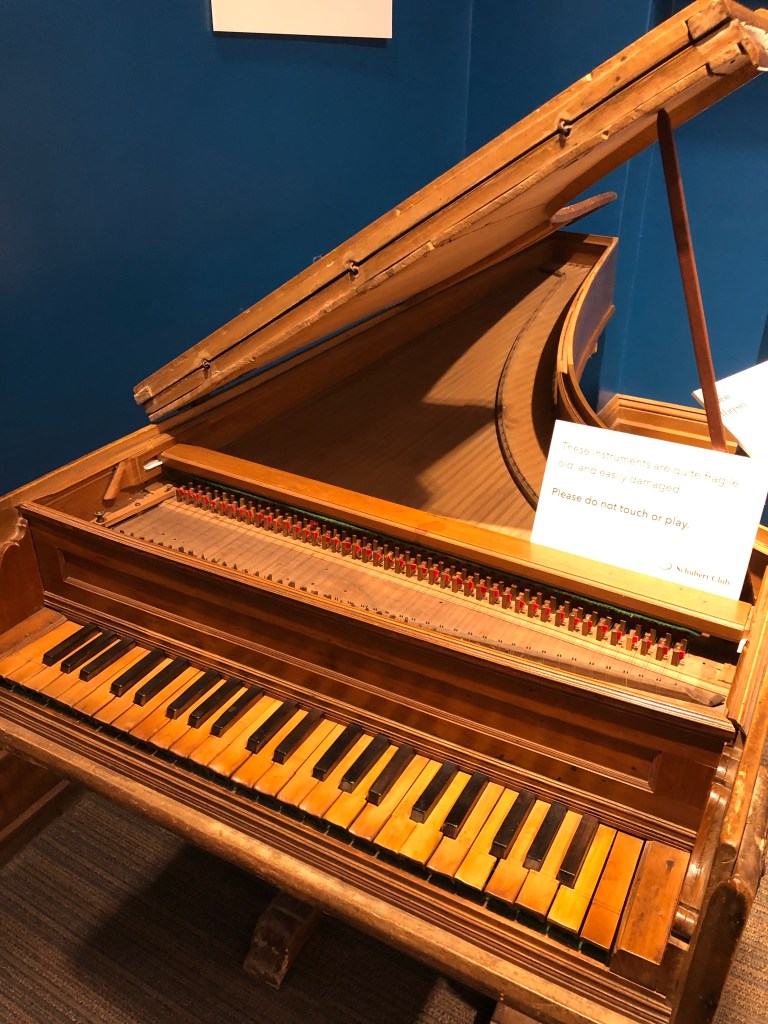
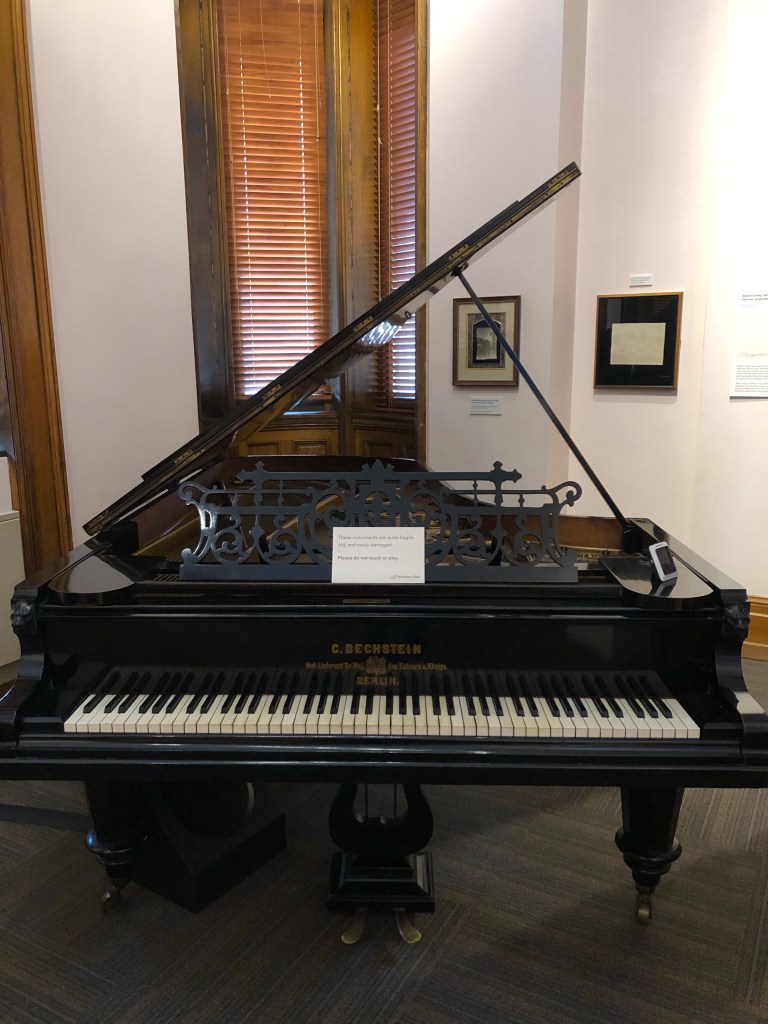
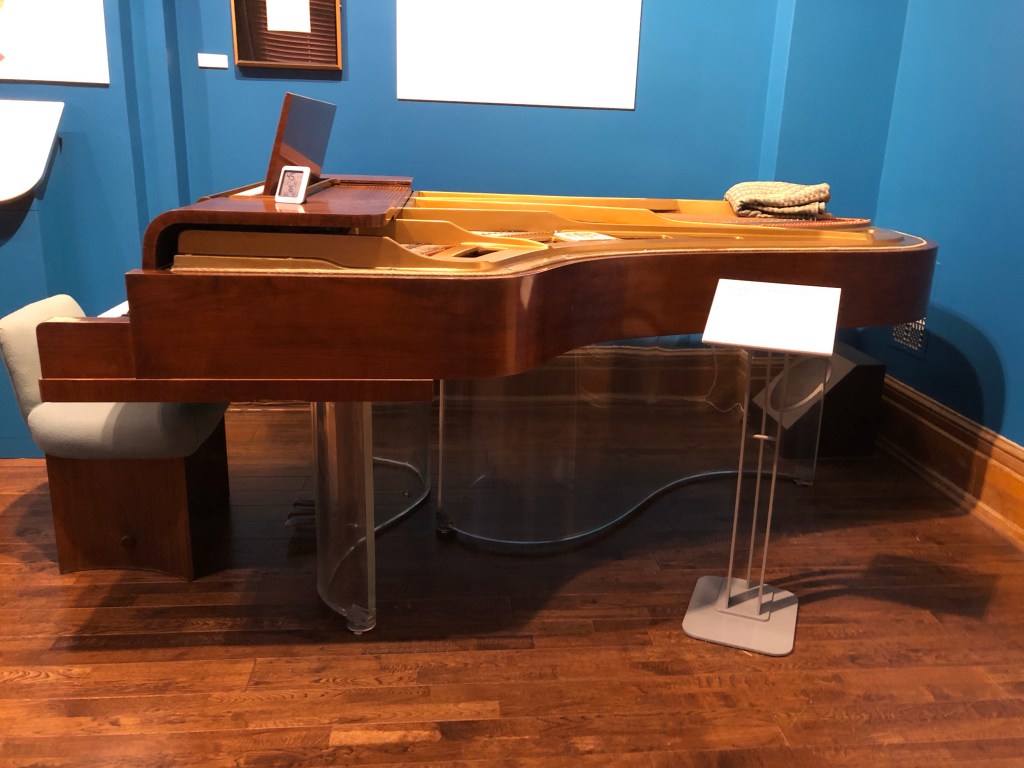
The Schubert Club’s gallery has a remarkable collection of historical and contemporary keyboard instruments. Many of them were accompanied by a short video demonstration that gave an idea of how they would sound playing the music of their era. An excellent guide explained each one as we toured the gallery.
Italian harpsichord, 17th century English fortepiano, 18th centuryGerman piano, late 18th century German Beckstein piano, mid 19th century.Viennese piano, mid 19th century. This one has only 84 keys. Hammond B3, 1960’s. Dad, this one’s for you. Wurlitzer piano, 1940’s. Note the clear supports! This gave the piano the appearance of floating on stage.
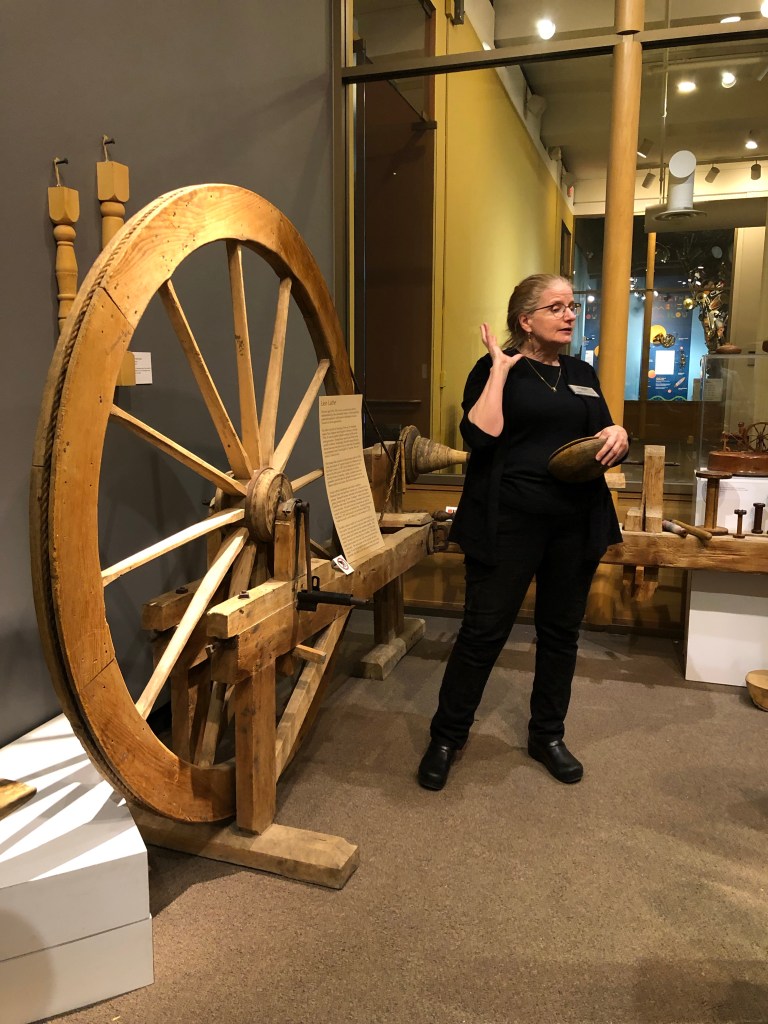
The Woodturners Association museum has an amazing collection of historical and modern wood art and tools. The curator explained how wood turning has evolved from a practical skill to an artistic one. The collection of lathes and objects demonstrated this evolution clearly!
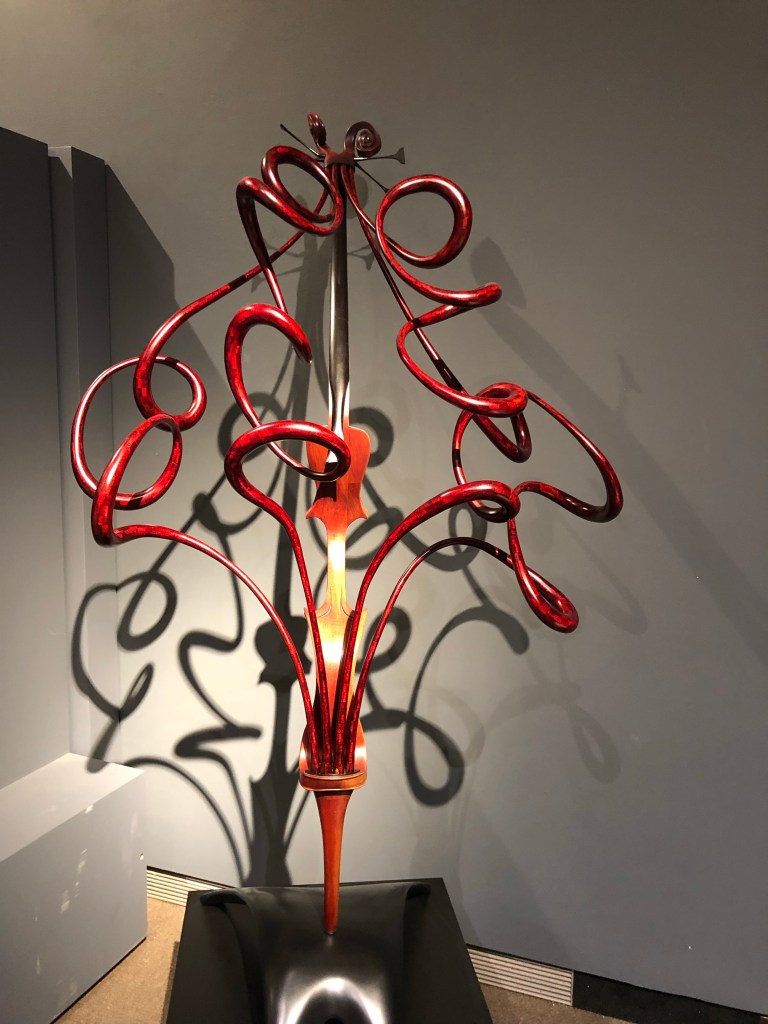
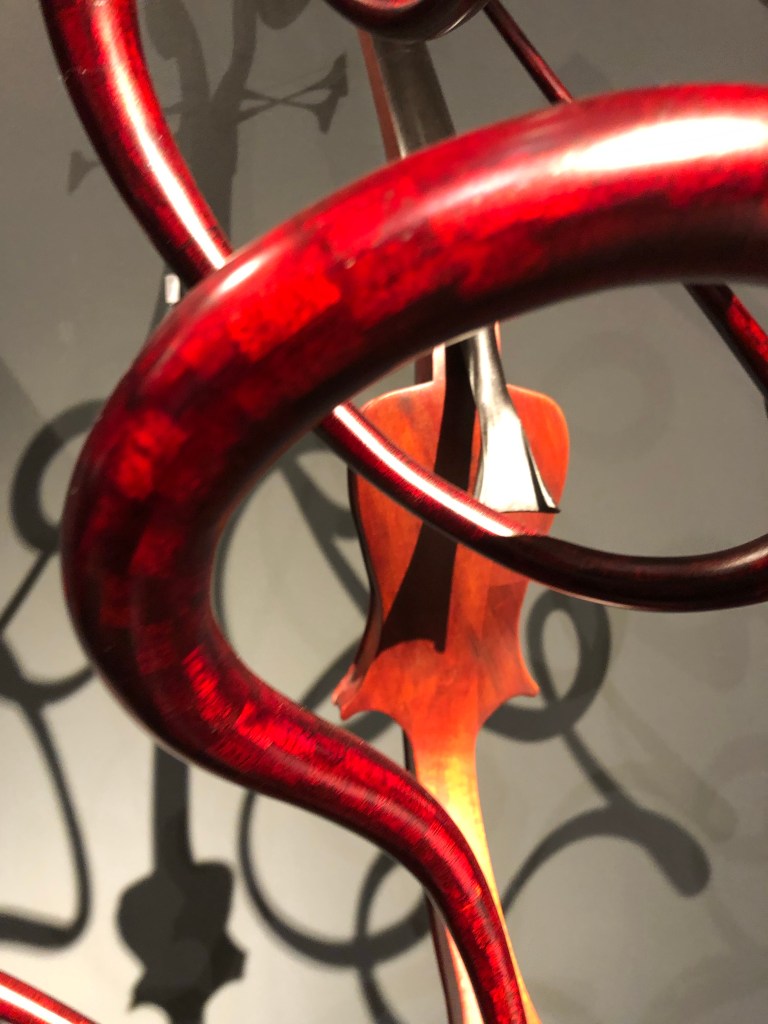
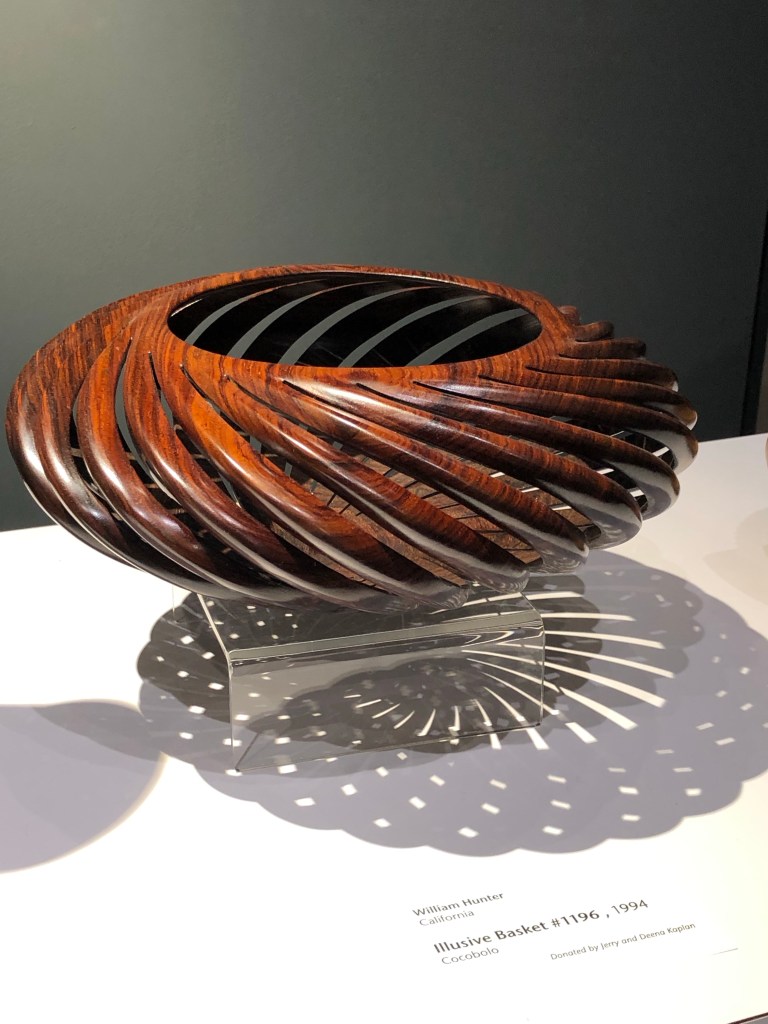
Museum curator with an early lathe Turned box, used for household storage. Early Tupperware! And valued similarly. A collection of baseball bats. A similar collection hangs in the Baseball Hall of Fame in Cooperstown, NY. The wood in this piece is very hard and sturdyAn impressionistic cello. Wow!The wood in this piece is constructed of tiny blocks glued together. Our guide explains how artists use voids in their work. In the tall piece, the artist is revealing the wood’s life history by removing the soft layers in the growth rings. This bowl’s shadow is as interesting as the bowl itself The pear wood used in this bowl is strong and tightly grained. It allowed the artist to create this cross-hatched reflection attached to the solid side by the thinnest of connections!
Impressive art of many kinds! Love beautifully crafted buildings that provide a service to the public and underscore the value placed in those services. Nice work, people of St. Paul! (St. Paulers? St. Paulees? St. Paulians?)
WOW. What a great day you and Des must have had. The architecture in the museum building is just wonderful and the exhibits beautiful. The workpersonship is incredible. Thanks for all the great pictures you are sending.



















 Wanda Free
Leave a reply to Mia Cancel reply