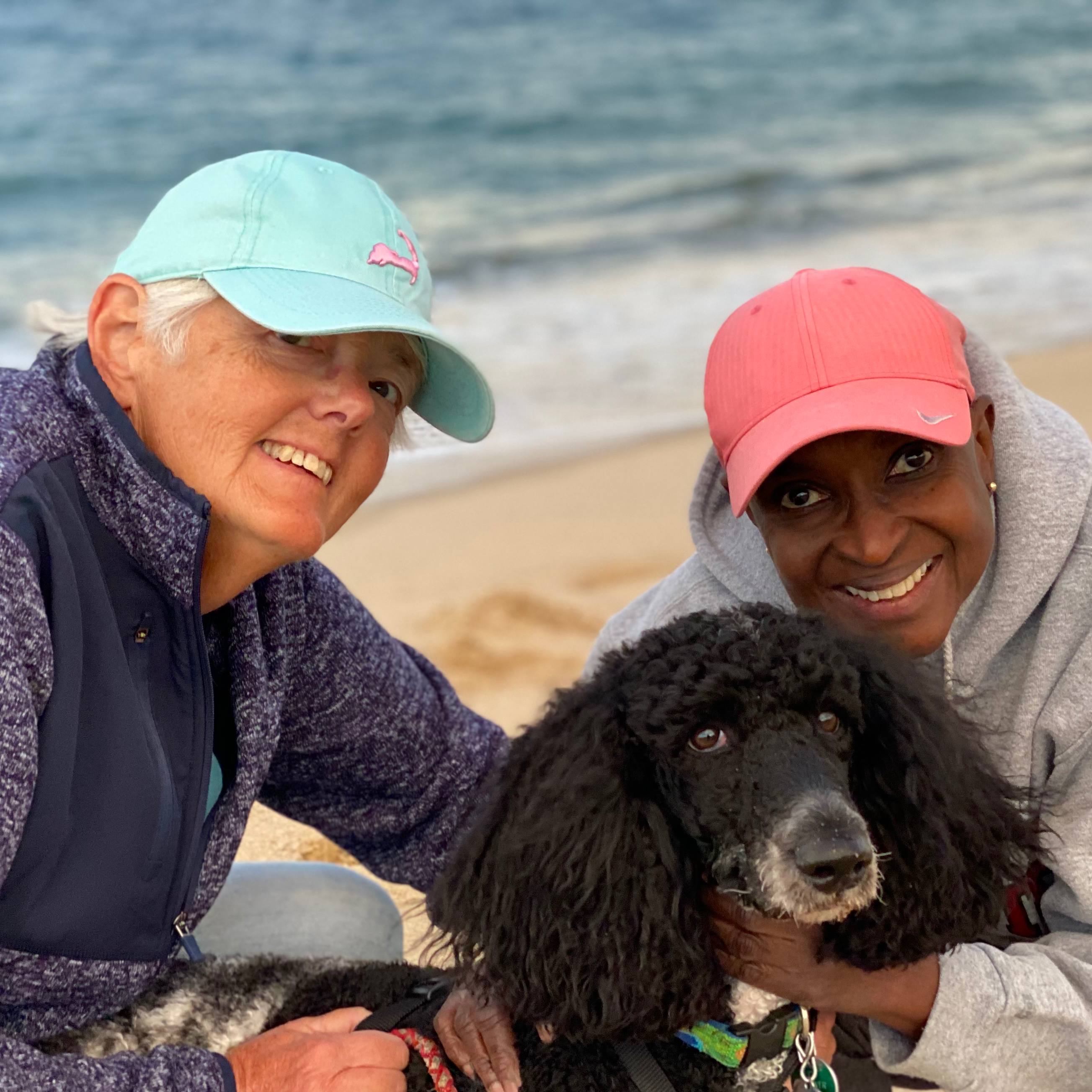

We didn’t travel far to our first stop after Gulf State Park. Mobile is just up the road aways, at the head of Mobile Bay. We needed to stock up on a few things at Costco, and we wanted to poke around a little bit in this place that we had only passed through on the highway previously. We stayed at a little campground with a hip-deep accumulation of live oak leaves (ok, I exaggerate, but it was darn hard to find the drain cover when we hooked Wanda 2 up to the utilities at our site!).
The next day we went downtown to take a tour with the Dora Franklin Finley African-American Heritage Trail. Our guides took us to 15 of the 35 sites located on the trail. We learned quite a lot about the history of the African-American community in Mobile, from the early slavery period to the present. One of the highlights of the tour was the Clotilda, a slave ship that illegally imported 110 enslaved Africans to Mobile in 1860, 52 years after the international slave trade had been outlawed. In order to cover up the crime, the ship was burned and scuttled in the Mobile River. It has recently been rediscovered and raised, and an exhibit telling the history of the ship and the people who were brought to America on it has recently opened at the African Heritage Center in Mobile. We learned that Mobile was the home of two major figures in baseball history, “Satchel” Page and Hank Aaron. We drove through many sites in Africatown.
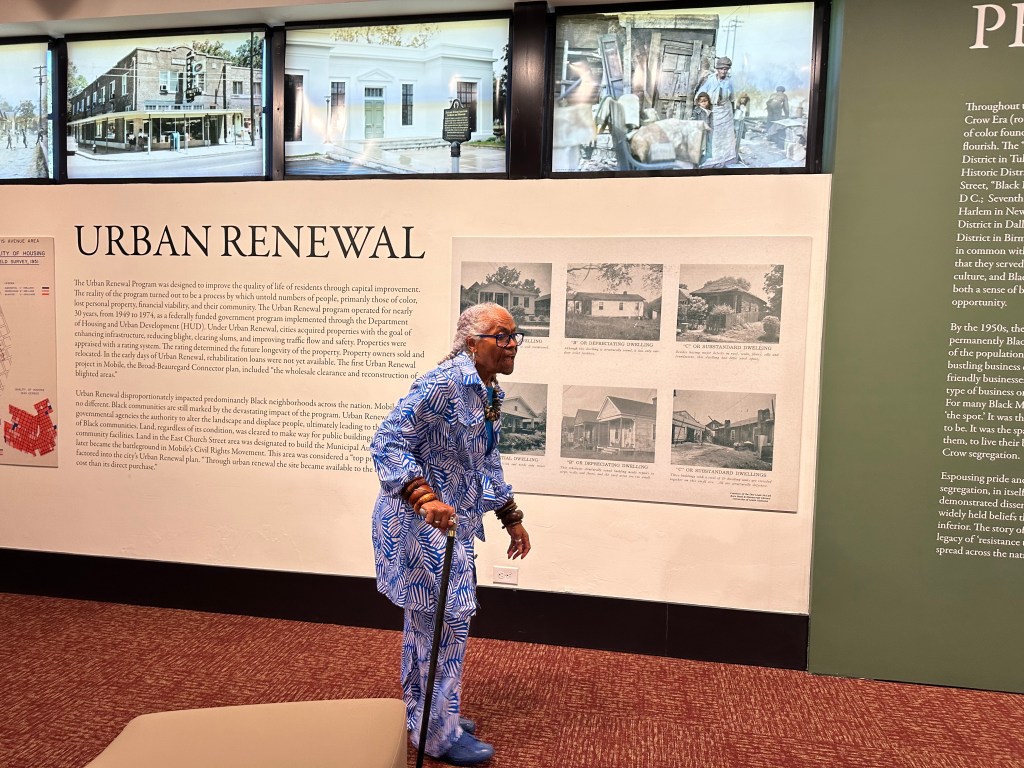
One of the most touching stops on this tour was the cemetery reserved for the Clotilda’s cargo of people and their families. Each grave is covered with a stone slab with a headstone facing east, back toward the African home of deceased. Unfortunately, we were not able to stop for photos here, or at most of the other sites we visited. We did, however, visit the Historic Avenue Cultural Center, an exhibit and event center that anchors Mobile’s project to recognize the cultural significance of many locations on and around Martin Luther King Junior Avenue in the city. This area was central to Africatown, the hub of African-American activity in the city during segregation and Jim Crow. The Cultural Center has exhibits of important political activity and events that took place here. The building was constructed in 1931 to serve as a library for the Black community in Mobile, which was not allowed to use Mobile’s public library facilities. Julius Rosenwald, who financed the construction of over 5000 schools to educate Black children in the 1930’s and 40’s, contributed significant funds to the construction of this library. (It has been fun to find Mr. Rosenwald’s work in places we have visited since we first encountered him in Memphis in 2022). We enjoyed studying the “Remember the Avenue” exhibition that was currently on display there.

Following our tour, we went to lunch at Dauphin’s, a restaurant with the best view in town, recommended by our tour leader. It delivered on the food and the view!

One quirky thing we learned about Mobile is that it counts down to the arrival of the new year by dropping a round object from the top of a tall building, as New York City does. Mobile honors its southern roots by using an oversized Moon Pie instead of a crystal globe, though. Nice touch!
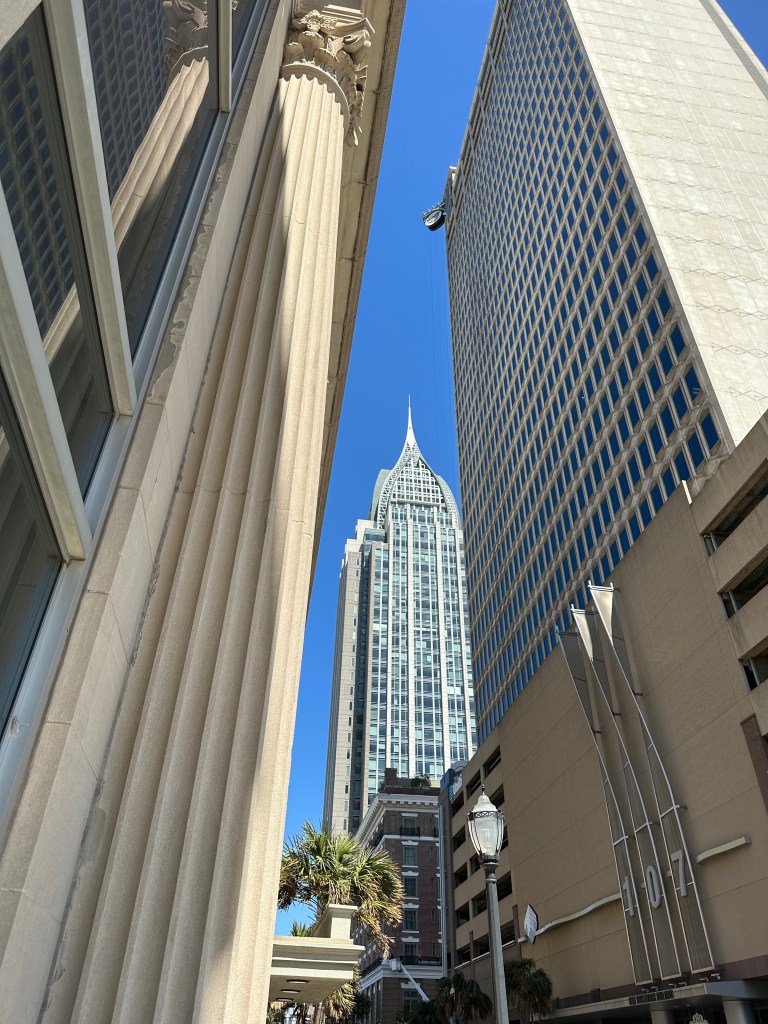
Our time in Mobile was, unfortunately, limited. We would have liked to explore more of this historic city, but we were on a mission. We hope to spend more time here on a future visit to the Alabama coast!


 Wanda Free
Leave a reply to Dee Cancel reply